

The Wizard
33. Thomas Edison

33. Thomas Edison (1847-1931)
Americans had a special way with invention. The nation’s vast market and republican sensibility encouraged the democratization, industrialization, and commercialization of useful ideas from the very beginning. The republic began with farmers, printers, surveyors, shipwrights, and mechanics, all hard workers searching for practical ways to improve their trades. But soon the nation became one of laboratories, patents, factories, wires, lights, films, motors, and sound. Few Americans facilitated that transformation more than Thomas Alva Edison. He did not merely invent things. He helped invent the modern process of invention.
Edison was born in Milan, Ohio, in 1847 and grew up in Port Huron, Michigan. He was not a polished product of universities or learned societies. In fact, he barely received any formal education. He was partly deaf, largely self-educated, restless, curious, and entrepreneurial from childhood. As a boy, he sold newspapers and candy on trains, edited and printed his own newspaper, and tinkered whenever he could. Like many great Americans, he was hopelessly restless. He examined, tested, improved, wired, recorded, and remade everything he saw.
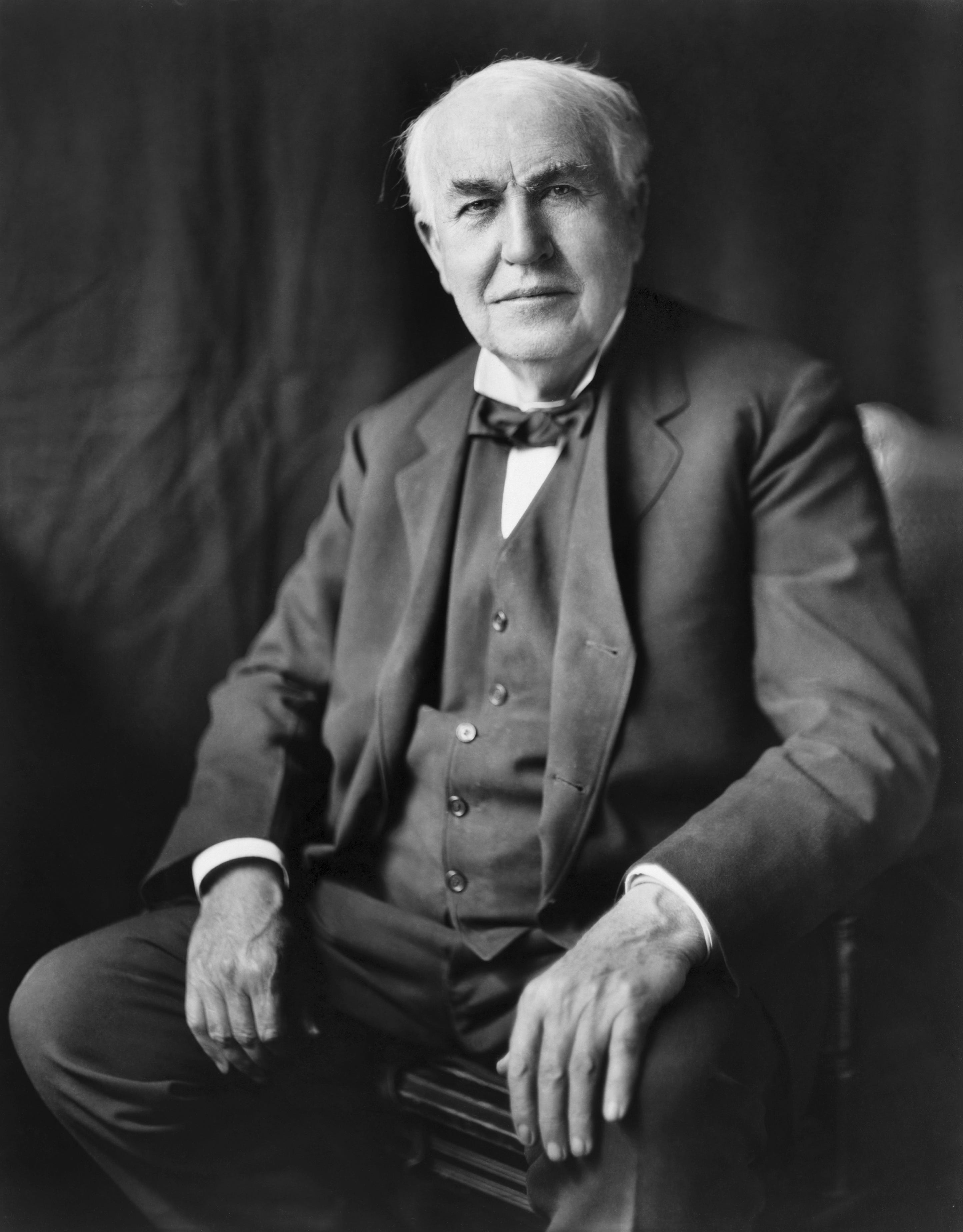
His first serious inventive work came in telegraphy. This field mattered immensely. The telegraph was one of the great technological nervous systems of the nineteenth century, enabling near-instantaneous communication across vast distances. Edison learned not only the technology, but also the habits and methods of those who worked within it. He became a full-time inventor in an age when invention was still often the work of lone tinkerers and workshop mechanics. But Edison soon pushed beyond that model.
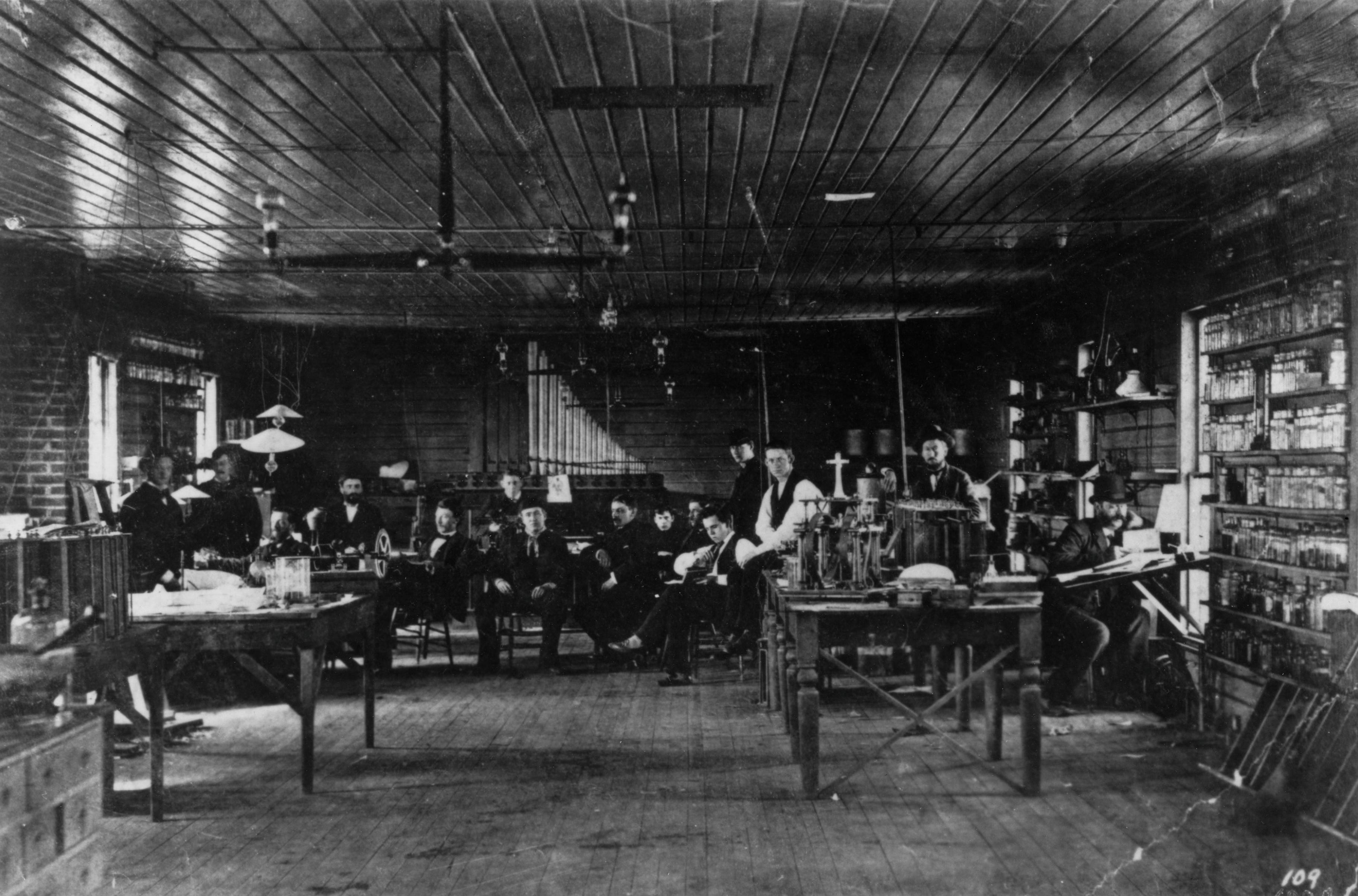
At Menlo Park, New Jersey, he created something new: an organized invention factory. It was not a university, nor exactly a workshop, and not merely a business. It was a laboratory aimed at producing useful discoveries on demand. Edison gathered machinists, chemists, draftsmen, and experimenters and set them to work under intense pressure. The myth of Edison as a solitary wizard is therefore both true and false. He was intensely driven and a singular visionary, but he also knew how to build and manage talented teams. His genius was not only in seeing what might be made, but in creating the conditions under which invention itself became systematic.
The invention that first made him famous was the phonograph in 1877. For all of human history, sound vanished almost as soon as it was made. A voice could be remembered, imitated, or written about, but never captured. Edison’s phonograph forever changed that. Suddenly the human voice could survive the moment of its utterance. It was a machine with something almost ghostly about it, as though memory itself had been given gears and a cylinder. It made Edison a celebrity and earned him the title “Wizard of Menlo Park.”


But Edison’s greatest achievement was not the phonograph. It was electric light and electric power. He did not truly invent the first electric light. Others had worked on electric lighting before him. But Edison understood that a light bulb alone would never change the world. To transform civilization, electric light needed to be part of a practical and sustainable system that included generation, wiring, meters, switches, distribution, durability, safety, and affordability. In 1879, Menlo Park was publicly illuminated by Edison’s incandescent lighting system. In 1882, his Pearl Street Station in lower Manhattan began delivering electric light and power to customers. The electric age had begun.
This was Edison at his most consequential and systematic. Invention was not merely a device, but an ecosystem. A lamp without a power station was a curiosity. A power station without customers was a monument. A patent without manufacturing was merely paper. Edison joined the inventor’s imagination to the businessman’s discipline.
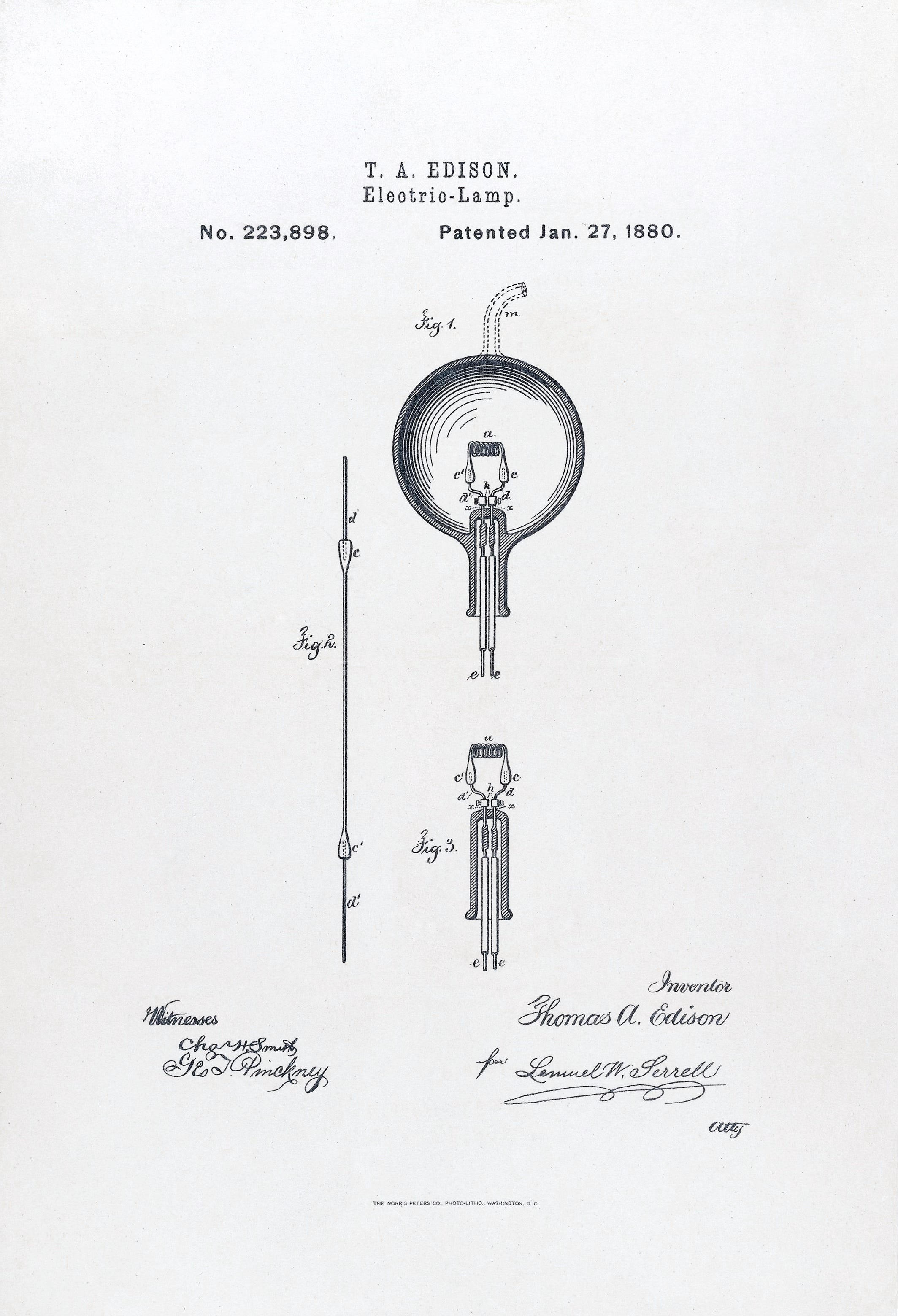
Edison’s reach extended still further. He worked on improvements to the telephone. He helped develop motion-picture technology. At his later laboratory in West Orange, he worked on commercial phonographs, motion pictures, batteries, cement, mining, and other enterprises. Some succeeded brilliantly. Others failed expensively. But the pattern remained the same. He experimented, tested, revised, commercialized, and repeated. By the end of his life, Edison held more than a thousand patents, a staggering monument to both his disciplined curiosity and his systematic approach to invention.
Of course, Edison was not a saint of invention. He was ruthless in business, combative over patents, and often ungenerous toward rivals. The famous “war of currents” with advocates of alternating current, especially Nikola Tesla and George Westinghouse, complicates his reputation. Edison promoted direct current and resisted alternating current, sometimes in ugly and misleading ways. He was capable of pettiness, pride, and hard dealing. But the modern tendency to reduce him either to a heroic wizard or a villainous monopolist misses the more interesting truth. Edison was a titan of practical genius, and titans cast shadows, in his case shadows drawn from his own electric light.
Yet those shadows should not obscure the achievement. Edison belongs high on any list of great Americans because he represents one of the central American promises: that intelligence need not remain cloistered, that practical labor can be a form of genius, and that the future can be built by stubborn hands.
His life also reveals something important about American greatness. The United States has always honored workable ideas. The Constitution itself is a practical machine, built upon checks, balances, powers, limits, and mechanisms for repair. The same civilization that produced Madison’s architecture of government also produced Edison’s architecture of light.
Edison undoubtedly changed the texture of ordinary life. That is no small thing. Some Americans have changed borders, laws, or wars. Edison changed the room in which the family sat after sunset. He changed the street at night, the factory floor, the sound of a human voice, and eventually the moving image. His inventions did not remain distant wonders. They entered homes, offices, theaters, and daily habits.
For that reason, Edison’s legacy is not merely technological. He stood at the hinge between the age of steam and the age of electricity, between the workshop and the research laboratory, between invention as accident and invention as industry. He gave America not only devices, but confidence that the material world could be mastered through experiment, organization, and perseverance.
with gratitude, and love—