

The Dean
84. Roscoe Pound

84. Roscoe Pound (1870-1964)
America’s institutions make its history. These include the organs of the state, its legislatures and courts, its armies and navies. But they also include its laboratories and its faculties. These quieter institutions, often removed from public view, tend to receive less attention. Yet over time they exercise a deeper and more enduring influence. The great law schools and medical schools, for example, have shaped generations of the nation’s leading professionals and, through them, the course of the Republic. The leaders of those institutions, though less visible than statesmen or soldiers, have helped form the habits of mind and judgment that guide American life. Among the most influential was Roscoe Pound, who led Harvard Law School for two decades and, in doing so, helped reshape American legal thought in the twentieth century.
Roscoe Pound was born on October 27, 1870, in Lincoln, Nebraska. His home state was then in a moment of transition. Nebraska had been admitted to the Union only three years earlier, and its institutions were still young. Pound’s father, Stephen Bosworth Pound, was a lawyer, judge, and later a congressman. Pound had early and practical exposure to the law, but he was initially more interested in biology. He attended the University of Nebraska, where he earned a bachelor’s degree in botany in 1888, graduating at the age of seventeen. He continued his studies in the natural sciences, ultimately earning a Ph.D. in botany from the same institution. He published credible scientific research before the age of thirty.
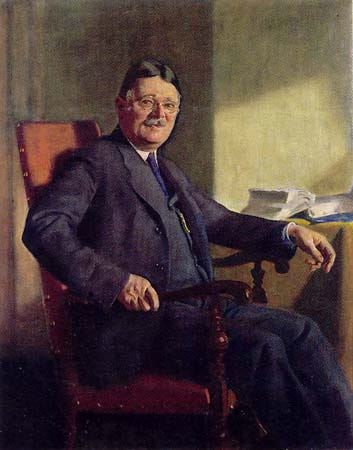
At the same time, Pound pursued legal studies, reading law in his father’s office and later completing formal coursework. He was admitted to the Nebraska bar in 1890 but never obtained a law degree. For a time, he maintained parallel careers in botany and law, teaching and writing in both fields. His scientific training left a permanent imprint on his legal thought. He approached the law scientifically and studied it as it worked within society, rather than as a closed system of settled doctrines.
By the late 1890s, Pound had begun to shift his focus more fully toward the law. He joined the faculty of the University of Nebraska College of Law, where he would later serve as dean while still in his thirties. In these early academic years, he established himself as a careful and disciplined scholar, though not yet a transformative figure. That would come later.
In 1906, Pound delivered an address to the American Bar Association that would become one of the most influential critiques of the American legal system in its time. Titled “The Causes of Popular Dissatisfaction with the Administration of Justice,” the speech identified a growing divide between the legal profession and the public. Pound argued that courts had become overly technical, procedures too rigid, and outcomes too detached from common expectations of fairness. The dissatisfaction, he insisted, was not a failure of public understanding. It was a failure of the legal system itself.
The speech established him as a leading voice in what would come to be known as sociological jurisprudence. Rather than treating the law as pure logical doctrine, Pound urged lawyers and judges to consider its social effects. Law, in his view, was a tool of social organization, and its success or failure should be measured in part by how well it served that function.
Pound’s career advanced quickly. He left Nebraska for a series of appointments at more prominent institutions, including Northwestern University and the University of Chicago. In 1910, he joined the faculty of Harvard Law School, then already the most influential legal institution in the country. Six years later, in 1916, he was appointed dean.
Pound’s deanship at Harvard, which lasted until 1936, was one of the most consequential periods in American legal education. He inherited a school shaped by the legacy of Christopher Columbus Langdell, who had introduced the case method and emphasized the scientific study of legal principles through appellate decisions. Pound did not reject this approach, but he expanded it. He encouraged the incorporation of history, economics, and the social sciences into the legal curriculum. He believed that lawyers needed to understand the broader context in which legal rules operated.
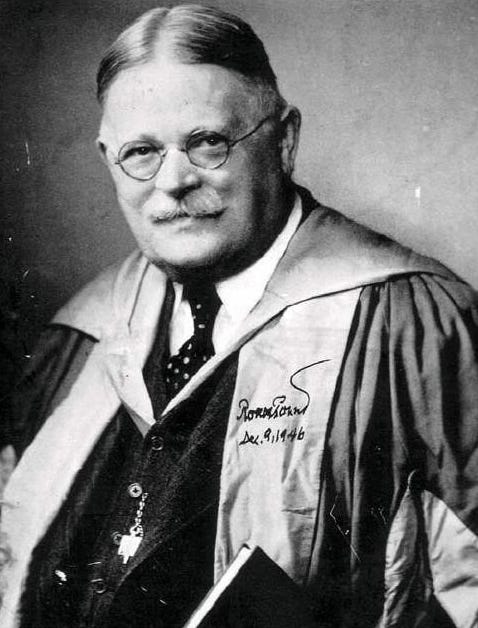
Under Pound’s leadership, Harvard Law School strengthened its position as the central training ground for the American legal elite. Many of his students would go on to occupy positions of influence in the judiciary, government, and academia. Through them, his ideas spread far beyond Cambridge, and enrollment more than doubled.
During this same period, Pound remained an active scholar. He wrote extensively on a wide range of legal subjects, including property law, criminal law, and jurisprudence. Among his most significant contributions was his effort to categorize the interests that the law seeks to protect. He distinguished between individual interests, public interests, and social interests, and argued that the task of the legal system was to balance these competing claims. This framework reflected his broader commitment to a functional understanding of the law.
Beyond his academic and judicial work, Pound was deeply involved in efforts to reform the legal system. He played a leading role in the movement to improve judicial administration, advocating for more efficient court structures and simplified procedures. He supported the creation of organizations dedicated to studying and improving the functioning of courts. His work contributed to a broader Progressive Era effort to bring order and rationality to public institutions.
Pound’s career also intersected with the rise of legal realism in the 1920s and 1930s. Legal realists shared his dissatisfaction with formalism and his emphasis on the practical operation of the law. But they often went further, suggesting that legal rules were indeterminate and that judicial decisions were shaped largely by personal and social factors. Pound engaged with these ideas but did not fully embrace them. He remained committed to the possibility of principled legal reasoning, even as he acknowledged the need for flexibility.
After stepping down as dean in 1936, Pound continued to teach and write. He remained at Harvard as a professor until his retirement in 1947, and even afterward he remained active in scholarly and professional circles. His influence persisted through his students, his writings, and the institutional changes he had helped to set in motion.
Pound lived through a period of extraordinary change in American life. When he was born, the United States was still largely rural, its legal system rooted in nineteenth-century doctrines. By the time of his death in 1964, the country had become an urban, industrial, and increasingly complex society. The law had evolved alongside it, expanding in scope and adapting in form.
His legacy is most clearly seen in the transformation of American legal thought. The rigid formalism that dominated the late nineteenth century gave way, over time, to a more pragmatic and policy-oriented approach. Courts became more attentive to the consequences of their decisions. Legal education broadened to include disciplines that had once been considered outside the law. These developments cannot be attributed to Pound alone, but his influence was central.
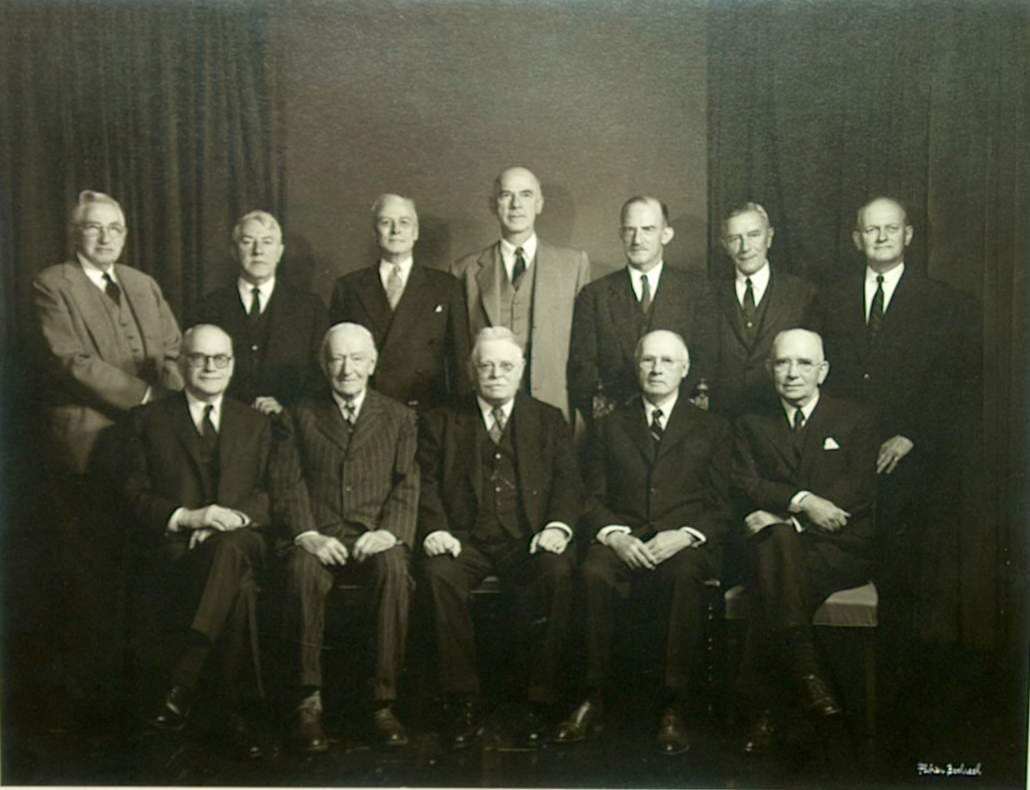
Roscoe Pound’s life traces the arc of that transformation. He began as a scientist, trained to observe and classify the natural world. He rose to national prominence as a scholar and educator, shaping the way generations of lawyers would think about their profession. At each stage, he carried forward the same underlying conviction: that the law must be understood in relation to the society it serves.
He left no single doctrine that bears his name in the manner of a judicial opinion or a statute. His influence is more diffuse, but no less real. It can be found in the expectation that legal rules should be tested against their effects, in the willingness of courts to consider context, and in the training of lawyers to look beyond the page.
with gratitude, and love—