

Silent Authority
97. Calvin Cooldige

Calvin Coolidge (1872-1933)
Americans today probably could not conceive of their president earning the moniker “silent,” but Calvin Coolidge governed the nation while affectionately known as “Silent Cal” for the quiet, calm, and efficient way he went about the people’s business. Others in American history spoke louder; few let their actions and character speak better than Coolidge.
He was born on July 4, 1872, in Plymouth Notch, Vermont. He is our only president born on Independence Day. His upbringing was plain. His father, John Calvin Coolidge Sr., was a storekeeper, farmer, and local official. The Coolidge family was of modest means but sturdy reputation. Coolidge was also descended on both sides from early settlers to New England. His forefathers fought in the French and Indian War, the Revolutionary War, and the Civil War. He was a Yankee through and through. But the lessons of Calvinist humility (he was named for John Calvin) stayed with him.
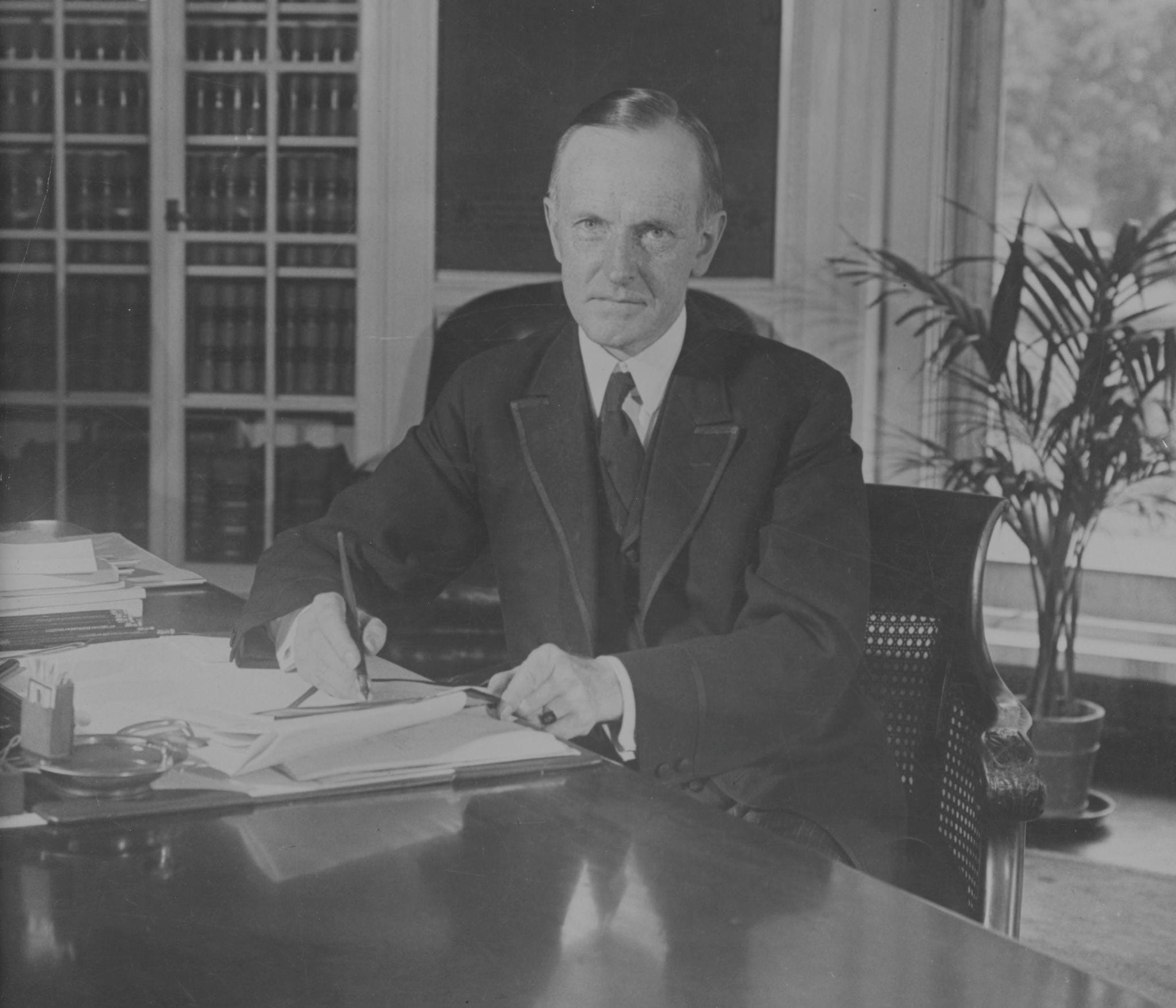
At Amherst College, he studied diligently rather than brilliantly. After graduation, he read law in Northampton, Massachusetts, and entered practice. The law, like everything else he touched, he approached with caution and care. He was not given to flamboyant argument, but to careful preparation and measured advocacy. He worked hard to keep his clients out of court. Local businesses and banks appreciated this approach, and his practice flourished.
His rise through Massachusetts politics followed a similar pattern. He served as a city councilman, then as mayor of Northampton, then in the state legislature, then as lieutenant governor, and finally as governor. At each stage, he advanced not through heavy rhetoric or overwrought promises, but by reliability. Others spoke more and promised more. Coolidge listened, considered, and decided. As mayor, he was known for trimming budgets and cutting taxes. As a legislator, he was respected for detailed committee work and convincing, logical floor speeches. He did not dissemble.
His emergence onto the national stage came during a moment of crisis while serving as governor. In 1919, the Boston Police went on strike, leaving the city vulnerable. The threat of disorder hung over Boston. Coolidge responded with a firmness that surprised many. He called in the state guard and issued a statement that would echo far beyond Massachusetts: “There is no right to strike against the public safety by anybody, anywhere, any time.” The power of the sentence lay not in ornament but in clarity. It was a position stated with unmistakable and immovable force. In a period of labor unrest and ideological ferment, it signaled that there remained limits grounded not in theory, but in the basic obligations of civic order. A man like Coolidge would quietly but firmly uphold that order.
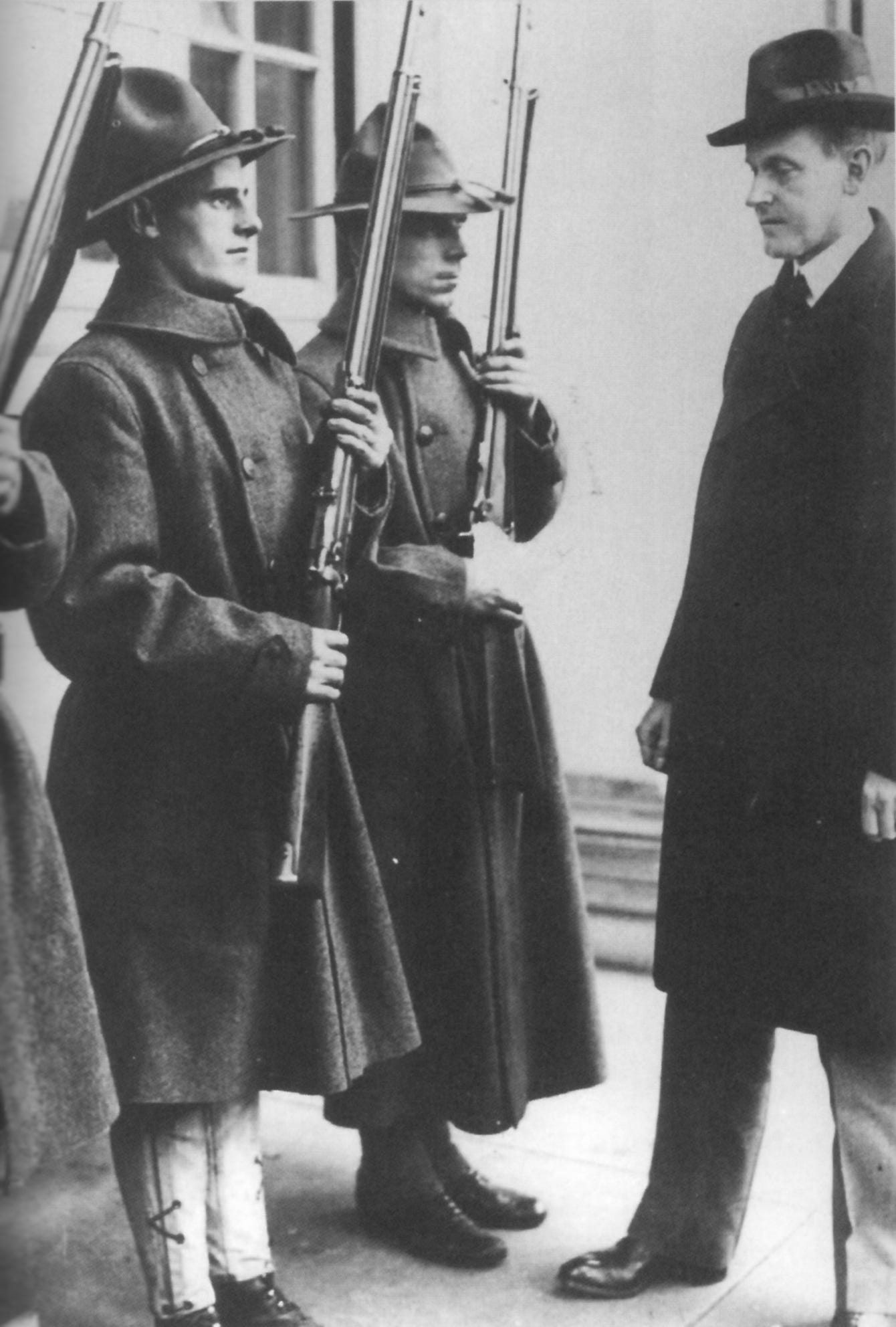
That moment carried him to the vice presidency under Warren G. Harding. Harding’s administration, genial and expansive, stood in quiet contrast to Coolidge’s reserve. Then, in August 1923, Harding died suddenly while on a western tour. The presidency passed, without ceremony, into Coolidge’s hands.
The scene of his inauguration has the quality of an American parable. In the early hours of the morning, in the family home in Plymouth Notch, by the light of a kerosene lamp, Coolidge took the oath of office. His father, as a notary public, administered it. There were no crowds, no grand platform, no orchestration of public sentiment. It was continuity without pomp, authority grounded in law.
Coolidge carried that spirit into his presidency. The country he inherited was weary of war, suspicious of grand projects, and eager for normalcy—a return to easier times. Where Woodrow Wilson had sought to remake the international order, Coolidge sought to preserve the domestic one. He believed that government, like any instrument, could be overplayed. Too much intervention could distort as easily as it could improve. His task, as he saw it, was not to direct every movement of national life, but to ensure that its basic conditions—law, stability, confidence—remained intact.


This philosophy found expression in fiscal policy. He moved to cut taxes, particularly at the upper levels, in the belief that capital, once freed, would find productive use. His Treasury Department restrained federal spending. The national debt, swollen by the Great War, gradually came down. Coolidge was not indifferent to prosperity; he was attentive to its preconditions. “The chief business of the American people is business,” he observed. Americans, he believed, were already engaged in the work of building, trading, and inventing. Government’s role was to refrain from unnecessary interference.
But Coolidge was capable of decisive action when he believed it necessary. He signed the Indian Citizenship Act, extending citizenship to Native Americans, a measure that, while imperfect in its implementation, marked a significant shift in federal recognition. He spoke against lynching and supported, at least rhetorically, federal efforts to address it, though Congress would not ultimately act. His approach to civil rights was cautious, bounded by the political realities of his time, but not wholly silent.


He also navigated the complexities of a rapidly modernizing economy. The 1920s were a decade of extraordinary growth, expanding the scale and speed of American life. Coolidge did not attempt to manage this transformation in detail. He trusted, perhaps more than some of his successors would, in the capacity of individuals and markets to adapt. Whether that trust was wholly justified would become a matter of fierce debate after his presidency, when the Great Depression cast a long shadow backward over the decade.
But to judge Coolidge solely by what followed is to misunderstand his moment. He governed in a time of confidence, not crisis. The pressures he faced were not those of collapse, but of excess. His answer was discipline: in spending, in regulation, and in the use of executive power. He believed that the habits of restraint cultivated in quieter times would prove essential when more difficult days arrived.
There was, too, the personal dimension and the famous silence. Stories of Coolidge’s brevity became legend. At a dinner party, a guest reportedly told him she had wagered she could get more than two words out of him. “You lose,” he replied. Such anecdotes, while amusing, risk trivializing what was in fact a considered disposition. Coolidge believed that words, like laws, should be used sparingly and with care. Speech, in his view, was not a substitute for thought, but its expression. To speak constantly was, perhaps, to think less precisely. And the words of the president carried enormous weight; he resolved to use them carefully.
This restraint extended to his understanding of the presidency itself. He did not seek to enlarge the office beyond its constitutional bounds. He vetoed legislation he believed excessive. He declined opportunities to expand executive authority where he saw no clear warrant. In an era when the presidency was already beginning to grow in power, Coolidge stood, quietly, for limits.
His personal life bore its own share of sorrow. In 1924, his younger son, Calvin Jr., died from an infection that followed a blister sustained while playing tennis on the White House grounds. The loss struck Coolidge deeply. Those close to him observed a further withdrawal, a deepening of the reserve that had always marked him. “When he went, the power and the glory of the Presidency went with him,” Coolidge later wrote. It was a rare glimpse into an interior life otherwise carefully guarded.
By 1928, with the end of his term approaching, Coolidge made a decision that surprised many. He would not seek reelection. “I do not choose to run for President in 1928,” he announced. Again, he spoke a sentence of plain words carrying decisive weight. He had done his part, and he would step aside.
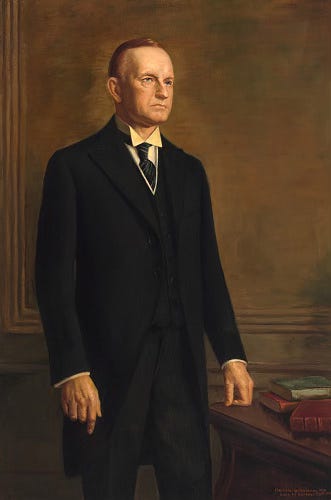
He returned to private life in Northampton, writing, reflecting, and occasionally commenting on public affairs. He lived only a few years more, dying in 1933 at age 60, just as the nation entered one of the most turbulent periods in its history. The contrast between his presidency and that of his successor, Franklin D. Roosevelt, would be stark. Coolidge’s restraint gave way to activism.
Coolidge did not leave behind sweeping reforms or dramatic transformations. There are no vast programs that bear his name, nor grand doctrines that define an era. He believed that not every problem required a federal solution, that not every opportunity justified expansion, and that the strength of the Republic lay as much in what government refrained from doing as in what it accomplished. In an age that often equates leadership with visibility, Coolidge saw the leader as steward rather than architect, as guardian rather than innovator.
with gratitude, and love—