Shock and Scale
Expanding realities, narrowing choices

Edwin Hubble and Paul Volcker
America has faced recurring moments of shock, both national and intellectual. These are moments when inherited conceptions fail and the old picture of the world no longer holds. The shock does not arise because reality has changed, but because reality has finally come into focus.
In the twentieth century, Americans encountered such moments in domains far removed from one another. In astronomy, the scientific world was startled to learn, in 1925, from a young astronomer working in California, that the universe was vastly larger and more dynamic than anyone had previously imagined. In economics, Americans were forced to confront the fact that money was more fragile, and more dependent on human judgment and policy, than long assumed. In both fields, established frameworks eroded. The scale of the universe expanded. So did the scale of economic risk and responsibility.
Edwin Hubble and Paul Volcker stood at the center of these moments of shock. Each confronted a system already drifting out of alignment and forced a reckoning that was uncomfortable, controversial, and unavoidable. In doing so, they did more than respond to crisis. They reset the terms of understanding. Time has borne out the wisdom of that recalibration.
Edwin Hubble (1889-1953)
As a young man, Edwin Hubble gave little indication that his stargazing would one day change how humanity understands the universe. He was, first, an athlete. Growing up in Wheaton, Illinois, he excelled in nearly every sport he tried, including baseball, football, track and field, and the still-new game of basketball. In 1907, he led the University of Chicago’s basketball team to its first Big Ten Conference title. The year before, he had won seven first-place finishes at a single high school track meet.

Yet when Hubble turned to his studies, he excelled there as well. He earned a bachelor’s degree from the University of Chicago in 1910, distinguishing himself in mathematics. After graduation, he received a prestigious Rhodes Scholarship and went to Oxford to study law, apparently honoring a promise to his father, who hoped his son would enter the profession. When his father died in 1913, Hubble returned to science. He enrolled again at the University of Chicago, this time pursuing a doctorate in physics. Drawn to the university’s observatory in Wisconsin, he began devoting himself to the study of faint and distant celestial objects. His doctoral dissertation, “Photographic Investigations of Faint Nebulae,”already revealed his desire to see farther than anyone had before.
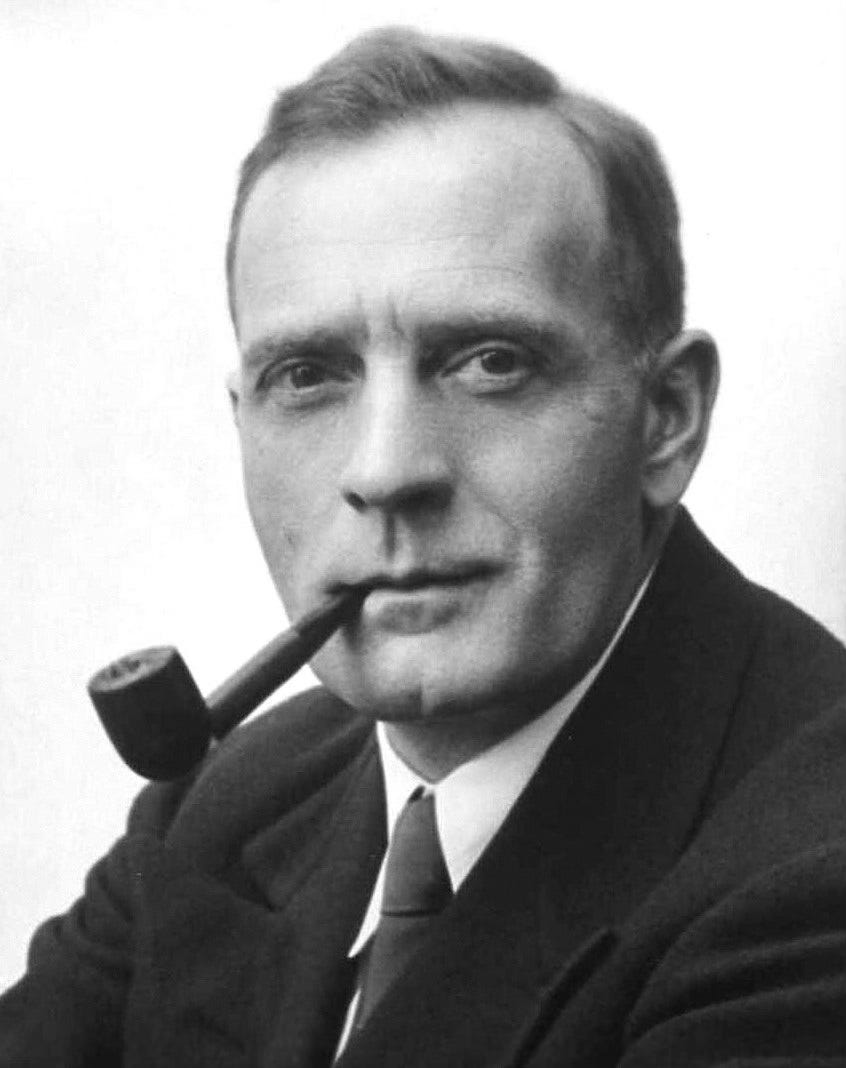
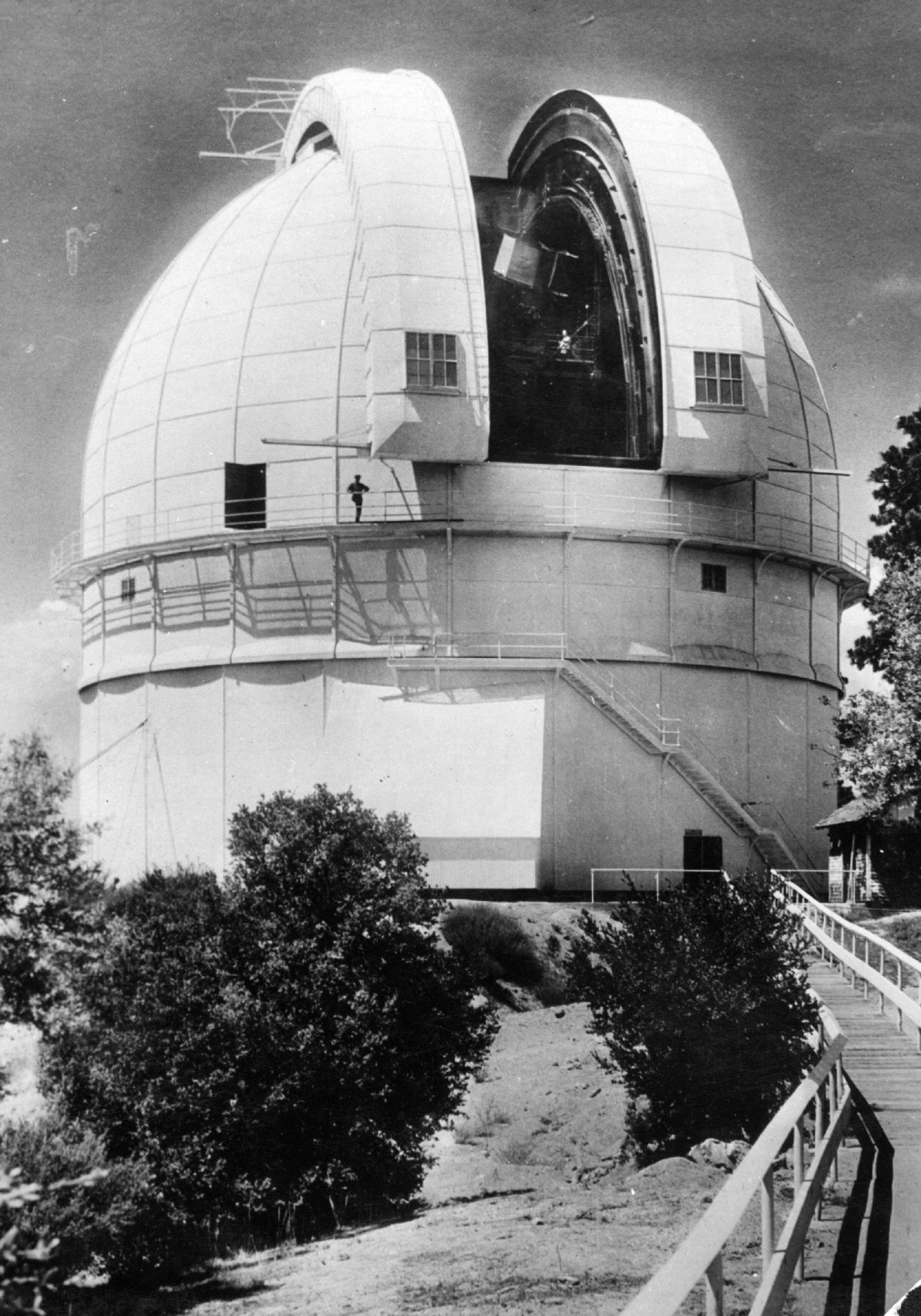
Shortly after World War I, Hubble received the opportunity of a lifetime. George Ellery Hale, the driving force behind America’s great observatories, offered him a staff position at the Mount Wilson Observatory. Hale had pioneered the development of massive telescopes and was responsible for the construction of the 100-inch Hooker Telescope, then the largest in the world. He had also discovered magnetic fields in sunspots. Hubble arrived just as the Hooker Telescope came online, placing in his hands the most powerful astronomical instrument of the age.
He put it to extraordinary use. Building on the work of Henrietta Swan Leavitt, Hubble employed a method for measuring cosmic distances using Cepheid variable stars. By comparing the apparent brightness of these stars with their known intrinsic luminosity (known thanks to Leavitt), he could calculate their distance from Earth. Applying this technique, Hubble determined that the Andromeda Nebula and the Triangulum Nebula lay far beyond the boundaries of the Milky Way. They were not clouds within our galaxy, as many believed, but entire galaxies in their own right.
The conclusion rocked the scientific world and captured public attention. The New York Times reported on Hubble’s findings. Established astronomy had long held that the Milky Way constituted the full extent of the universe. Prominent astronomers, including Harlow Shapley, director of Harvard’s observatory and the scientist who had correctly identified the Sun’s position within the Milky Way, initially dismissed Hubble’s claims. Yet when Hubble presented his evidence to the American Astronomical Society in 1925, the data proved decisive. Shapley reconsidered and publicly acknowledged that Hubble was correct, urging him to continue his work. It was an act of intellectual honesty for which Shapley deserves lasting credit—science at its best.
But Hubble was not finished. Identifying galaxies beyond the Milky Way did more than add new objects to the cosmic inventory. It expanded the conceptual space in which astronomy operated. If the Milky Way was not the limit, then the universe was vastly larger than previously imagined. The question now became one of structure and behavior. How were these other galaxies arranged? Were they fixed in place, or were they moving? If they were moving, how?
Hubble turned again to the Hooker Telescope, this time not simply to locate distant galaxies, but to measure them with precision. Distance alone, however, could not answer these questions. To understand the universe at scale, Hubble needed to know not only where galaxies were, but what they were doing. He suspected the answer lay not in their position, but in their light.
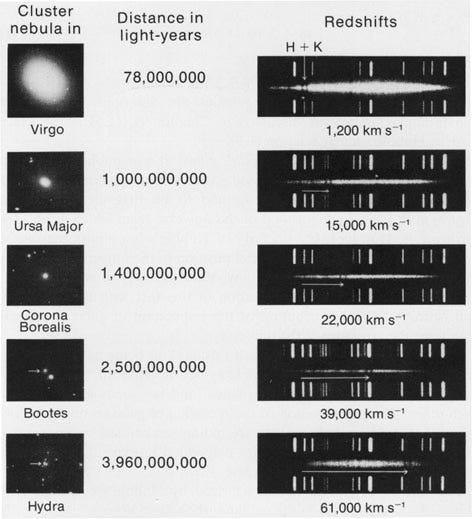
At Mount Wilson, astronomers had begun pairing telescopes with spectrographs, instruments that separate light into its component wavelengths. When Hubble examined the spectra of distant galaxies, a consistent pattern emerged. Their light was shifted toward the red end of the spectrum. This phenomenon is known as redshift.
Redshift occurs when light moves away from an observer. As the light source recedes, the wavelengths of its light are stretched, shifting them toward longer, redder wavelengths. A familiar analogy is the Doppler effect in sound. As a siren passes and moves away, its pitch drops. In light, the effect is subtler but can be measured with great precision using spectrographs.
The first astronomer to detect redshift in distant nebulae was Vesto Slipher, working several years earlier at Lowell Observatory. Slipher showed that many nebulae exhibited substantial redshifts, indicating that they were moving away from Earth at remarkable speeds. His measurements were careful and accurate, but without reliable distance estimates, their broader significance remained unclear.
Hubble provided the missing context. By combining Slipher’s spectral data with his own distance measurements, he uncovered a striking relationship. The farther away a galaxy was, the greater its redshift appeared to be. Distance and recession were linked. This relationship, now known as Hubble’s Law, demonstrated that the universe is not static, but expanding. Space itself is stretching, carrying galaxies away from one another in every direction, and at accelerating speeds.
The implications were profound. Earth was no longer situated within a vast but bounded cosmic system centered on the Milky Way. Instead, humanity occupied a small position within a universe of staggering scale and dynamic motion. Hubble’s work laid the observational foundation for modern cosmology and pointed directly toward the idea that the universe had a beginning, eventually described in the Big Bang.
Yet Hubble’s legacy is not merely cosmological. His discoveries showed that careful measurement and fidelity to evidence could reveal realities far larger than intuition or tradition allowed. The universe grew immeasurably larger. So too did the reach of the human mind that learned how to see it.
Paul Volcker (1927-2019)
Paul Volcker was born in Cape May, New Jersey, but grew up in Teaneck. He learned the importance of public service early. His father, Paul Volcker Sr., served for twenty years as Teaneck’s first appointed municipal manager, a role akin to a city’s chief executive. Volcker watched as his father improved municipal services and stabilized the town’s finances. Public service, disciplined by professionalism, yielded results. Paul Jr. never forgot.
He graduated with honors from Princeton University, earning an undergraduate degree in public affairs. Even as a young man, the challenges of national finance weighed on him. His senior thesis, titled “The Problems of Federal Reserve Policy Since World War II,” wrestled directly with the structure and limits of postwar monetary policy and presaged his later service. As an undergraduate, he was already concerned that “a swollen money supply presented a grave inflationary threat to the economy.” He spent a summer as a research assistant at the Federal Reserve Bank of New York, then studied economics at Harvard, where he earned a master’s degree. He later attended the London School of Economics with the intention of pursuing a doctorate but withdrew in 1952 to join the staff of the Federal Reserve Bank of New York as a full-time economist. He was twenty-five years old.
Over the next seventeen years, Volcker rotated between positions in the public and private sectors, steadily gaining seniority. By his forties, he was a leading executive at Chase Manhattan Bank, responsible for planning the bank’s financial investments and overseeing its economics department. He had also served in the Treasury Department, rising as high as Deputy Undersecretary for Monetary Affairs. By then, Volcker was an institution in high finance, respected not only in Manhattan, but also in Washington.
He stepped onto an even higher plane in 1969, when Richard Nixon asked him to return to the Treasury Department. At the time, Nixon was contemplating a decision of historic consequence: removing the dollar from the gold standard. Before 1971, the dollar remained anchored to gold. Under the Bretton Woods system, foreign governments could exchange dollars for gold at fixed prices. Over time, however, the United States spent more on war, social programs, and global commitments than it could credibly redeem in gold. The system grew strained, then implausible, and finally untenable. Everyone knew it would not work. It also constrained monetary and economic flexibility.
Volcker, serving again as Deputy Undersecretary of the Treasury for Monetary Affairs, understood that the arrangement could no longer hold. As part of the Nixon administration, he helped close the gold exchange window and, in 1971, guided the transition away from a metal-backed currency toward a world in which money would “float.” Dollars could no longer be exchanged for gold. Their value would instead be measured against other currencies. The dollar became more flexible, able to expand and contract with economic conditions, but also more exposed. Stability would no longer be enforced by a fixed price, but by the result of policy choices. At the same time, the shift acknowledged an emerging reality: the dollar had become the central currency of global trade and finance, and it operated on a far larger scale than gold allowed.
The change solved an immediate crisis, but it did not resolve the deeper problem of discipline. By freeing the dollar from gold, the United States gained room to maneuver but also removed a long-standing constraint that had quietly imposed limits. In the years that followed, economic shocks and policy errors tested whether that freedom could be governed without distortion.
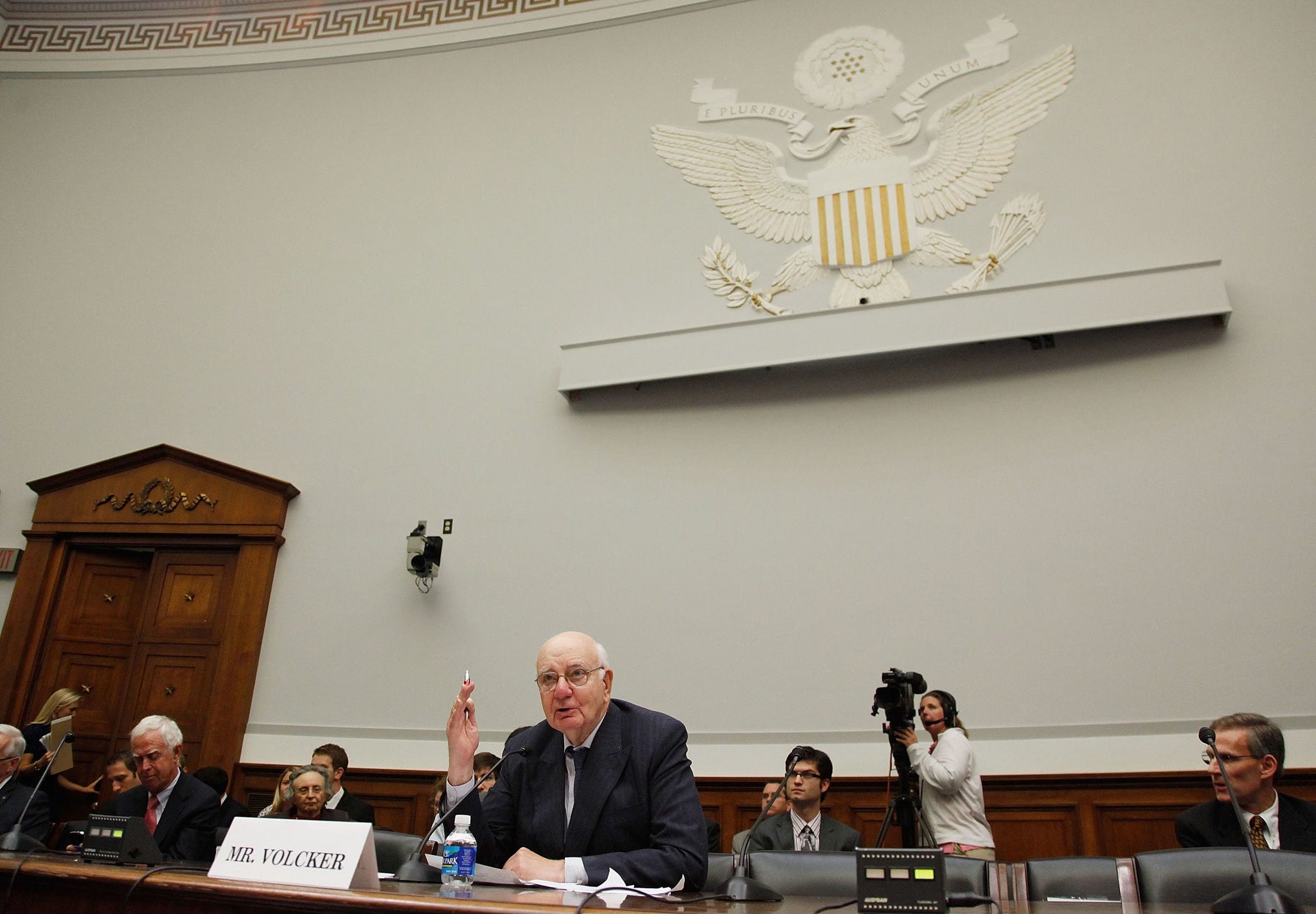
In 1974, after Nixon resigned, Volcker left executive service and returned once again to the Federal Reserve Bank of New York, this time as its president. It was a remarkable ascent in just over twenty-two years. Meanwhile, inflation emerged as the defining economic challenge of the era. By the late 1970s, it had escaped containment. Prices rose year after year, embedding themselves in contracts, wages, and expectations. In 1980, consumer price inflation reached fourteen percent, a record which stands today. Mortgage rates approached eighteen percent, pushing homeownership beyond the reach of ordinary families. The dollar weakened. Savings eroded. Confidence thinned. The economy felt stretched beyond its tolerances.
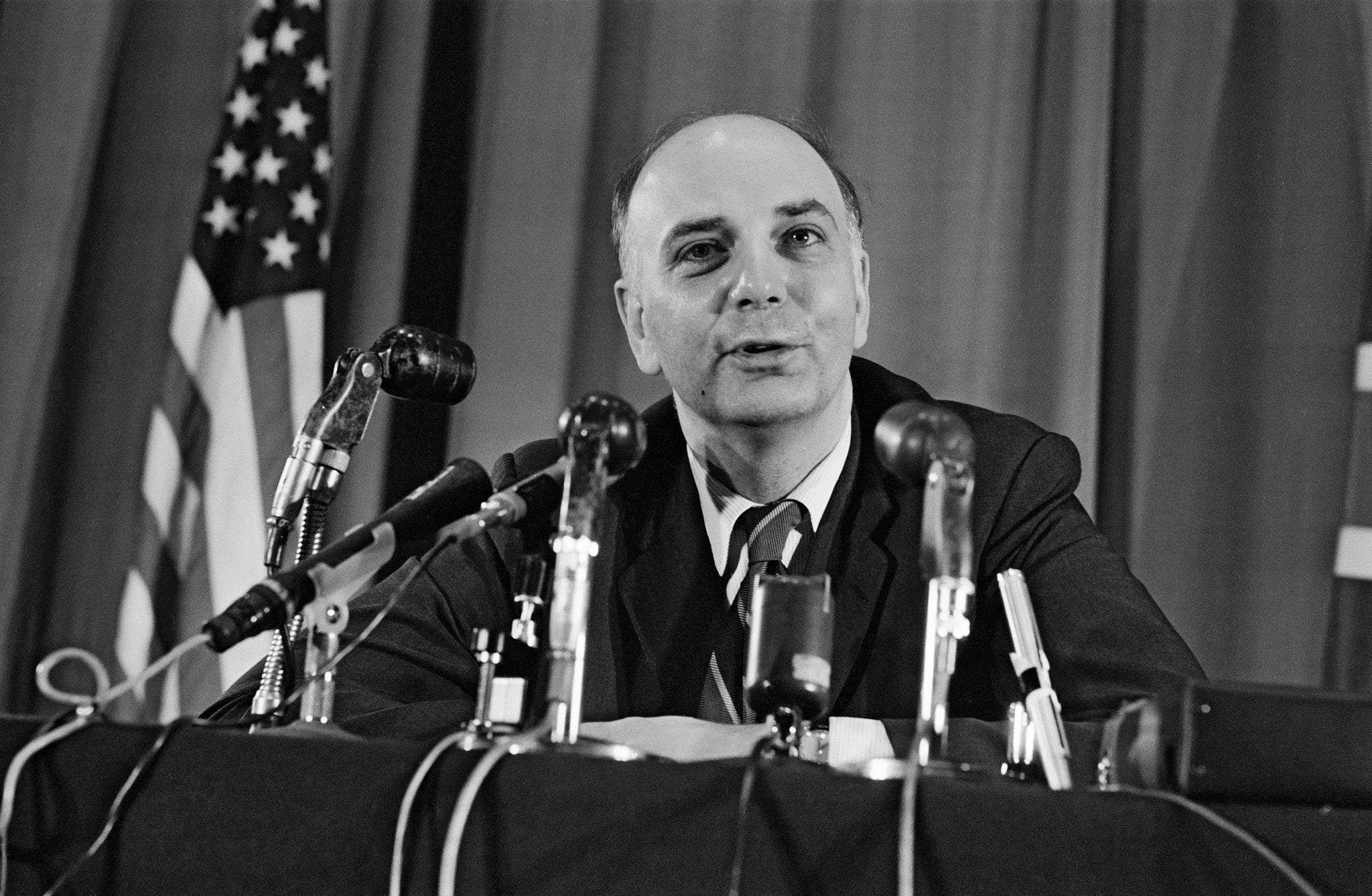
In 1979, Jimmy Carter turned to Volcker, appointing him Chairman of the Federal Reserve, the institution responsible for regulating banks and setting the nation’s key interest rates. Volcker understood that inflation had become too large and too entrenched for gradual correction. It was no longer simply a policy problem. It was structural and psychological. Fixing it would require shock.
Volcker abandoned traditional interest-rate targeting. He announced instead that interest rates would rise as high as necessary to curb the excess money supply and break inflation’s hold. The message was blunt and the scale unprecedented. He had been warning of this danger since his college years. Now he acted. The federal funds rate surged to twenty percent. The economy contracted sharply. Unemployment rose to ten percent. Volcker became deeply unpopular. Farmers, reliant on credit and thus sensitive to interest rates, drove tractors around the Federal Reserve. Home builders, also reliant on credit, mailed 2x4s to Washington. Criticism mounted from Congress and the press. But Volcker held firm.
And the policy worked. Inflation collapsed, falling below four percent by 1983. The recession ended. Growth resumed on sounder footing. The dollar stabilized as markets adjusted to a new, more sustainable reality. Volcker did not promise ease. He promised honesty. And in choosing discipline, he showed that a nation untethered from gold could still work.
With gratitude, and love—