Seeing without Permission

Clarence Thomas and Philo T. Farnsworth
History is not only moved by those established in power. It is also bent by those who learn to see clearly long before anyone grants them the authority to be heard. Clarence Thomas and Philo T. Farnsworth share a quieter virtue. They trusted their own sight over that of the surrounding world.
Farnsworth was a farm boy who imagined electrons moving in lines. Long before corporations and laboratories took notice, he solved a problem others thought impossible. Clarence Thomas’s journey followed a different terrain but demanded the same discipline of vision. Raised in poverty, formed by faith, and sharpened by experience, he arrived at the law convinced that it must be read honestly, not ornamented by fashion or fear.
Together, Thomas and Farnsworth remind us that progress is not always loud, nor consensus-driven. Sometimes it comes from individuals willing to stand apart, and to see without permission.
Clarence Thomas (1948--)
That Clarence Thomas ever rose to positions of national authority, much less Yale Law School, and high office in the federal government, and ultimately the Supreme Court, borders on the improbable. He was born in a wooden shack without plumbing in Pin Point, Georgia, speaking Gullah, the creole language of descendants of the enslaved, as his first tongue. His father abandoned the family when Clarence was three. His mother, Leola, left her children in the care of an aunt so she could work as a maid in Savannah, seeing them only on weekends. When that aunt’s house burned down in 1955, the family scattered again. With nowhere else to go, Leola brought her children to live with her father, Myers Anderson.
Myers was a successful businessman, and in his home Clarence encountered stability for the first time, including indoor plumbing, regular meals, order. But it was not a gentle household. Myers was a rigid disciplinarian, a severe Catholic, and a man who believed that formation required pressure. He ruled by routine, labor, and punishment. Yet he also gave Clarence something rarer: an austere but durable faith, a belief in work as dignity, self-reliance as virtue, and the conviction that human rights come from God, not from governments or courts. Slowly, Clarence found his footing. He attended Catholic boarding school, then Conception Seminary College in Missouri, intending at first to become a priest.
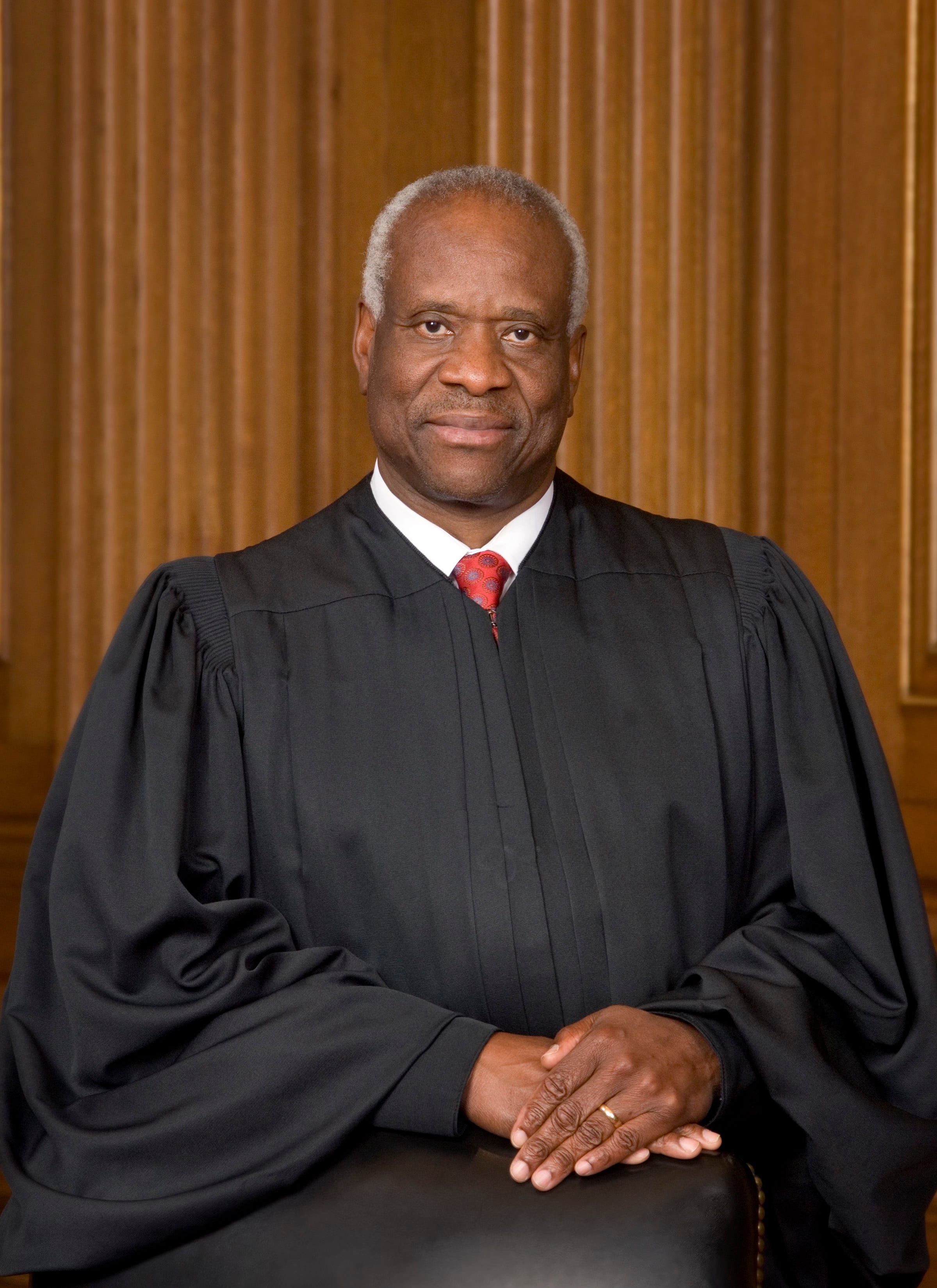
That vocation collapsed after the assassination of Martin Luther King Jr., when Thomas heard fellow seminarians speak of King with contempt. He left, disillusioned not with faith, but with institutions that preached moral authority yet were populated by casual racists. He transferred to the College of the Holy Cross on a full scholarship, one of its first Black students. There, he worked relentlessly and searched for his place in the world. He flirted with Black Power and separatist movements, attended protests, marched against the war. But when those movements turned violent and dogmatic, he recoiled again. He was still looking for a way to live honestly within power but without being consumed by it.
A professor suggested law school. Thomas applied to Yale and was accepted. He thrived academically yet found the world beyond graduation colder than expected. Private employers questioned whether his success was earned or assigned, whether his grades reflected merit or racial preference born of affirmative action. He concluded that he bore an invisible asterisk, that even his demonstrable legal excellence required permission he would never be fully granted. So, he turned to public service, first as an assistant attorney general in Missouri under John Danforth, then as Danforth’s legislative assistant in Washington. He learned the machinery of government from the inside, its ambitions and its evasions.
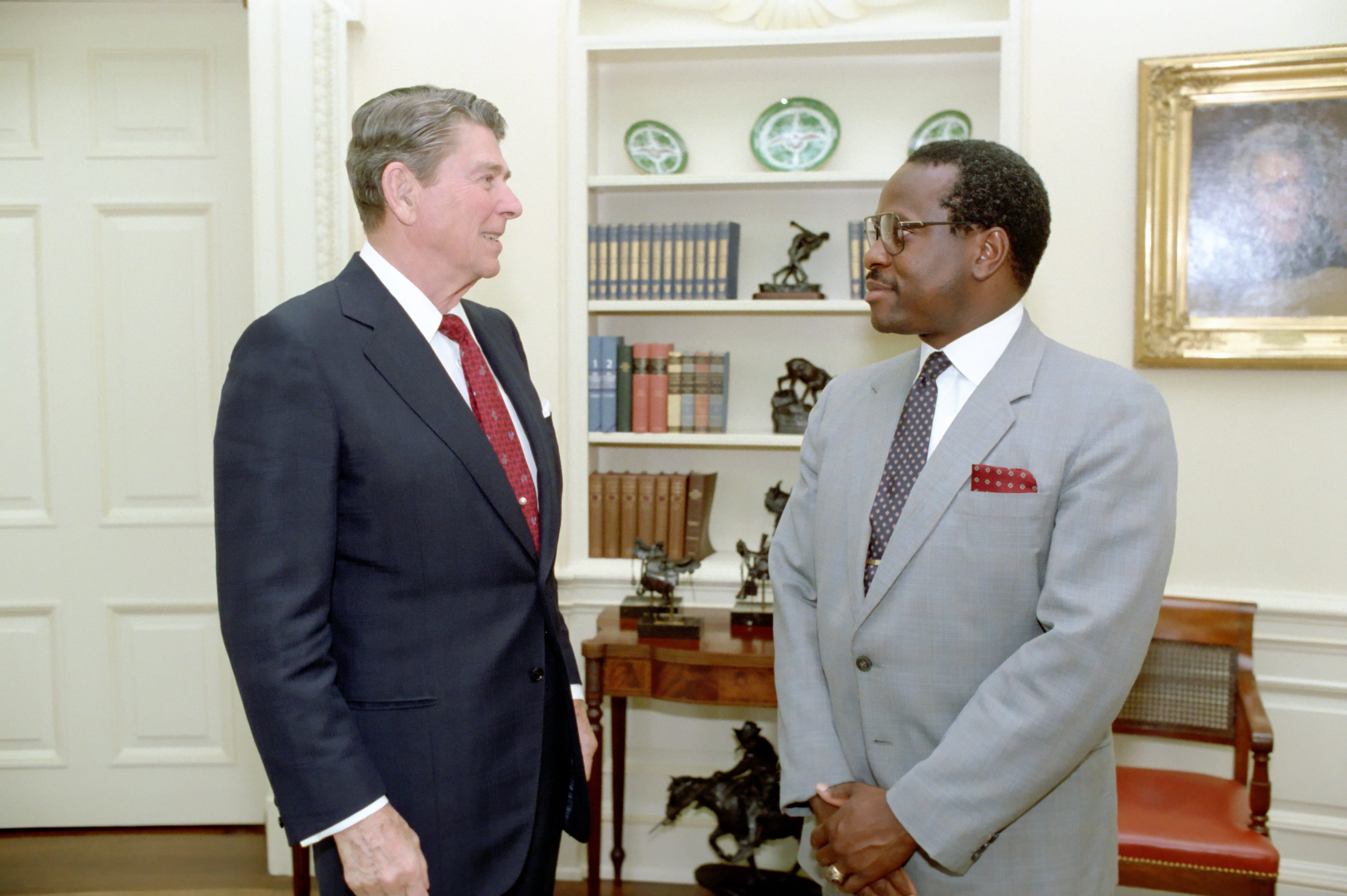
The Reagan Administration soon noticed him. He was appointed Assistant Secretary of Education for Civil Rights, then Chairman of the Equal Employment Opportunity Commission, where he served for eight years enforcing the Civil Rights Act of 1964. He professionalized the agency, increased efficiency, and quietly changed its culture: fewer lawsuits, higher settlements, a sharper focus on meritorious claims. He believed law should be firm but restrained, principled but limited.
After a brief tenure on the D.C. Circuit Court of Appeals, President George H. W. Bush nominated Thomas to the Supreme Court. The confirmation battle was brutal and remains contested. But what followed is not. Thomas emerged as one of the most consequential jurists of his generation, and his jurisprudence echoes today.
He approaches the Constitution as something discovered, not invented. His originalism is not nostalgia but fidelity. It is the belief that constitutional meaning was fixed at adoption and that judges are bound to recover, not revise, that meaning. He treats text and history as anchors against doctrinal drift, insisting that legitimacy flows from consent given by the people, not from judicial ingenuity or morality. For Thomas, the past is not a dead weight on justice but its grammar. Without it, law dissolves into preference.
From that foundation grows his skepticism of federal and judicial power. In Lopez and Morrison he questioned the modern sprawl of the Commerce Clause and the assumption that national authority may expand simply because it has done so before. In NFIB v. Sebelius, he rejected the conversion of a penalty into a tax to save a statute by verbal maneuver. In West Virginia v. EPA, his long-standing warning about administrative overreach came into focus, challenging delegations of power that float free of constitutional text. Again and again, his opinions return to the same inquiry: where did this power come from, and who granted it?
His strict construction is clearest when the Court is tempted to rule by moral momentum rather than legal authority. In Dobbs, Thomas insisted that constitutional rights must rest on text and history, not judicial intuition. In Heller and McDonald, he treated the Second Amendment not as a suggestion shaped by modern sentiment, but as binding law. Across cases, his method is consistent: read carefully, rule narrowly, and leave unfinished questions to the people themselves.
Taken together, Thomas’s jurisprudence forms a demanding ethic of restraint. It is not passive. It is severe. It asks judges to surrender the satisfactions of authorship and accept the harder discipline of stewardship. And here the irony sharpens. Thomas rose to power without permission, without pedigree, comfort, or institutional grace. Yet from the highest seat of authority, he has devoted his career to asking whether courts themselves have been exercising power they were never granted. For a man whose life defied expectations, his jurisprudence is a reversal worthy of notice: authority earned without permission, used to insist that power itself must never assume it.
Philo T. Farnsworth (1907-1971)
Philo T. Farnsworth was born far from laboratories, universities, and established research institutions that credential “reliable” science. Instead, he entered the world in 1906 in a small log cabin in Beaver, Utah, and grew up on hardscrabble farms in Utah and Idaho, where electricity arrived late and resources were scarce. His parents were devout, practical people who valued work over abstraction. Yet it was in those fields, while plowing furrows and watching rows align and converge, that Farnsworth first imagined a future no one had yet permitted him to see.
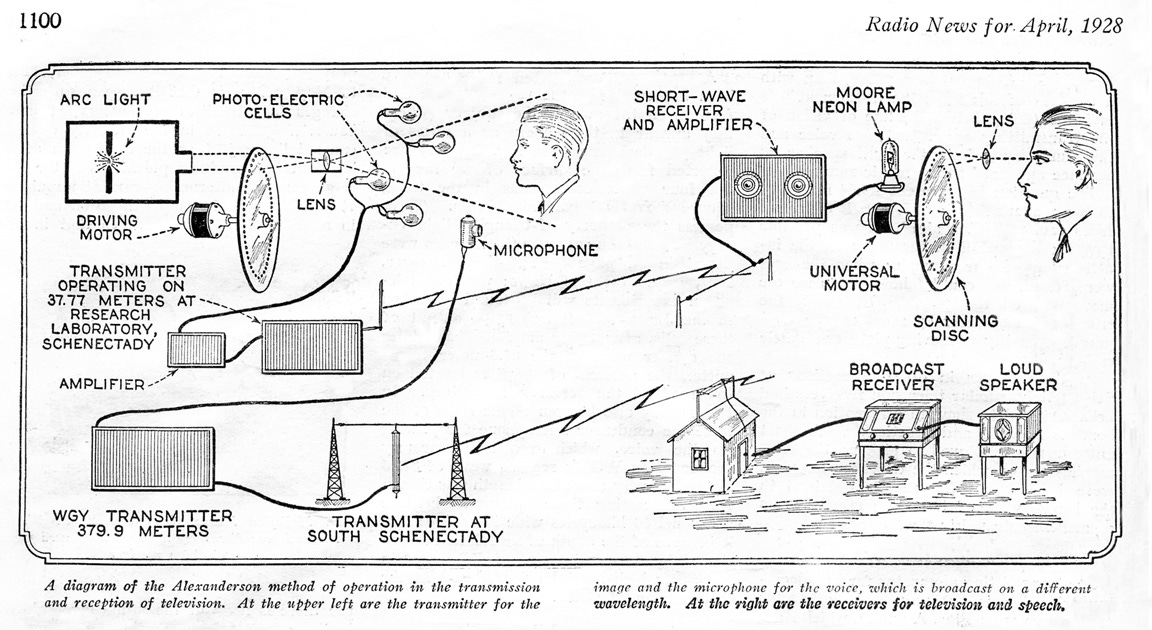
As a teenager, Farnsworth became fascinated by the idea of transmitting images electronically, through the air. At the time, most engineers believed television, if it were possible at all, would require mechanical systems such as rotating disks, mirrors, gears. The idea of electronic or radio wave transmission seemed impossible.
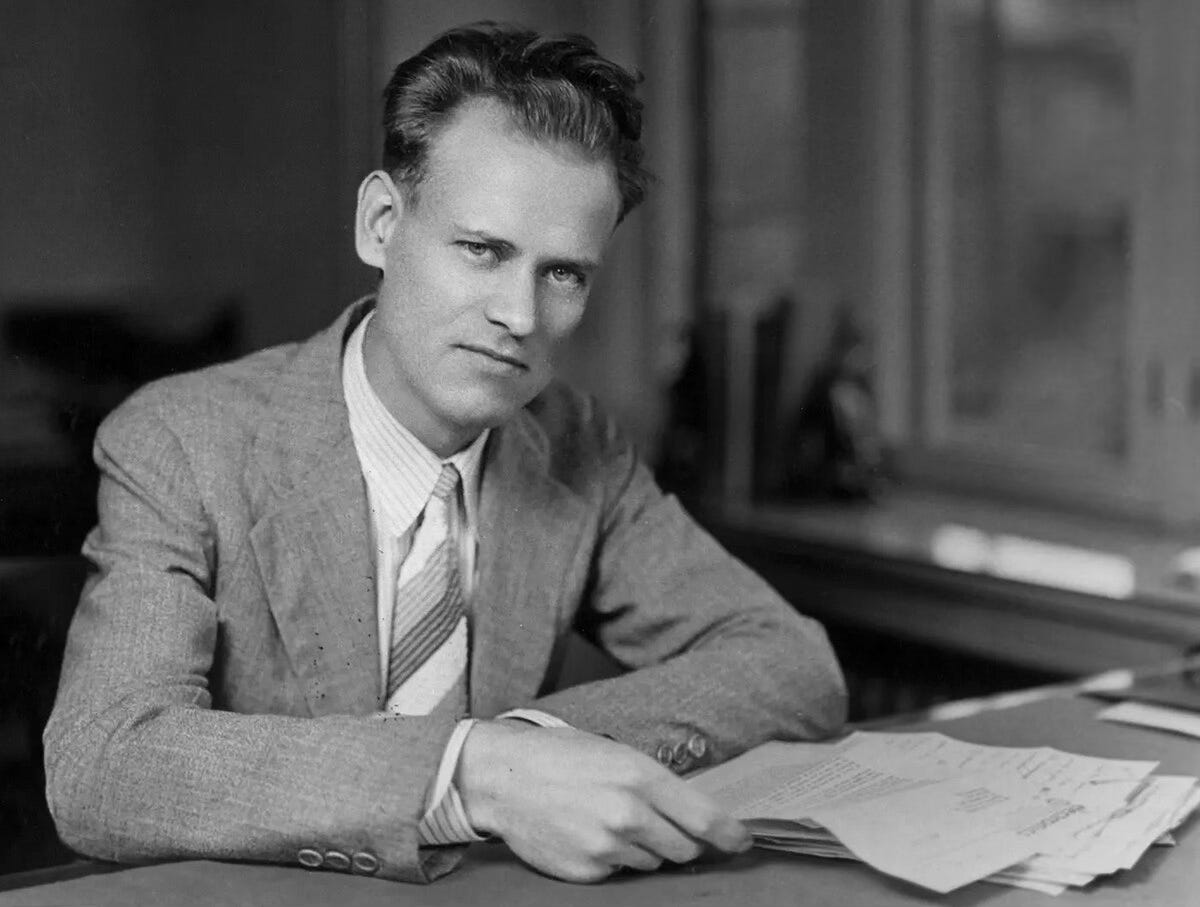
But Farnsworth reasoned that if images could be broken down into lines and converted into electrical signals, they could be transmitted and reconstructed without moving parts. At fourteen, he sketched a complete electronic television system for his high school science teacher, complete with scanning lines and image dissectors. No one asked him to do this. No institution sanctioned it. But the idea was already finished in his mind. It was already the complete television system in utero.
Farnsworth carried his vision forward through persistence and improvisation. He studied briefly at Brigham Young University without graduating (he never graduated from anything), then moved to California with his wife, Elma “Pem” Farnsworth, who would become his closest collaborator and advocate. In borrowed lab space, using salvaged parts, Farnsworth built the first fully electronic television system. In 1927, at the age of twenty-one, he successfully transmitted the first electronic image—a simple line—proving that his theory worked.
What followed was not celebration, but resistance and hostility. Farnsworth’s breakthrough threatened entrenched corporate interests, particularly the Radio Corporation of America, which had invested heavily in mechanical television and employed armies of engineers, lawyers, and publicists. RCA also had an established interest in radio, which it did not want disrupted by a brand new and potentially more alluring technology. Radio was still in its infancy as well and just beginning to show a profit as a viable technology itself.
RCA disputed Farnsworth’s claims, attempted to absorb his work, and dragged him into years of litigation. Farnsworth, armed with notebooks, witness testimony, and quiet resolve, prevailed legally. But victory came at great personal cost. His finances were drained, his health deteriorated, and the commercial rewards of his invention flowed largely to corporations better positioned to exploit it.
Yet Farnsworth never altered his fundamental approach to science and invention. He did not seek permission. He did not argue that authority should belong to those with size, prestige, or power. He believed discovery should speak for itself. If something was true, if it worked, then it belonged in the world, regardless of who first spoke it aloud. His insistence was not ideological but practical. Reality, once revealed, does not require consensus.
The irony is that Farnsworth’s invention would reshape public life in precisely the ways he himself distrusted. Television became a tool of mass persuasion, spectacle, and centralized influence. Farnsworth grew uneasy with what his creation enabled, turning away from the industry he had made possible. He turned his attention later to nuclear fusion research, again pursuing foundational problems with little institutional backing. Once more, he worked ahead of approval, convinced that progress begins not with authorization but with insight.
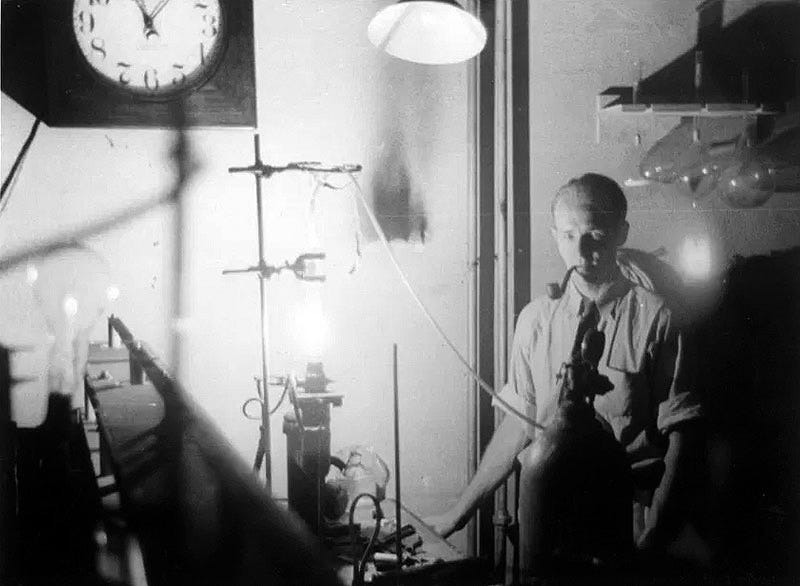
Farnsworth’s life traces a quiet but demanding pattern. He rose without pedigree. He advanced without invitation. At every stage, he confronted systems that assumed authority flowed downward, yet his work inverted that assumption. He demonstrated that vision precedes validation, that discovery outruns permission, and that legitimacy can arise from fidelity to truth rather than compliance with power.
With gratitude, and love