

Public Mind, Public Memory

Walter Lippmann (1889-1974)
Walter was born of the German Jewish elite in the late 19th Century. His grandfather was a successful clothing manufacturer and Walter’s father combined his considerable inheritance with his wife’s real-estate fortune to construct an even more immense fortune. Walter’s youth was cultured, secure, and cosmopolitan. He grew up in a home that valued European thought and American opportunity. Walter’s inheritance was a dual legacy. But he also grew up with a certain distance from all around him. He was never close to his parents, and he maintained a cool detachment from his nation as well.
He entered Harvard at sixteen. There he studied under William James and George Santayana. He absorbed the philosophy known as pragmatism. He also learned that ideas have consequences. He graduated in three years. His education was broad. He read widely in psychology, philosophy, and politics. He left Harvard not as a partisan but as a thinker.
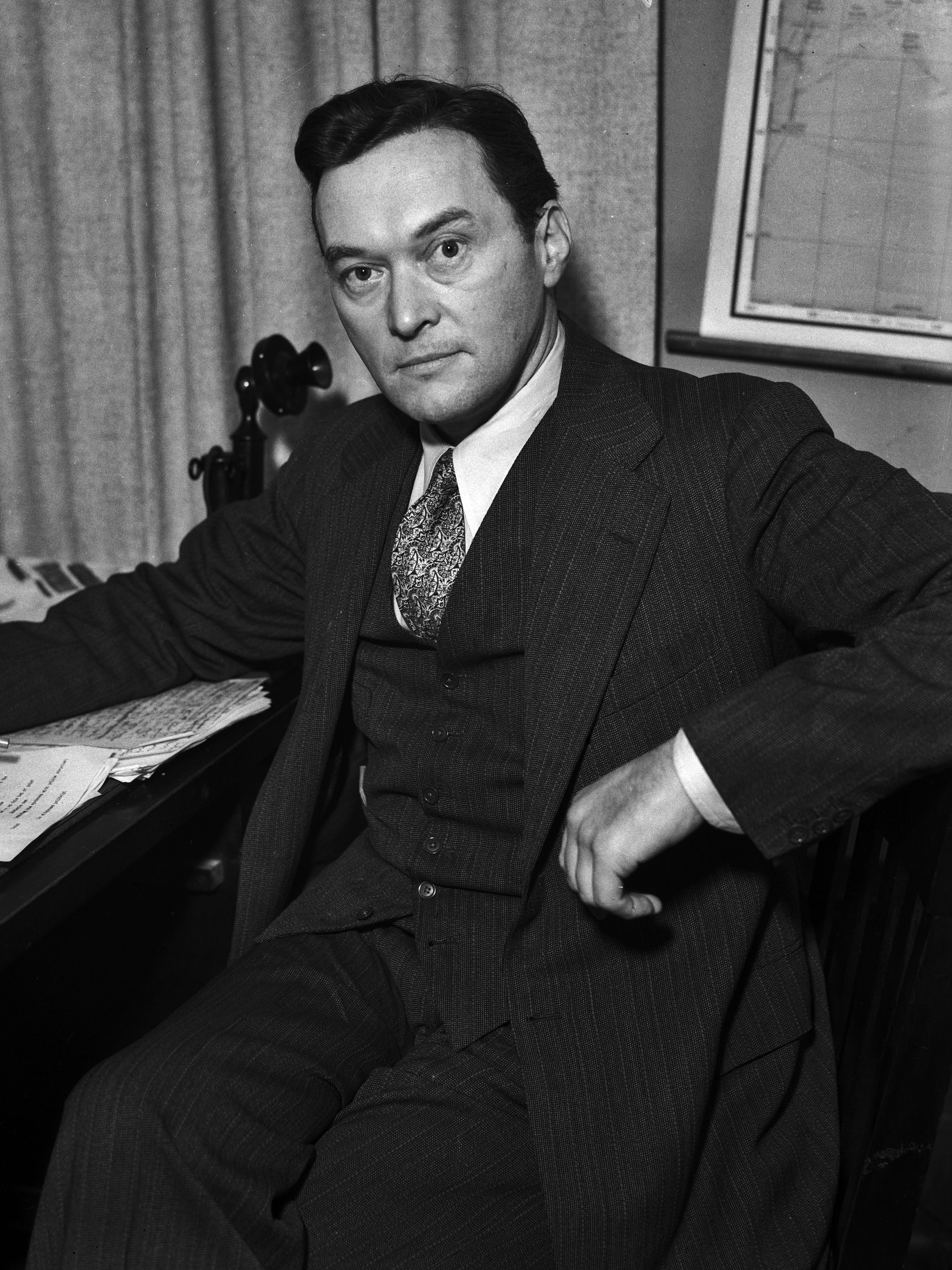
In 1914 he helped found The New Republic, still in circulation. The magazine sought to wed progressive reform to intellectual rigor, with American style. Lippmann was still in his twenties, but he already displayed a capacity to synthesize large political movements into cool, disciplined prose. His writings garnered attention. During the First World War he entered government service and assisted in drafting portions of Woodrow Wilson’s Fourteen Points. He believed at that time that liberal internationalism could stabilize the world in the grim and dreary aftermath of the Great War. He was not naive about power, but he believed in ordered diplomacy. Perhaps the thought that powered the industry of war could also turn the machines of destruction to reconstruction.
But the war and its aftermath altered him. In 1922 he published Public Opinion. It was not merely a critique of journalism. It was a comprehensive assessment of modern democracy. Lippmann argued that citizens do not encounter the world directly. They respond to representations of the world, to what he called the pictures in their heads. Modern life was too complex for ordinary perception. The press mediated reality. So did propaganda. So did habit. Democracy, he concluded, required more than enthusiasm. It required structures of knowledge and responsibility. People used what he called stereotypes, a term he invented.
He followed this with The Phantom Public in 1925. There he advanced a harder claim. The public, he argued, was not a constant governing presence but an intermittent force in public. affairs. Citizens could not manage every question of policy and expecting them to do so was unrealistic. They could judge results and remove leaders, but they could not administer the details of governance. This view unsettled romantic conceptions of democracy. It also positioned Lippmann as a critic of both populism and technocratic arrogance. But it also pointed to a realistic assessment of American democracy that allowed for democratic accountability.
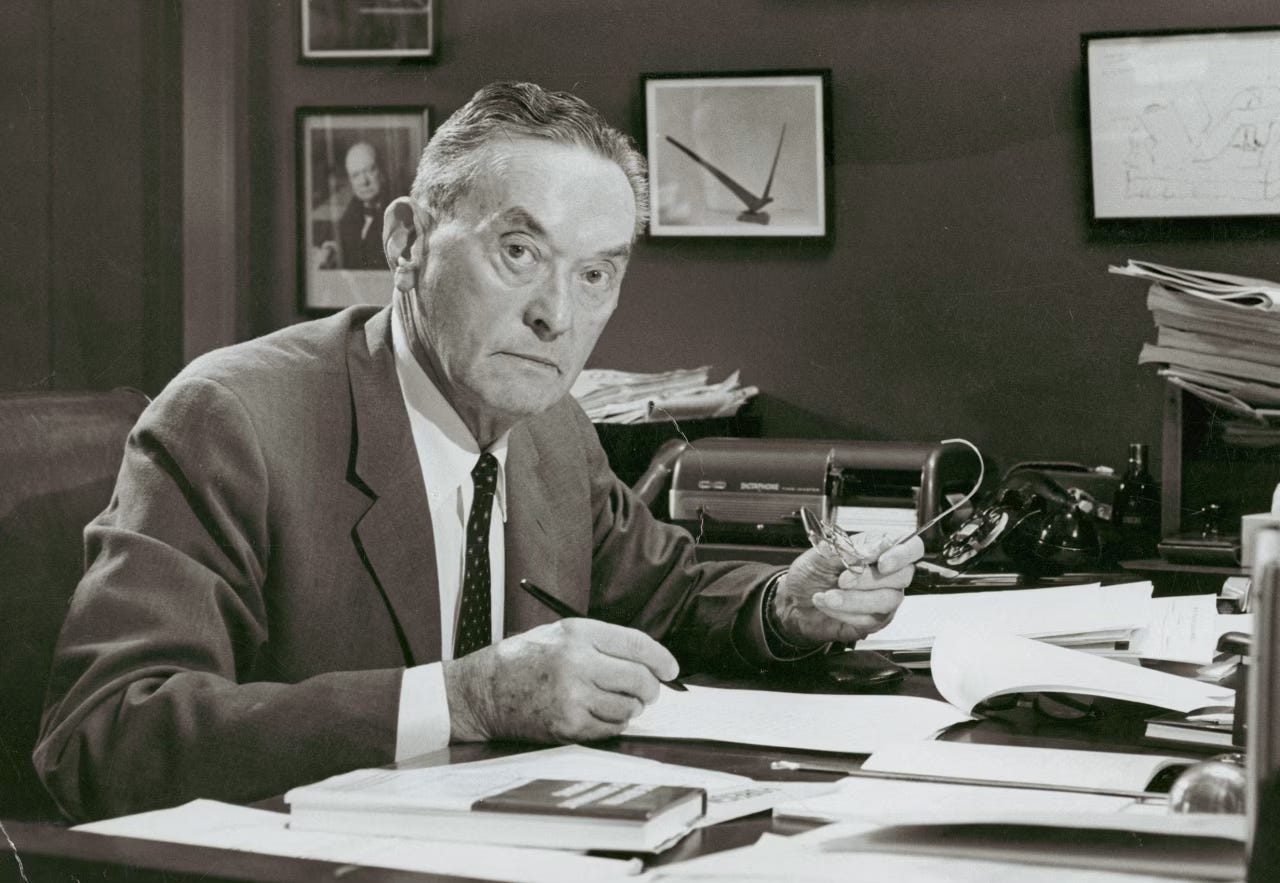
From 1931 to 1967 he wrote the syndicated column “Today and Tomorrow.” It reached hundreds of newspapers and millions of readers. Presidents read him. Franklin Roosevelt engaged him. Later, John Kennedy and Lyndon Johnson did as well. He became an unescapable shaper of American thought. Characteristically, he did not shout his arguments. He reasoned them. During the early Cold War he popularized the term “Cold War” itself in his 1947 book of that title. He opposed reckless containment strategies and warned against military overextension. Yet he was never isolationist. He believed American power must be guided by prudence and by a sober understanding of the limits of American power and will.
Over time his thought evolved. The early progressive who trusted administrative expertise became more cautious about centralized authority. The Wilsonian idealist grew wary of moral crusades abroad. He did not repudiate democracy. He refined his understanding of it. He believed stable institutions, responsible elites, and informed debate were essential to its survival. He distrusted mass hysteria, whether of the left or the right.
He won two Pulitzer Prizes, in 1958 and 1962. He advised statesmen privately but remained formally independent. His prose was spare and analytical. He preferred clarity to flourish. For more than four decades he shaped the language through which Americans discussed foreign policy and governance.
Lippmann’s evolution mirrors the maturation of political thought and self-conception in the American century. He began with confidence in reform and ended with a tempered realism. He saw world war, depression, fascism, nuclear brinkmanship, and ideological conflict. Through it all he insisted that public life required intellectual discipline. He did not flatter the electorate. He respected it enough to tell it the truth but maintained optimism in steady improvement.
His contribution to the nation lies in a habit of mind. He forced Americans to confront the limits of perception and the dangers of manipulation. He maintained that democracy must be sustained by knowledge, not merely sentiment.
John Hope Franklin (1915-2009)
John Hope Franklin was born in 1915 in Rentiesville, Oklahoma, an all-Black town founded in the hopeful but fragile years after Reconstruction. His life began in the long shadow of slavery but also in the presence of aspiration. His father, Buck Colbert Franklin, was a lawyer of formidable will. He later represented survivors of the 1921 Tulsa Race Massacre, earning himself the sobriquet “Amazing Buck”. His mother, Mollie Parker Franklin, was a schoolteacher. The household was disciplined, literate, and serious about advancement. They believed education was not ornament but armor. They were also brave.
Franklin came of age in a segregated America. He witnessed, as a child, the effects of racial violence and legal exclusion. Yet he also saw Black self-government, Black enterprise, Black civic life. Seeing both shaped him. There was injustice in the country. There was also hope. It was not simple.
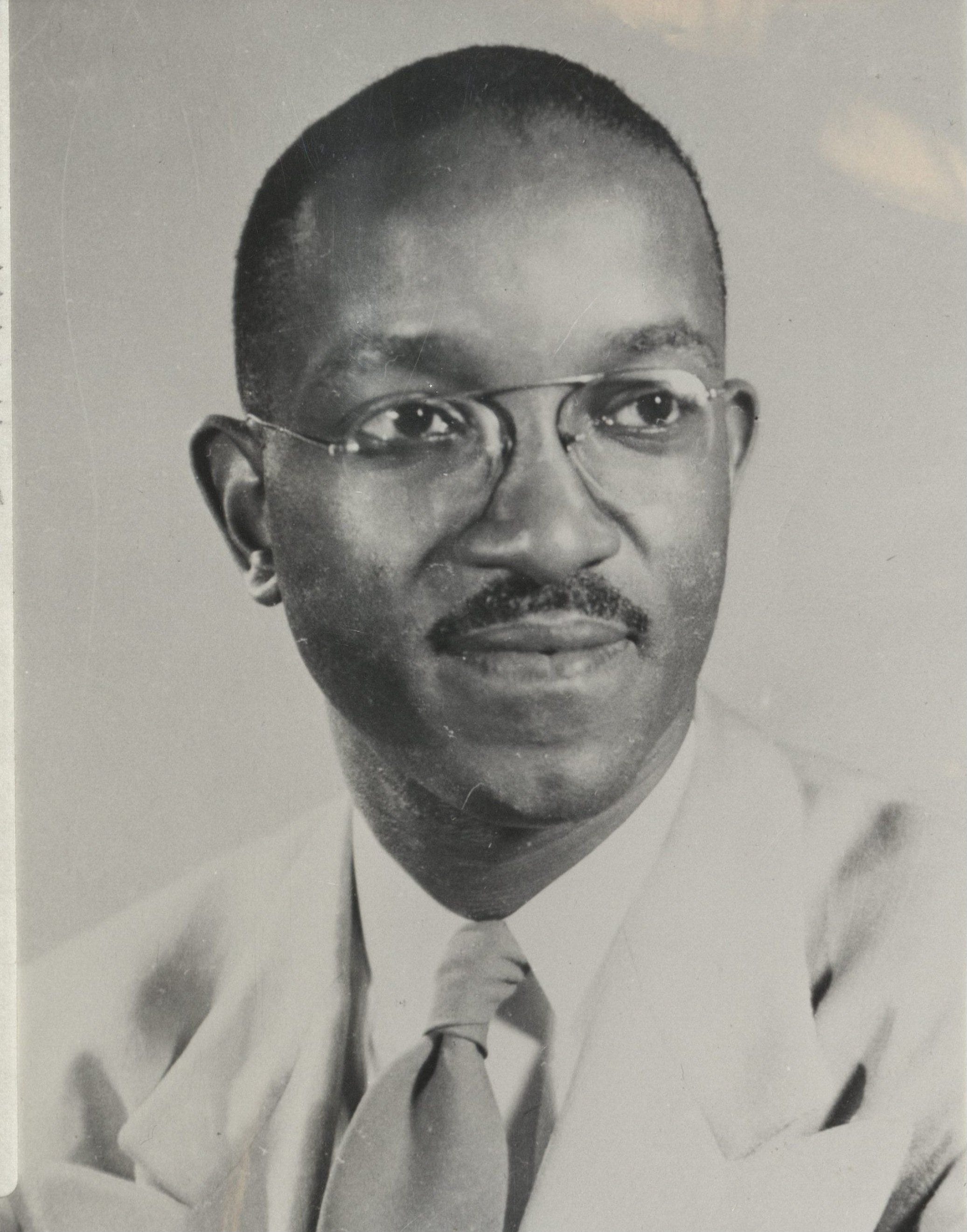
He entered Fisk University and graduated in 1935 with highest honors. Fisk exposed him to a community of scholars who treated Black history as a field of legitimate inquiry. He then enrolled at Harvard University, where he studied under distinguished historians and earned his doctorate in 1941. Even with a Harvard Ph.D., the doors of elite universities remained largely closed to Black scholars. But he pursued serious scholarship nonetheless. Franklin taught at St. Augustine’s College and North Carolina College for Negroes before joining Howard University in 1947.
In that same year he published From Slavery to Freedom: A History of African Americans. The book was expansive in scope and careful in method, and a revelation. It traced the forced migration of Africans to North America, the development of slavery as an economic and legal system, the cultural and religious life of enslaved people, the Civil War, Reconstruction, migration, industrialization, and the modern (and then unfinished) civil rights movement. It refused caricature or simplicity. It documented both oppression and agency. Over time it became the most widely used survey of African American history in the United States and went through multiple revisions across six decades. It remains definitive and foundational.
Franklin did not confine himself to synthesis. In Reconstruction After the Civil War in 1961, he challenged the prevailing interpretation that had portrayed Reconstruction as a tragic mistake imposed by vindictive Northerners and incompetent Black politicians. Drawing on archival sources, he demonstrated the genuine democratic aspirations of Reconstruction governments and the violent resistance that destroyed them. His work contributed to a broader scholarly reevaluation of that era and helped dismantle interpretations rooted in racial prejudice.
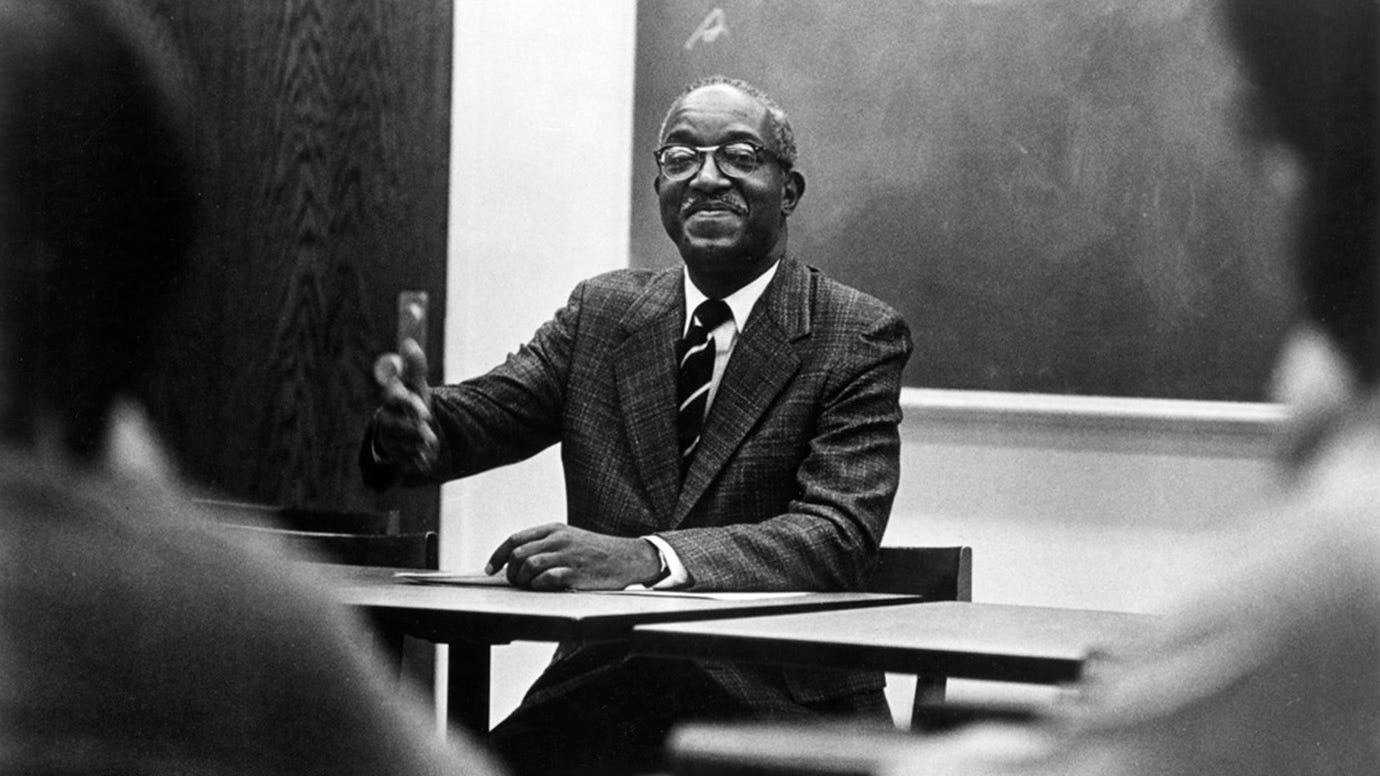
He moved to Brooklyn College in 1956, where he later became chair of the department, becoming the first African American to chair a major history department. He later moved to the University of Chicago in 1964, where he held a distinguished professorship. In 1982 he joined Duke University as James B. Duke Professor of History. His presence at these institutions marked a gradual but real opening of the academy. In 1979 he became the first African American president of the American Historical Association, a milestone in a profession that had once excluded him.
Franklin also engaged public life directly. He provided historical research that informed the NAACP Legal Defense Fund’s litigation strategy in Brown v. Board of Education. His scholarship helped demonstrate that segregation was not a benign tradition but a system with malignant historical roots and measurable harm. Decades later he chaired President Bill Clinton’s Advisory Board on Race, seeking to foster candid national dialogue grounded in fact rather than rhetoric.
Despite his stature, he continued to encounter the residue of the world into which he had been born. In 1995, shortly after receiving the Presidential Medal of Freedom, he was mistaken for a coat attendant at a private club event in Washington. He later recounted the episode not to inflame resentment but to illustrate continuity. The historian’s life and the historian’s subject were not separate.
Over the course of his career Franklin received more than one hundred honorary degrees and numerous awards. He wrote and edited works on southern history, legal history, and biography. His autobiography, Mirror to America, reflected on a life that spanned from segregation to the dawn of a new century.
Franklin’s achievement rests not only in the books he wrote but in the discipline he imposed upon the nation’s self-assessment. He demanded that the story of the United States be told in full, with its crimes and its courage. By doing so he strengthened both history and citizenship.
With gratitude, and love—