Held, not Hardened
Why the most fragile things endure

Louis Comfort Tiffany and August Vollmer
Fragile things can endure for ages. Ancient manuscripts, delicate porcelains, finely tuned mechanical clocks can all outlast empires. The Dead Sea Scrolls have endured for more than two thousand years. Chinese porcelain has survived for three millennia. The oldest known mechanical clock has been keeping time since 1386. These endured not because they are strong, but because those closest to them tend them. They choose to repair, preserve, and choose, again and again, to carry them forward because they see the value.
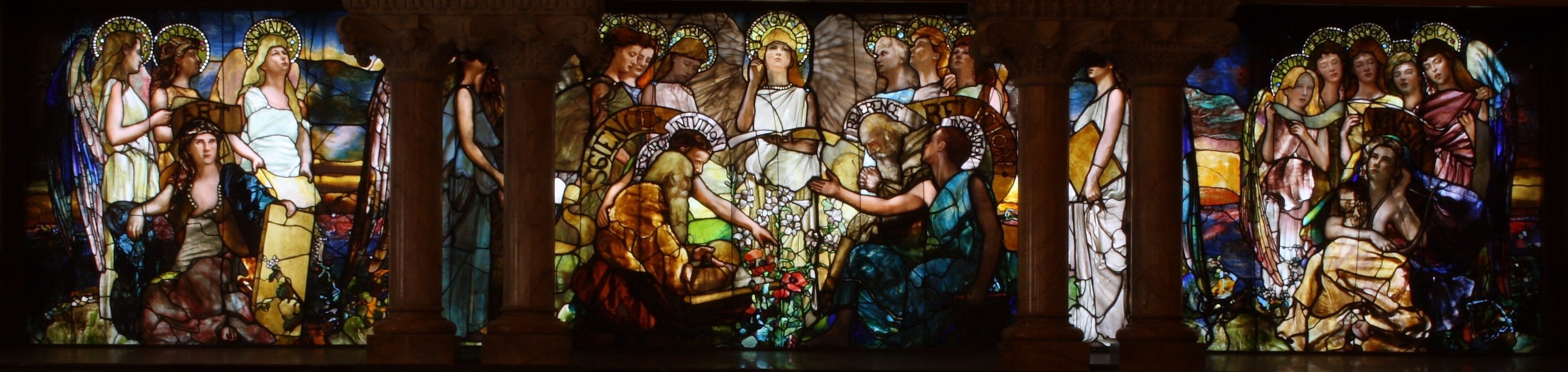
Louis Comfort Tiffany chose to work primarily in glass, the most fragile and most luminous of artistic media. At the height of the Industrial Revolution, when the modern world threatened to turn uniformly sooty and brown, he shaped light into lustrous, placid forms drawn from nature. His windows adorned the new temples of America (churches, museums, homes) with an art that was at once stunning and consoling. The fragility of the medium deceived. The clarity of the achievement all but guaranteed its endurance, because Americans would choose to protect what he had made.
August Vollmer, by contrast, confronted fragility in the streets. A pioneering lawman, he recognized the eternal risk of fracture in American life. Law and order could not be assumed. Though resilient, the republic could break. A disciplined, educated, and modern police force would be necessary to preserve it and to carry it forward. Both men understood the same truth from different directions. Fragility need not mean failure, especially when one builds with care.
Louis Comfort Tiffany
Tiffany was born into times of upheaval. 1848 brought failed revolutions across Europe, the publication of Marx’s Communist Manifesto, and the near doubling of the United States in the wake of the Mexican–American War. The long shadow of the Civil War loomed over his adolescence—thirteen when it began, sixteen when draft riots tore through his native New York City. Bank panics, social dislocation, and a rollicking postwar culture, driven by industrial consolidation and, more portentously, the moral earthquake of abolition, unsettled the inherited certainties of his youth.
Yet the serenity of Tiffany’s stained glass—the most delicate of canvasses—betrays no panic and makes no concession to doubt. Across a convulsive and transformative nineteenth century, he bent light through colored glass with a steady hand and an undaunted faith in his artistic vision.
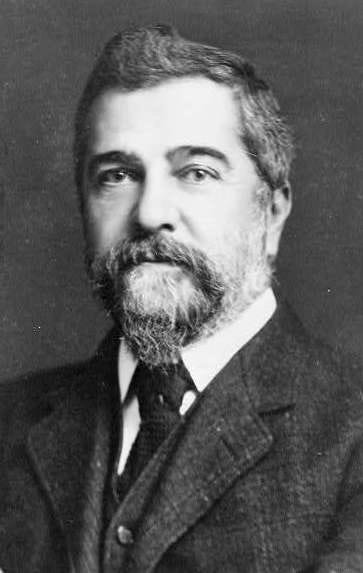
His father, Charles Lewis Tiffany, founded the jeweler Tiffany & Company eleven years before Louis’s birth. Charles proved shrewd amid disorder, purchasing gemstones in Europe during revolutionary turmoil at knockdown prices and selling them at substantial profit in America. That windfall secured Louis a first-rate education, initially at private military academies and then, more fatefully, in art. He studied under painters George Inness and Samuel Colman before enrolling at the National Academy of Design in New York City. Art was his métier. His painting was accomplished, but his temperament inclined him toward synthesis and fusion rather than to canvas alone. He created outside established form.


He soon turned his artistic instincts toward enterprise, founding Louis Comfort Tiffany and Associated American Artists, a hybrid studio and emporium offering paintings, wallpapers, textiles, furniture, and decorative objects. It was a kind of high-end interior design house for the Gilded Age; something new for a new time. It was an early expression of Tiffany’s defining gift: not simply to make beautiful things, but to orchestrate beautiful environments and moods.
It was during this period, in the 1870s and 1880s, that Tiffany saw the light, and how it might be shaped through colored glass. In the mid-1880s he founded the Tiffany Glass Company, and his work in stained glass flowered. His colors were entrancing and electric, yet disciplined; vibrant, yet calm. Churches, museums, and grand homes soon sought his windows, trusting him to mediate between light and meaning in the most public of spaces.


Yet he also worked at smaller and more intimate scales. In the 1890s he began producing the lamps that became his most recognizable creations. Their shades, assembled with copper foil and set in blues, greens, purples, and soft ambers, echoed dragonflies, lilies, and flowing vines. They embodied what came to be known as Art Nouveau, drawing beauty from nature with grace and form. Around this same time, Tiffany returned to his father’s firm as its first design director, bringing the same luminous restraint to jewelry and decorative arts.

Tiffany’s work endures, despite its fragility, because it was never careless. Glass breaks easily, refracting and scattering light at random, even chaotically. Tiffany designed. Every choice bespoke intention, and later generations chose to protect what he had made. In an age overladen with force, speed, and claims of permanence, Tiffany trusted delicacy. His beauty was designed to demand attention, and to reward the care we give it.
August Vollmer (1876-1955)
August Vollmer’s path into policing was almost accidental. A railroad freight car once broke loose on Shattuck Avenue in downtown Berkeley. This was more than a nuisance. It had the makings of a rolling catastrophe. An unassuming German-American transplant from New Orleans took initiative. Thinking quickly, Vollmer leapt aboard the runaway car, applied the brakes, and brought it under control.
He was well suited to the moment. As a young man he had been an excellent swimmer and boxer, and he was a decorated veteran of the Spanish-American War. At just twenty-eight, still in the prime of youth, Vollmer became a local hero. The acclaim swept him into elected office as town marshal in 1905, and again in 1907.
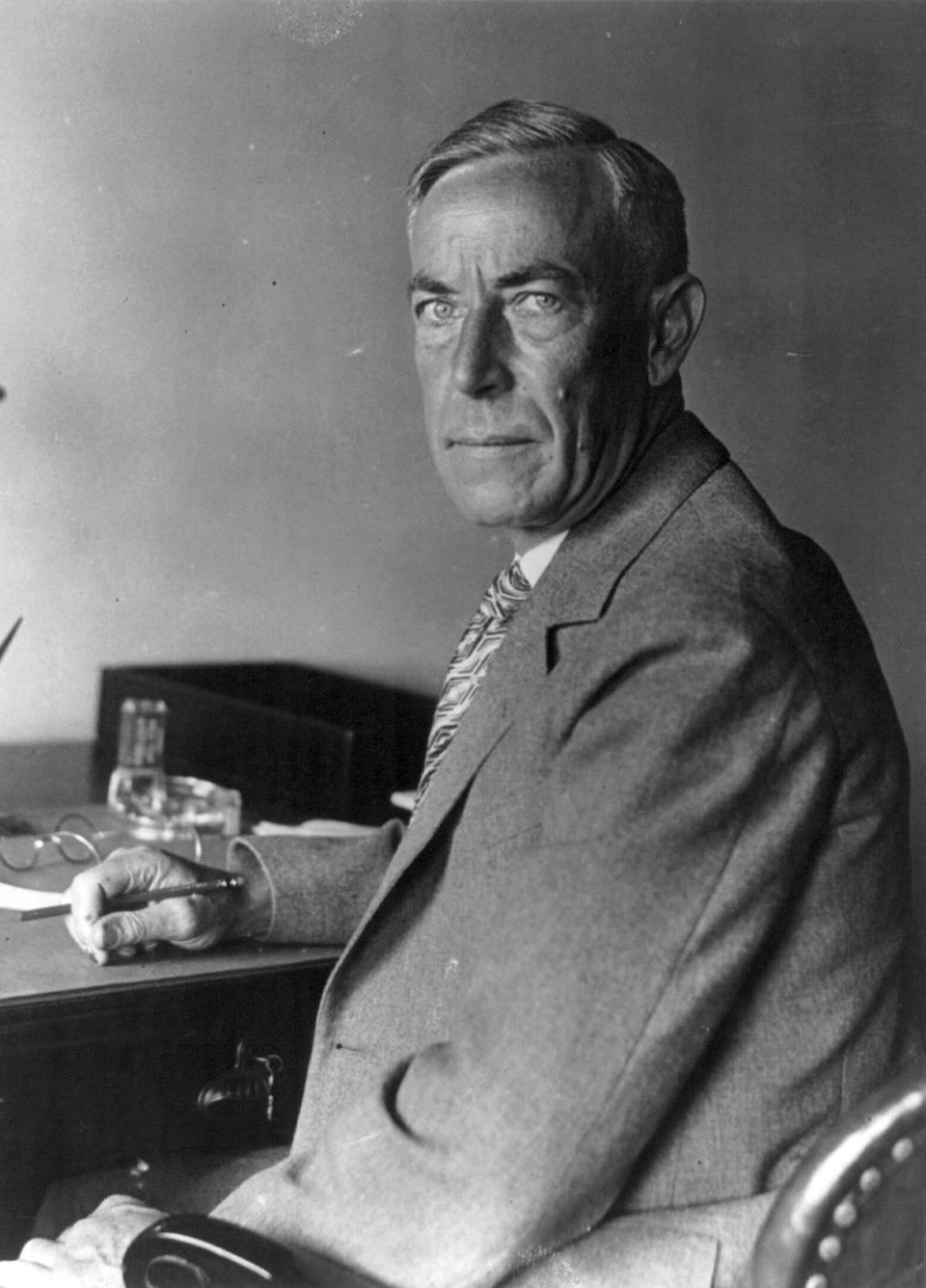
But Vollmer was serious about the job. When Berkeley reorganized its police force, it selected him as its first chief of police, and in doing so, helped unknowingly usher American policing into the modern age. At the time, policing in the United States was largely an amateur affair. Vollmer found no manual, no established literature, no guidebook for the work. So, he went looking for one. He studied policing practices abroad, drawing on advances in France and Germany, and adapted them to American conditions in Berkeley, but also applied lessons he learned from his military service.
He moved quickly and decisively. In 1912 he introduced bicycle patrols, allowing officers to cover far more ground while remaining visible and engaged in the community, helping to prevent crime rather than merely investigate it. He centralized police records at department headquarters, intuiting that crime could be prevented (and criminals caught) more effectively if information was systematically collected and shared. He then installed a network of call boxes, primitive phone booths wired directly to headquarters, keeping patrol officers in constant communication with command.
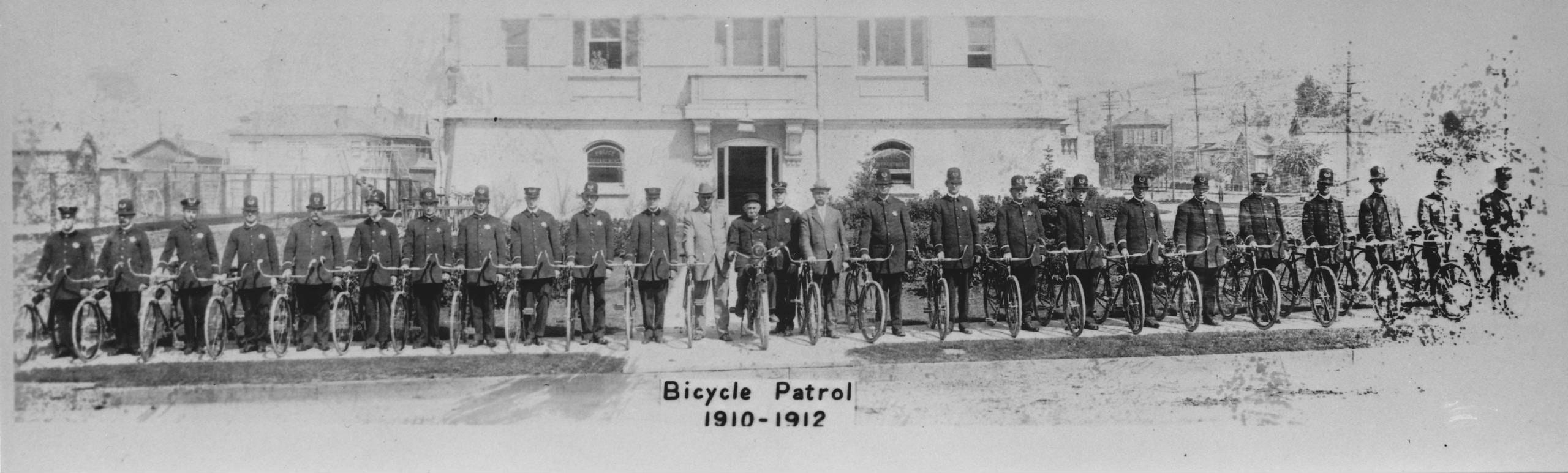
Vollmer soon discovered that many officers lacked basic marksmanship and even rudimentary professional training. He responded by instituting formal instruction in firearms, investigation, and police conduct. As technology advanced, his department evolved with it. Bicycle patrols gave way to motorized units, and wireless radios followed. Education became central to his philosophy. Vollmer required increasing levels of formal schooling for officers and pressed the University of California to develop criminal justice programs, helping to establish policing as a profession, rather than merely a job.
Like many Americans of his era, Vollmer held some racial assumptions now discarded. He believed certain groups were more prone to crime. Yet those views did not prevent him from acting in ways that often ran ahead of his time. He hired Berkeley’s first African American police officers in 1919 and its first female officers in 1925. Writing in the 1930s, he argued against drug prohibition, maintaining that addiction was a medical problem rather than a policing problem. These showed a complexity and adaptability of mind, evident in his tenure in command.
Vollmer served as chief until 1932, when failing eyesight forced his retirement. Widely recognized during his lifetime as the “father of modern policing,” he spent his later years teaching and advocating for educated, disciplined, and professional police forces.
Though he arrived in policing by accident, Vollmer grasped a central truth: society is not fragile, but crime can break it. But thought, care, and prudence can preserve the order in which society thrives.
With gratitude, and love—