

Form Following Function
Frank Lloyd Wright and Louis Sullivan

Frank Lloyd Wright (1867–1959)
The boy who would grow into the man later hailed as the greatest American architect, a titan and shaper of cities, glass, and steel, came from the tiny prairie farming town of Richland Center, Wisconsin. His father, William Carey Wright, was a preacher and musician who moved frequently between congregations. His mother, Anna Lloyd Jones, came from a Welsh immigrant family that had settled in rural Wisconsin and prized learning and independence. From his earliest years she believed her son was destined for greatness. She reportedly decorated his nursery with images of great buildings, hoping to inspire in him a love of architecture. The lessons stuck.
Wright’s childhood unfolded largely in the rural countryside around Madison. The rolling hills, open fields, and scattered farmhouses of Wisconsin left a lasting impression on him. The landscape’s horizontal lines and sense of natural harmony shaped the architectural philosophy that later defined his career. As a boy he spent long hours observing the land and experimenting with construction toys known as Froebel blocks. These were simple geometric shapes that encouraged children to build structures and patterns. Wright later credited these blocks with awakening his sense of form and proportion. One of his greatest signature design elements would, of course, become the bold use of strong geometric shapes that were centrally placed and visually dominant.
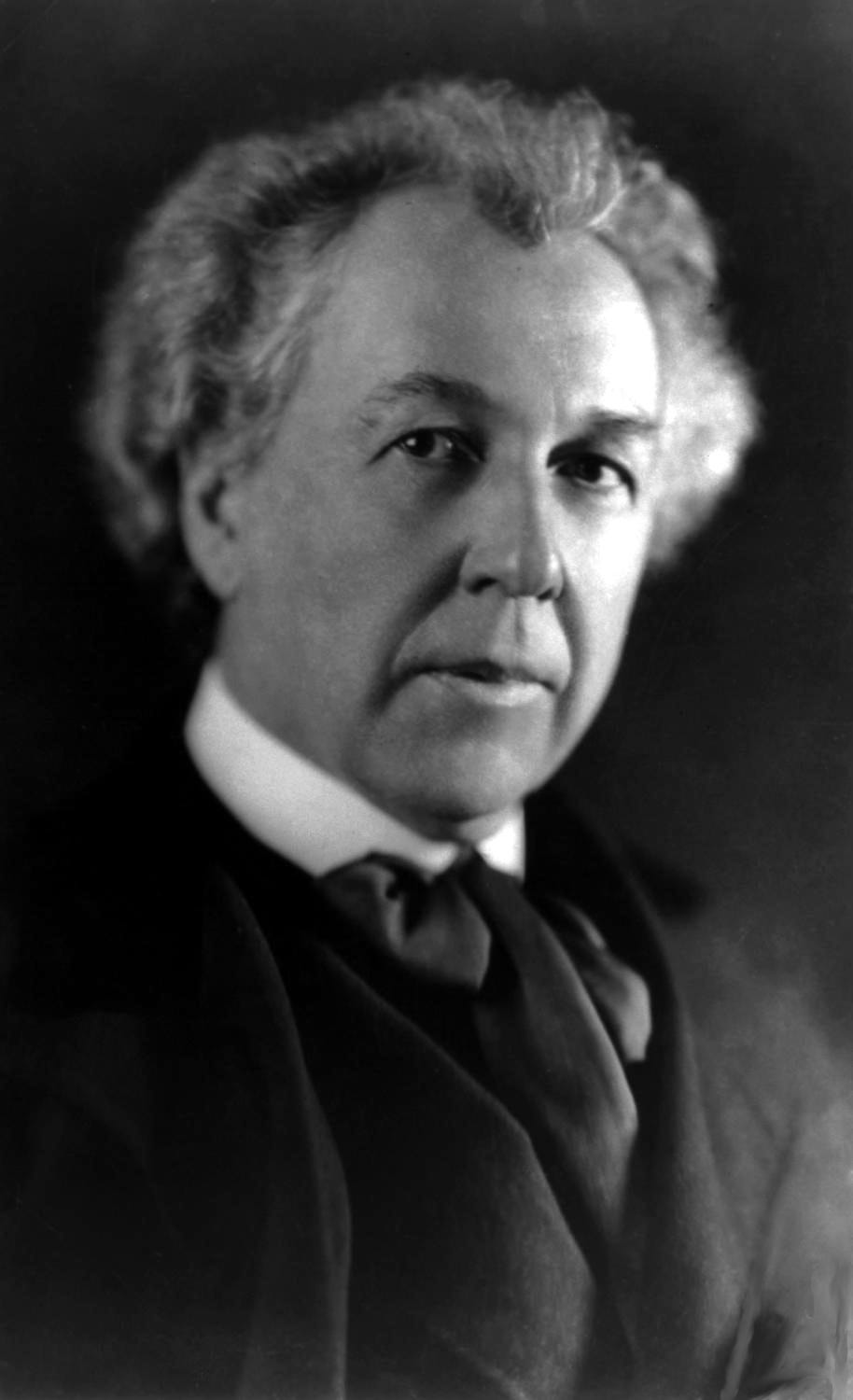
In 1885 Wright entered the University of Wisconsin to study civil engineering. He never completed a degree, but the technical training introduced him to the mechanics of construction and structural design. After two years he left school and moved to Chicago, then one of the fastest-growing cities in the world. Chicago was rebuilding itself after the Great Fire of 1871, and its architects were experimenting with new forms made possible by steel frames and modern engineering. Demand for construction was high, fed both by rebuilding and by the explosive growth of industry, rail freight, shipping, and finance.
Wright soon found employment in the office of Louis Sullivan, widely hailed as the most innovative architect of the Chicago School. Sullivan believed that modern architecture should reflect the realities of modern life rather than imitate the classical forms of the past. His famous principle—“form follows function”—rejected decorative imitation in favor of organic design. Buildings should look like what they were designed to do. Beauty would follow. Wright worked for Sullivan from 1888 to 1893 and later referred to him reverently as Lieber Meister, or beloved master. The apprenticeship proved decisive, although it ended tempestuously when Sullivan discovered that Wright was accepting commissions “off the books” and perhaps surreptitiously using firm designs. He fired Wright.
In 1893 Wright opened his own practice in Oak Park, Illinois. Over the next two decades he developed what became known as the Prairie School of architecture. Rejecting the verticality and ornament of Victorian styles, Wright designed houses that stretched outward along the landscape. He emphasized low horizontal roofs, wide overhangs, bands of windows, and open interior spaces. These created a sense that the building was growing naturally from the land. The design features suited domestic architecture particularly well, engendering an earthy and unobtrusive sense of shelter and comfort.


One of the most important of these early designs was the Robie House in Chicago, completed in 1910. With its dramatic cantilevered rooflines and flowing interior spaces, the Robie House exemplified Wright’s vision of architecture as an integrated environment rather than a collection of rooms. Its walls dissolved into windows; the rooms opened into one another. The house functioned as a unified organism, enveloping the family in a comfortable and beautiful space rather than imposing a rigid structure upon them.
Yet Wright’s life was far from orderly or comfortable. In 1909 he scandalized Chicago society by leaving his wife and children and traveling to Europe with Mamah Borthwick Cheney, the wife of one of his clients. Wright spent several years abroad publishing his architectural work and gaining international attention. His talent was undeniable, but his behavior shocked many observers. When he returned to the United States he built a home and studio called Taliesin in the hills of Wisconsin.


Taliesin became both refuge and tragedy. In 1914 a disgruntled servant murdered Cheney and several others before setting the house on fire. The event devastated Wright but did not end his work. Over the following decades he rebuilt Taliesin and resumed designing, producing some of the most remarkable buildings of the twentieth century.
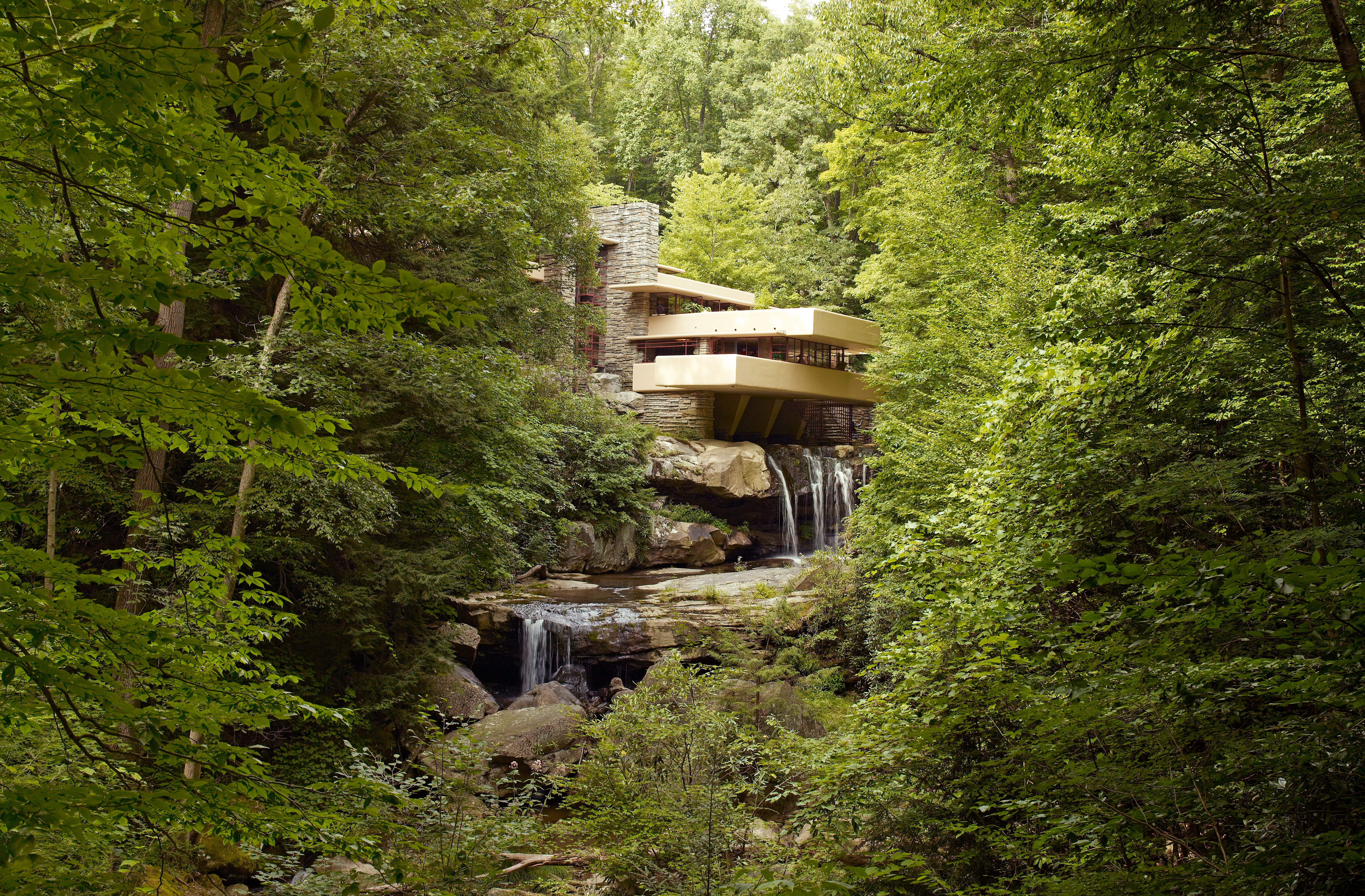
Among them was Fallingwater, completed in 1937 in rural Pennsylvania. Built over a waterfall, the house extended boldly across the stream with reinforced concrete terraces that seemed to hover above the rushing water. Rather than dominating nature, the building appeared to merge with it.
Another landmark came late in Wright’s career with the Solomon R. Guggenheim Museum in New York. Completed in 1959 shortly after his death, the building replaced traditional galleries with a spiraling ramp that carried visitors upward through a continuous exhibition space. The museum itself became an architectural experience.

By the time Wright died in 1959 he had designed more than a thousand buildings and transformed the language of American architecture. His vision rejected imitation of European styles and sought instead to create forms rooted in the American landscape.
Wright believed architecture should be organic, meaning that buildings should grow from their surroundings as naturally as trees or hills. The idea reflected both the geography of the United States and the spirit of its people. In Wright’s work the nation found not merely structures but a new architectural voice—one that echoed the open horizons of the continent itself.
Louis Sullivan (1856–1924)
Louis Sullivan was born in Boston, but his origin was of a type that was becoming increasingly common in the middle of the nineteenth century. His father, Patrick Sullivan, was an Irish-born dancing master who emigrated in search of opportunity and a better life. His mother, Andrienne List, was Swiss. The household combined two very different Old World cultures in an American city rapidly reshaping itself in the wake of immigration. Boston, like America itself, was transforming. Men like Sullivan both made and reflected that change.
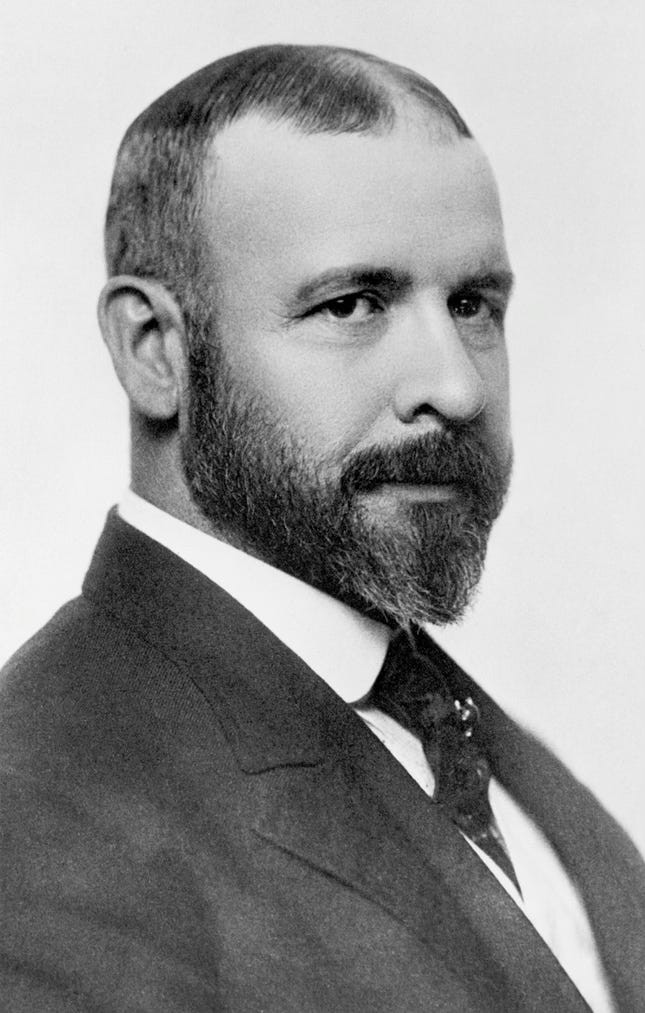
Before that transformation took hold, however, Sullivan spent much of his childhood with his grandparents on a farm outside Boston. The rural setting gave him an early appreciation for nature’s forms. He came to love the patterns of leaves, vines, and organic growth that would later appear in his architectural ornament. Even as a boy he showed an intense curiosity about buildings and design.
At sixteen Sullivan entered the Massachusetts Institute of Technology, one of the first schools in the United States to offer formal training in architecture. His time there was brief. Sullivan found the instruction overly rigid and doggedly rooted in European classical traditions that bored him. Restless and ambitious, he left after a year and traveled to Philadelphia to work in the office of architect Frank Furness, whose bold and unconventional designs greatly impressed him.
After the devastating Great Chicago Fire of 1871, Chicago became the most exciting laboratory for architecture in the United States. Sullivan moved there in the early 1870s and found a city determined to rebuild on a grand scale. Railroads, industry, and commerce were transforming the American economy, and Chicago stood at the center of it all. Sullivan, like all ambitious architects of the era, had to be there.
For a short time Sullivan studied at the École des Beaux-Arts in Paris, the most prestigious architectural academy in the world. But once again he found himself dissatisfied with academic tradition. When he returned to Chicago he joined the firm of Dankmar Adler, a talented engineer and architect. The partnership of Adler and Sullivan soon became one of the most important architectural firms in the country.
Adler handled the engineering and structural challenges of large buildings, while Sullivan focused on design and artistic vision. Together they created a series of remarkable structures during the 1880s and 1890s that helped define the emerging skyscraper. Among their most famous projects was the Auditorium Building in Chicago, completed in 1889. The massive structure contained a theater, hotel, and office complex all within a single building—something that had rarely been attempted at such scale. Its design combined advanced engineering with Sullivan’s rich decorative style. The building demonstrated that modern commercial architecture could be both functional and beautiful.


As steel-frame construction made taller buildings possible, architects confronted a new question: how should skyscrapers look? Traditional European architecture offered little guidance for structures that rose ten or more stories above the street. Sullivan offered an answer that became one of the most influential ideas in architectural history. In an 1896 essay titled The Tall Office Building Artistically Considered, he articulated the principle that “form follows function.” Buildings, he argued, should express their purpose honestly rather than imitate historical styles. The exterior of a skyscraper should reflect its internal structure and use.
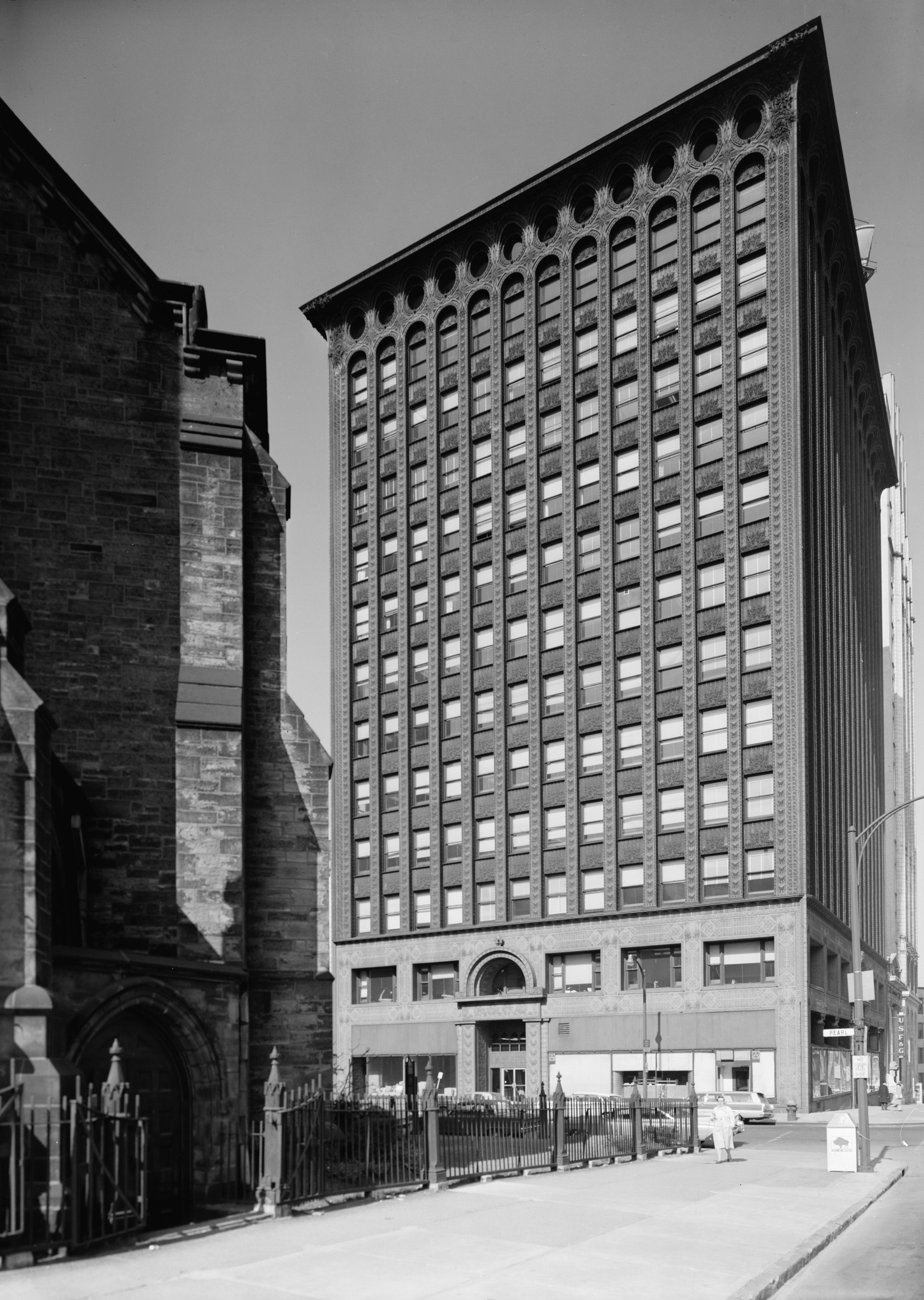
This philosophy shaped buildings such as the Wainwright Building in St. Louis and the Guaranty Building in Buffalo. Their vertical lines emphasized height, while decorative elements drew inspiration from natural forms rather than classical columns or pediments. Sullivan’s designs suggested a new architectural language suited to the industrial age, yet one that did not entirely lose touch with the organic patterns of nature.
During this period Sullivan also mentored a young draftsman named Frank Lloyd Wright. Wright absorbed Sullivan’s belief that architecture should grow organically from its function and environment. Though Wright would eventually eclipse his teacher in fame, he never forgot the influence Sullivan had on his thinking.
Despite his early success, Sullivan’s later years were difficult. The economic panic of 1893 devastated the construction industry and weakened his firm. Adler and Sullivan dissolved their partnership in 1895. Sullivan continued designing buildings, including a series of small banks in Midwestern towns that displayed intricate ornament and careful craftsmanship, but the large commissions of his earlier career became rare.
Financial troubles followed. Sullivan struggled to maintain his practice and eventually lived in relative poverty in Chicago hotels. Yet even in these years he continued writing and reflecting on architecture’s purpose.
Louis Sullivan died in 1924, largely unrecognized by the public that had once celebrated him. In time, however, his reputation grew. Architects came to see him as one of the founders of modern American architecture and the “father of the American skyscraper.”
Sullivan helped Americans imagine buildings that belonged to their own age rather than borrowed from the past. His skyscrapers rose alongside the expanding cities of the United States—symbols and tools of commerce, ambition, and modern life. In giving those buildings their form, Sullivan helped give shape to the skyline of modern America itself.
with gratitude, and love—