Enduring Structures
Engineered on Earth, Explained in the Stars

George Washington Goethals and Subrahmanyan Chandrasekhar
Some of the greatest advantages of the modern age work so well that we scarcely notice them. They are so close at hand, so reliable, that they disappear from view. Infrastructure is a prime example. You may cross a bridge several times a day without pausing to consider the labor and judgment embedded in its design, construction, and maintenance, much less the minds that first conceived not just that bridge, but the method by which such bridges could be built at all. Yet it is these builders and thinkers, working one level beneath daily awareness, who design for generations rather than moments.
George Washington Goethals and Subrahmanyan Chandrasekhar belong to this class. Both are largely forgotten by modern life, yet essential to it. Without exaggeration, Goethals built the Panama Canal. Its completion reshaped global commerce, cutting shipment times for goods across the world and inaugurating a new era of national and international connection. Geography, once a master of destiny, became a manageable constraint. Within a generation, the United States emerged as the wealthiest nation in human history, aided in no small part by the conquest of distance that the canal made possible.
Chandrasekhar’s contribution was quieter but no less consequential. Through rigorous mathematical analysis, he laid the intellectual framework for a revolution in theoretical astrophysics and cosmology. He transformed scientific understanding of how stars form, stabilize, collapse, and interact, illuminating the structure of white dwarfs, supernovae, neutron stars, and black holes. In doing so, he did more than explain the life cycles of stars. He modeled a way of doing science that patient, exacting, and structurally sound and whose influence endures well beyond any single result.
Taken together, Goethals and Chandrasekhar remind us that modernity is built twice: once in concrete and steel, and once in equations and ideas. Their work does not boast. It functions. And because it functions so well, it fades from notice, even as it continues to carry the weight of the world.
George Washington Goethals (1858-1928)
George Washington Goethals spent his life building things meant to outlast him. His beginnings, however, were modest. He was born in Brooklyn in 1858 to Flemish immigrant parents. His father was a carpenter, a trade humbly rooted in patience, measurement, and permanence. It is easy to imagine the young Goethals watching structures take shape, as his father fitted boards and squared angles, and sensing a future beyond his quiet New York corner.
That future arrived early. At fourteen, Goethals enrolled at the College of the City of New York, where he distinguished himself in mathematics and science. After three years, he earned an appointment to the United States Military Academy at West Point. There he excelled, graduating second in his class in 1880 and earning a commission in the Army’s elite Corps of Engineers.
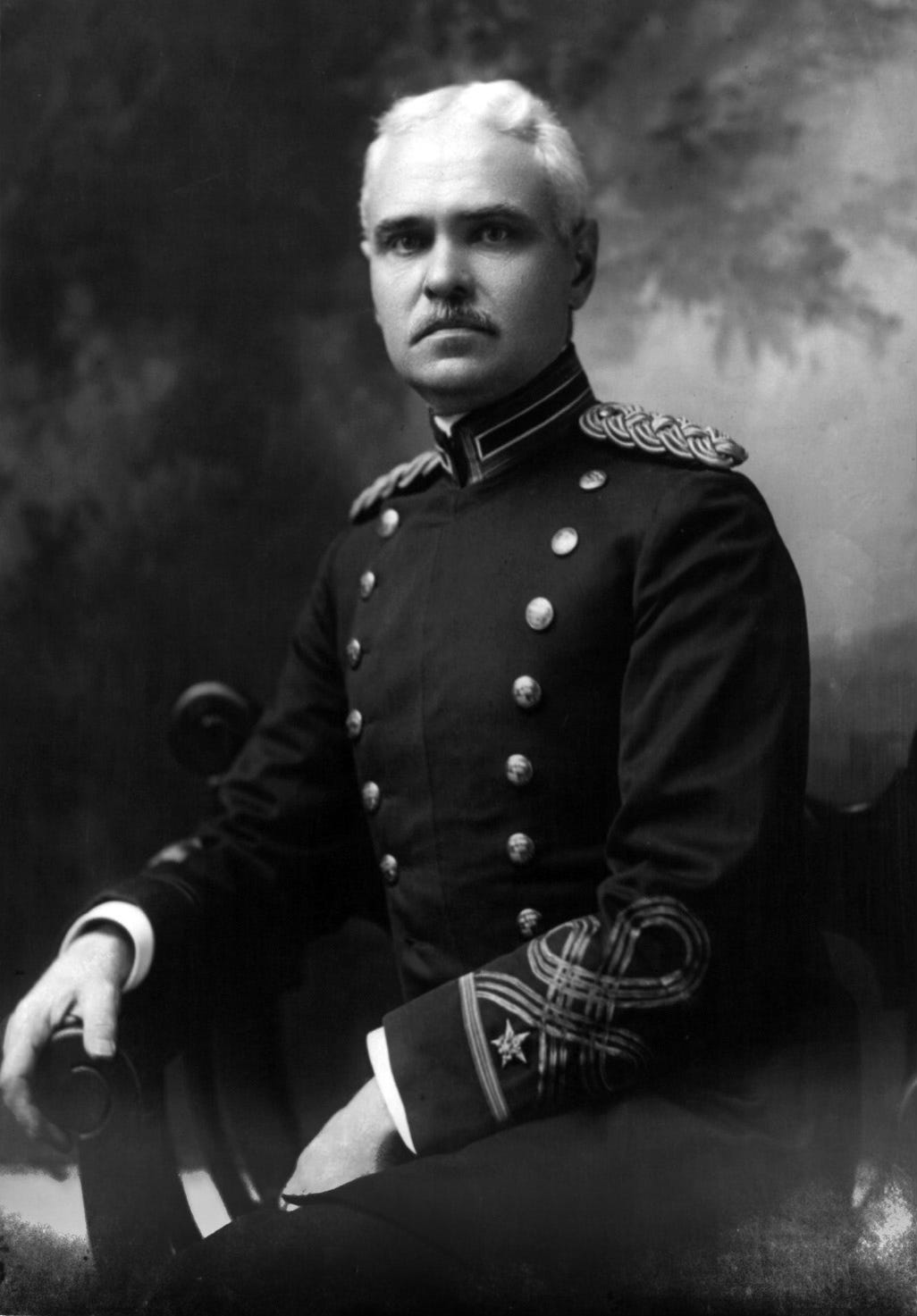
The Army put him to work immediately. His first assignment was the design of a replacement bridge spanning the Spokane River in Washington Territory. He was then returned to West Point for four years as an instructor, teaching engineering to cadets. But his most formative work began in 1889, when he was assigned to improve navigation infrastructure on America’s inland waterways.
Goethals worked first on the Cumberland and Tennessee Rivers, building and refining the full array of nineteenth-century river engineering: bridges, canals, locks, low-head dams, weirs, dikes, revetments, towpaths, guard gates, and turning basins. His competence earned promotion, and in 1891 he was placed in command of a major project on the Muscle Shoals Canal near Florence, Alabama.
There, Goethals made his reputation. His design and construction of the Riverton Lock featured an unprecedented 26-foot lift, far higher than any river lock previously attempted. Officials in Washington doubted it could be done. Confident in his calculations, Goethals proceeded anyway. Completed ahead of schedule and under budget (something that would become his calling card), the lock proved the feasibility of high-lift navigation and transformed river borne commerce. It marked Goethals as an engineer willing to push limits without abandoning discipline.
By the time of the Spanish-American War, Goethals was recognized as one of the Army’s most capable engineers. Promoted to lieutenant colonel, he was appointed Chief Engineer of the United States Volunteers. After the war, he served on the Army General Staff, advising on coastal defenses and strategic infrastructure.
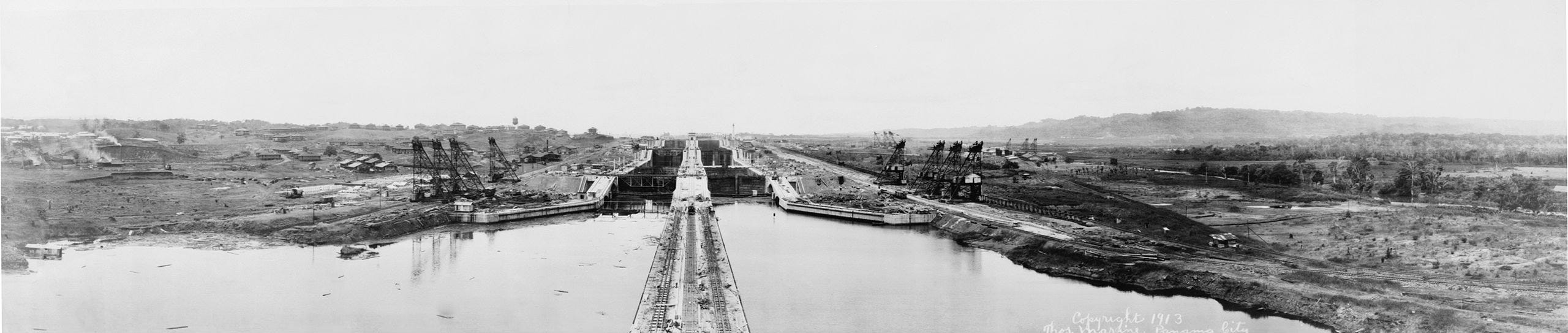
This experience positioned him for the defining challenge of his career. In 1904, the United States assumed control of the Panama Canal Zone and inherited a disaster. The prior French effort was bankrupt, equipment lay rusting in the jungle, workers were unpaid, and leadership was fractured by infighting. President Theodore Roosevelt, determined to finish the canal, replaced the existing leadership and turned to Goethals. He granted him sweeping authority but demanded results.
Goethals delivered. Taking command in 1907, he reorganized the canal project from the ground up. The workforce was divided into three regional divisions—Atlantic, Central, and Pacific—each with clear leadership and responsibility. Sanitation and living conditions were dramatically improved: clean barracks, hospitals, laundries, and recreation facilities replaced disorder, decay, and disease. Finally, Goethals embraced modern excavation techniques and heavy machinery, coordinating engineering, medicine, and logistics under unified command.
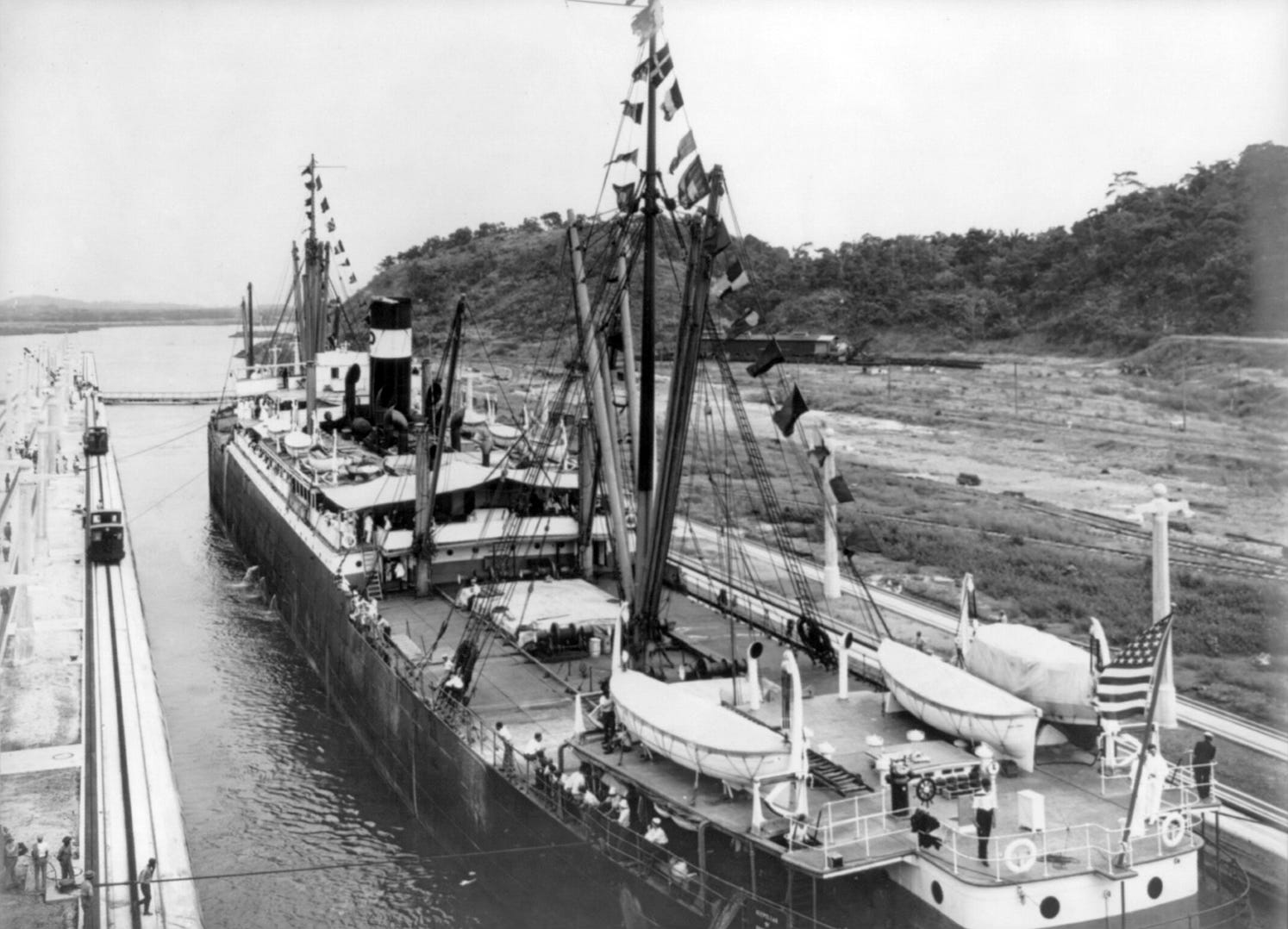
The results were decisive. The canal opened in 1914, a full two years ahead of schedule and under budget.
The achievement was celebrated nationwide. President Woodrow Wilson appointed Goethals the first Governor of the Canal Zone, and Congress promoted him to major general. His service did not end there. When the United States entered World War I, the Army’s logistical system proved inadequate. After early failures, Wilson appointed Goethals Quartermaster General of the Army.
Goethals modernized military logistics with reforms that now seem obvious but were then revolutionary: standardized recordkeeping, centralized procurement, and coordinated supply chains. These changes dramatically improved American effectiveness overseas. General John J. Pershing later remarked that by war’s end the U.S. Army had achieved a “perfection of supplies.” It was largely due to Goethals.
Goethals’ works endure. The Panama Canal collapsed oceans into neighborhoods and rearranged global trade. Voyages once defined by perilous voyages around Cape Horn became measured passages through locks and serene channels. His life demonstrated that disciplined service, even if quiet, methodical, and exacting, can build structures that connect and persist across generations.
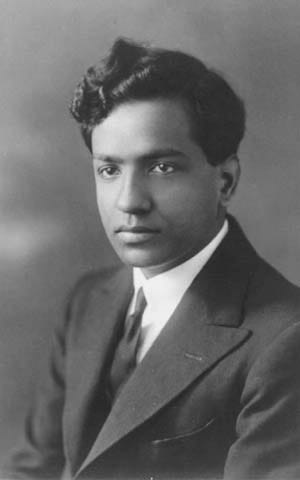
Subrahmanyan Chandrasekhar (1910-1995)
He was a child of the British Empire, but twentieth-century America gave him a home, a career, and the institutional freedom to do his life’s work. Born in Lahore in the waning years of the British Raj, Subrahmanyan Chandrasekhar grew up in a household where intellectual seriousness was assumed. His father was a senior civil servant, his mother a devoted literary mind who translated the plays of Henrik Ibsen into Tamil, and his uncle was the Nobel Prize–winning physicist C. V. Raman. Chandrasekhar moved easily through school in India and, by 1930, had earned a government scholarship to Trinity College, Cambridge. There he absorbed physics with remarkable speed, completing his master’s and doctorate in rapid succession. After brief courtships with Harvard and Princeton, he accepted a position at the University of Chicago in 1937. He would remain there until his death in 1995, becoming an American citizen and doing more than almost anyone to shape modern stellar astrophysics.
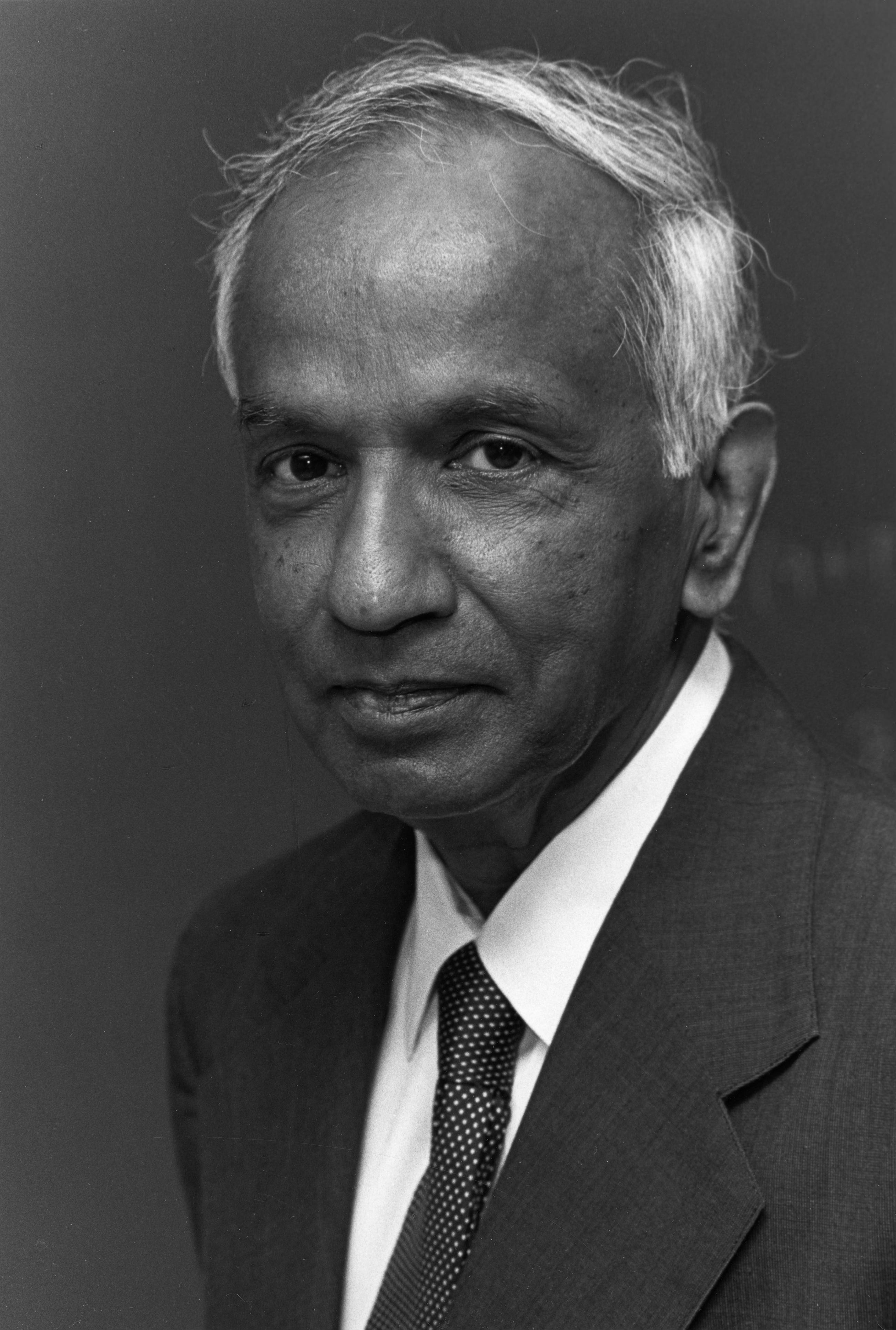
After his arrival in the United States, he preferred to be called simply Chandra, the name used by his students (after they earned their Ph.D.!), colleagues, and friends, and the one he himself favored. It suited him. His work was marked by precision rather than display, by completion rather than self-promotion.
Chandra is often remembered for a single result—the mass limit for white dwarf stars that bears his name—but that reputation understates both the breadth and the discipline of his career. He travelled though science, mastering fields and moving deliberately through them. His career reads less like a single arc, and more like a sequence of completed academic structures. And each structure is so well designed, it endures today.
Chandra’s early work on stellar structure and collapse, including the Chandrasekhar limit, provoked sharp resistance from senior figures in astrophysics. Chandra did not respond by retreating from theory or narrowing its reach. Instead, he broadened them. At the University of Chicago, he embarked on a sustained research program that eventually encompassed radiative transfer, stellar dynamics, hydrodynamic stability, turbulence, and relativistic astrophysics. Across these subjects, his method remained consistent: identify a foundational problem, reduce it to its mathematical core, and work through its consequences completely, without rhetorical flourish or strategic compromise.
One of Chandra’s most important later contributions lay in stellar dynamics, the study of how large systems of stars behave under gravity. Unlike gases or solids, gravitational systems are governed by long-range forces that defy ordinary statistical intuition. Chandra addressed problems of equilibrium, relaxation, and instability in star clusters and galaxies, analyzing how repeated stellar encounters redistribute energy and angular momentum over time. His work clarified how ordered motion gradually gives way to diffusion, how collective behavior emerges from individual interactions, and how stellar systems evolve across cosmic timescales. Much of modern galactic dynamics rests on foundations he helped stabilize. Think of it like this: he laid the groundwork for interpreting and understanding how stars interact with each other.
In the later decades of his career, Chandra turned increasingly toward general relativity and gravitational radiation. At a time when some physicists still regarded relativity as mathematically elegant but physically marginal, he treated it as a working theory demanding the same analytical seriousness as classical mechanics. He studied black holes, perturbations of spacetime, and the emission of gravitational waves from accelerating masses, clarifying the structure of Einstein’s equations and the physical meaning of their solutions. His work helped establish gravitational radiation as a legitimate physical phenomenon rather than a mathematical curiosity. He showed that something that was taken as an article of faith, was in fact, empirically true.
What distinguished Chandra’s contributions in this area was restraint. He avoided speculation and focused instead on internal consistency. His core belief was that theory must work from what the equations required, which approximations were valid, and where intuition failed. When gravitational waves were finally detected decades later, the theoretical framework he had helped build proved indispensable. Once again, empirical confirmation arrived long after Chandra had completed the analytical work.
Throughout his career, Chandra favored monographs over short articles. He treated each field he entered as a complete intellectual territory to be surveyed, organized, and stabilized before moving on. These books were demanding, formal, and unapologetically mathematical. They were not written to persuade skeptics or attract attention. They were written to last. Chandra believed that clarity, once achieved, did not require repetition. He built systems, not scientific memes.
Equally notable was his independence. Chandra did not follow trends, nor did he attempt to found a school. He chose problems because they were fundamental, not because they were fashionable. When he moved on from a subject, he did so only after satisfying himself that he had addressed its central questions. This discipline gave his career an unusual coherence despite its breadth.
Taken as a whole, Chandra’s legacy cannot be reduced to any single discovery. It is a model of how theoretical science can be practiced: patiently, rigorously, and without theatricality. His Nobel Prize felt small compared to the enormity of his life’s work. He demonstrated that fidelity to mathematics can coexist with physical insight, and that intellectual endurance often matters more than immediate recognition. In an age increasingly shaped by speed and visibility, Chandra stands as a reminder that some contributions mature slowly, and that those slowly built endure the longest.
With gratitude, and love—