

Decoding the Twentieth Century
Margaret Mead and Grace Hopper

Margaret Mead (1901–1978)
Margaret Mead came from an academic household. Her father was a professor of economics and finance at the University of Pennsylvania who primarily studied the effects of industrialization. Her mother studied and taught sociology and devoted much of her attention to the immigrant communities of Philadelphia and their family lives. Table talk in the Mead home concerned human behavior and how it responded to social systems and historical dynamics, and young Margaret likely never knew a time when humanity was treated as a mystery. Humanity was always something for study and measurement.
She later attended Barnard College, where her intellectual path quickly turned to anthropology, then a field undergoing exciting expansion. There she came under the influence of the great anthropologist Franz Boas, often considered the father of American anthropology, and his student Ruth Benedict. Boas and Benedict rejected the old belief that cultures could be ranked in hierarchies of “advanced” or “primitive.” Instead, they argued that each culture represented a unique system of values, customs, and assumptions that had to be understood on its own terms.
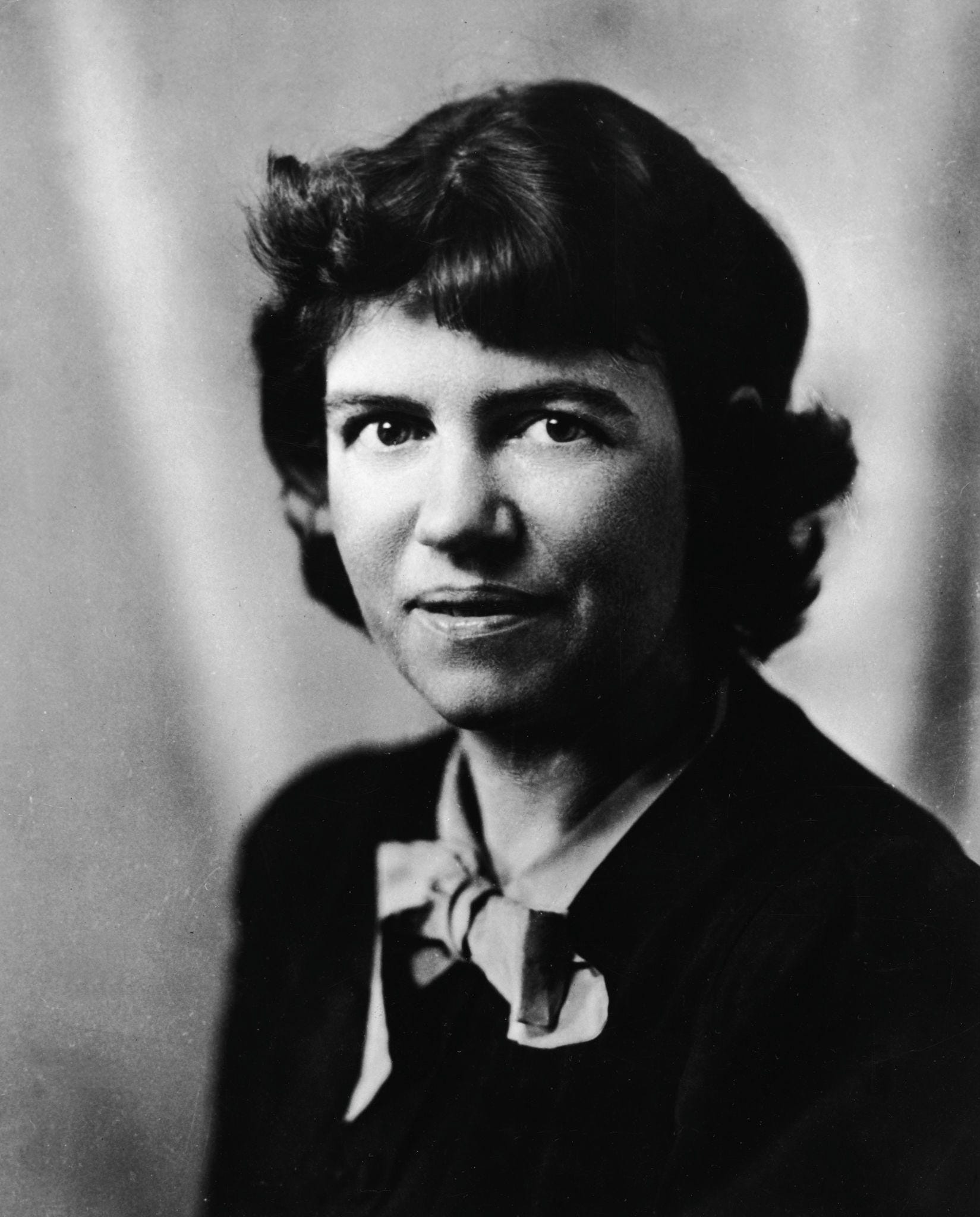
Mead embraced this idea enthusiastically. In the mid-1920s she traveled to the islands of Samoa to conduct fieldwork among Polynesian communities. At the time anthropology was still a young discipline, and field research among distant societies carried a sense of intellectual adventure. Mead lived among the Samoan people, learned their customs, and observed the rhythms of everyday life. This was a new method of science called “participant observation.” It was both daring and rigorous. She was still a young woman, unestablished in academia, venturing into places that Americans still considered distant and frontier.
The result was her groundbreaking book Coming of Age in Samoa, published in 1928. In it Mead argued that the emotional turbulence Western societies associated with adolescence was not a universal experience, and therefore not purely a biological phenomenon. Samoan teenagers, she observed, moved from childhood into adulthood with relative ease because their culture placed fewer restrictions on young people and approached sexuality and social roles differently.
The book excited the American public. Mead had written not only an academic study but a work accessible to ordinary readers, and its conclusions raised provocative questions about American social norms. If adolescence was culturally shaped, perhaps other aspects of human life such as family structure, gender expectations, and education were also products of culture rather than biological destiny. There was an even more provocative, though often unstated, implication: if these were cultural artifacts, they could be changed by choice.
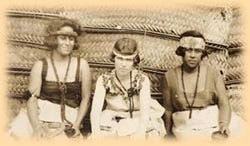
In the decades that followed Mead became one of the most visible intellectuals in the United States. She spent much of her professional career at the American Museum of Natural History in New York, where she served as curator of ethnology. From that position she conducted additional research in the Pacific and wrote a steady stream of books and essays examining the relationship between culture and personality.
Unlike many scholars, Mead saw no barrier between academic research and public conversation. She believed anthropology had practical lessons for modern society. If cultures differed widely in their assumptions about family life, child-rearing, and gender roles, then Americans might reconsider the inevitability of their own social arrangements.
During the mid-twentieth century Mead became a familiar presence on television and in magazines. She wrote about the challenges facing modern families, the role of women in society, and the rapid cultural changes brought about by technology and globalization. Not everyone accepted her conclusions without criticism. Later scholars debated aspects of her research and methodology in Samoa and questioned whether she had interpreted the evidence correctly. These debates became among the most famous disputes in anthropology. Yet even critics acknowledged the enormous impact of her work. Her conclusions might be controversial; the fact of her influence was not.
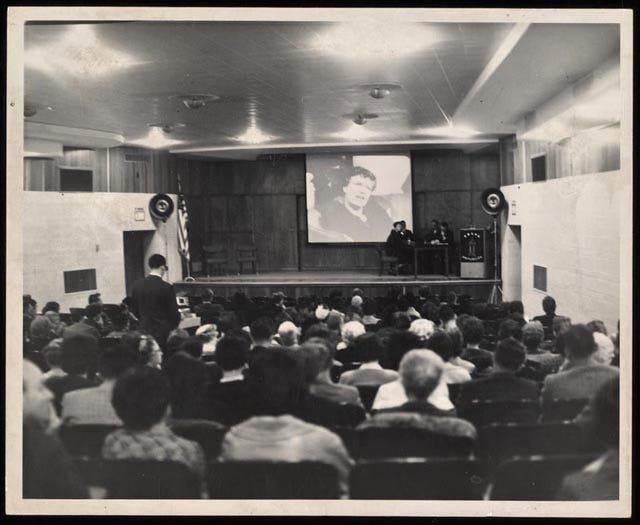
Margaret Mead helped transform anthropology from an obscure academic specialty into a discipline that spoke to fundamental questions about human life. She persuaded Americans that culture matters. Customs, expectations, and social norms shape human behavior in profound ways.
She also opened a door through which generations of scholars and readers would pass. Anthropology became not only the study of distant societies but a mirror through which Americans could examine themselves. When Mead died in 1978, she left behind more than a body of scholarship. She had helped change the way people think about culture itself. Human beings, she taught, live within systems of meaning that they themselves create. Understanding those systems is one of the great intellectual tasks of modern civilization.
Grace Hopper (1906–1992)
From an early age, Grace Hopper exhibited both a practical curiosity and an intellectual facility that would characterize her later career as a pioneer of computer science. Her family was thoroughly middle class (her father was an insurance broker and her mother a homemaker) but both encouraged Grace’s education in mathematics and science. They also fed her naturally inquisitive nature. She once dismantled all the alarm clocks in the house to see how they worked. Rather than responding in exasperation, her mother bought her a clock to devote solely to experimentation and tinkering. This was only the beginning for her.
Hopper went on to study, and excel, in mathematics and physics at Vassar College, where she graduated in 1928. She later pursued graduate study at Yale University, earning a Ph.D. in mathematics in 1934, an accomplishment that was rare for women in that era. For several years she taught mathematics at Vassar. Although this was a respectable and worthwhile career, her life might have remained within the quiet world of academia had world events not intervened.
When the United States entered World War II, Hopper felt compelled to contribute to the national effort. She joined the U.S. Navy Reserve and was assigned to work on one of the most advanced technological projects of the war: computers.
During the war the Navy ran a special program called the Bureau of Ships Computation Project. It was headquartered at Harvard University. There Hopper joined a team led by the pioneering computer scientist Howard Aiken. Their task was to operate and program the Harvard Mark I, an enormous calculating machine capable of performing complex numerical operations used in military planning.
Computers in the 1940s were not the sleek devices we use today. They were massive machines of relays and rotating shafts, filling entire rooms and requiring the careful labor of engineers to operate. Programming them demanded painstaking work, translating mathematical instructions into sequences of electrical operations. Operating a computer often required graduate-level mastery of physics and mathematics. Hopper quickly proved herself one of the most skilled programmers on the project. She wrote detailed manuals explaining how the machine operated and helped develop new programming techniques. She discovered new ways to extract maximum computing power and accuracy from the mysterious machine.
Yet her most important contributions came after the war. Early computers required programmers to write instructions directly in machine code. These are strings of numerical commands that were difficult to create and even harder to maintain. The programmer had to be fluent in long and complex logical chains. Any small error in that chain could cause a computational breakdown and waste hours (or even days) of programming work, not to mention valuable time spent running a failed computation. Hopper believed there had to be a better way.
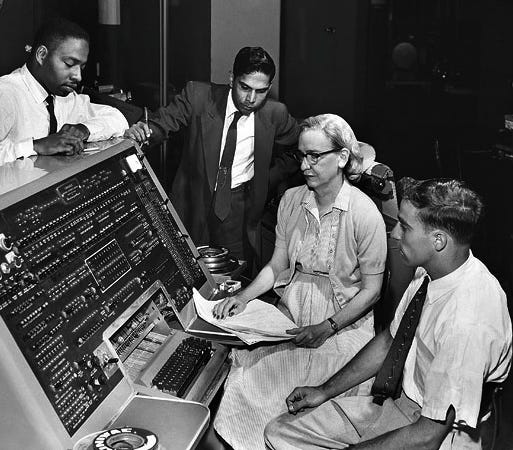
Her idea was radical for the time. Computers, she argued, should be able to understand instructions written in words rather than numbers. To accomplish this, Hopper helped design one of the first “compilers,” a program that translates human-readable instructions into machine language. This innovation became one of the foundational concepts of modern computing, and therefore of the modern computer age. Instead of thinking like machines, programmers could describe tasks in structured language, leaving the compiler to perform the translation.
Hopper’s work eventually contributed to the development of COBOL, a programming language designed for large business and government systems. COBOL made computing accessible to organizations that needed to process vast quantities of data, from banks and insurance companies to federal agencies. These organizations could suddenly integrate computers throughout their operations without having to employ armies of mathematicians and engineers, who in any event did not exist in sufficient numbers. For decades COBOL became one of the most widely used programming languages in the world. Even today, many critical financial and governmental systems still rely on software written in it.
Hopper possessed not only technical brilliance but also a rare gift for explanation. She spent much of her later career traveling and lecturing about computing. Her presentations were famous for their humor and clarity. To illustrate the speed of electrical signals, she would hand audience members small pieces of wire about eleven inches long which represented the distance electricity travels in a nanosecond.
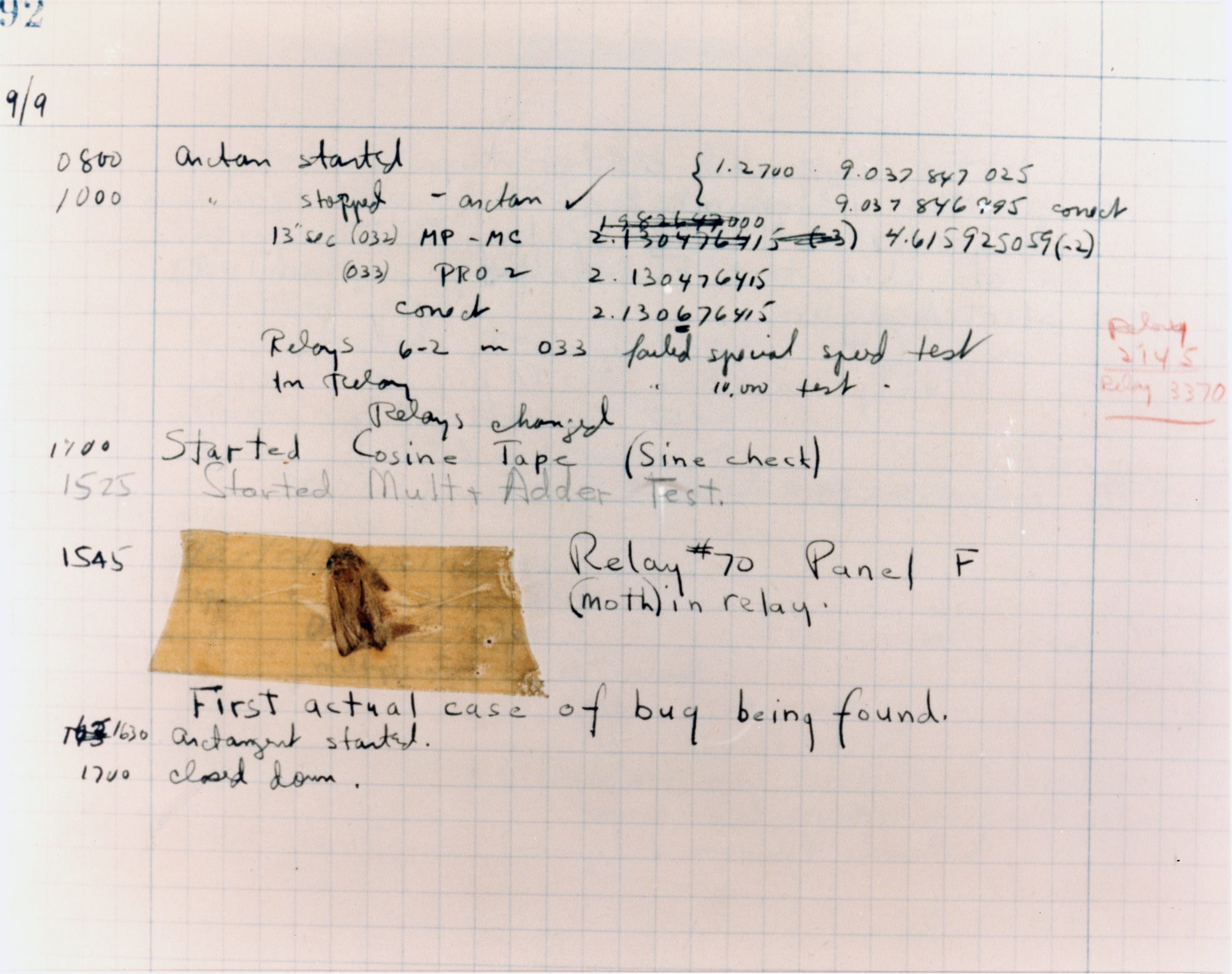
She also helped popularize the term “debugging,” after an actual moth was discovered lodged in the circuitry of an early computer. Whether apocryphal or not, the story became part of computing folklore. It also illustrated a real and essential process in computer science and programming: even the best-designed software contains unexpected flaws and requires troubleshooting.
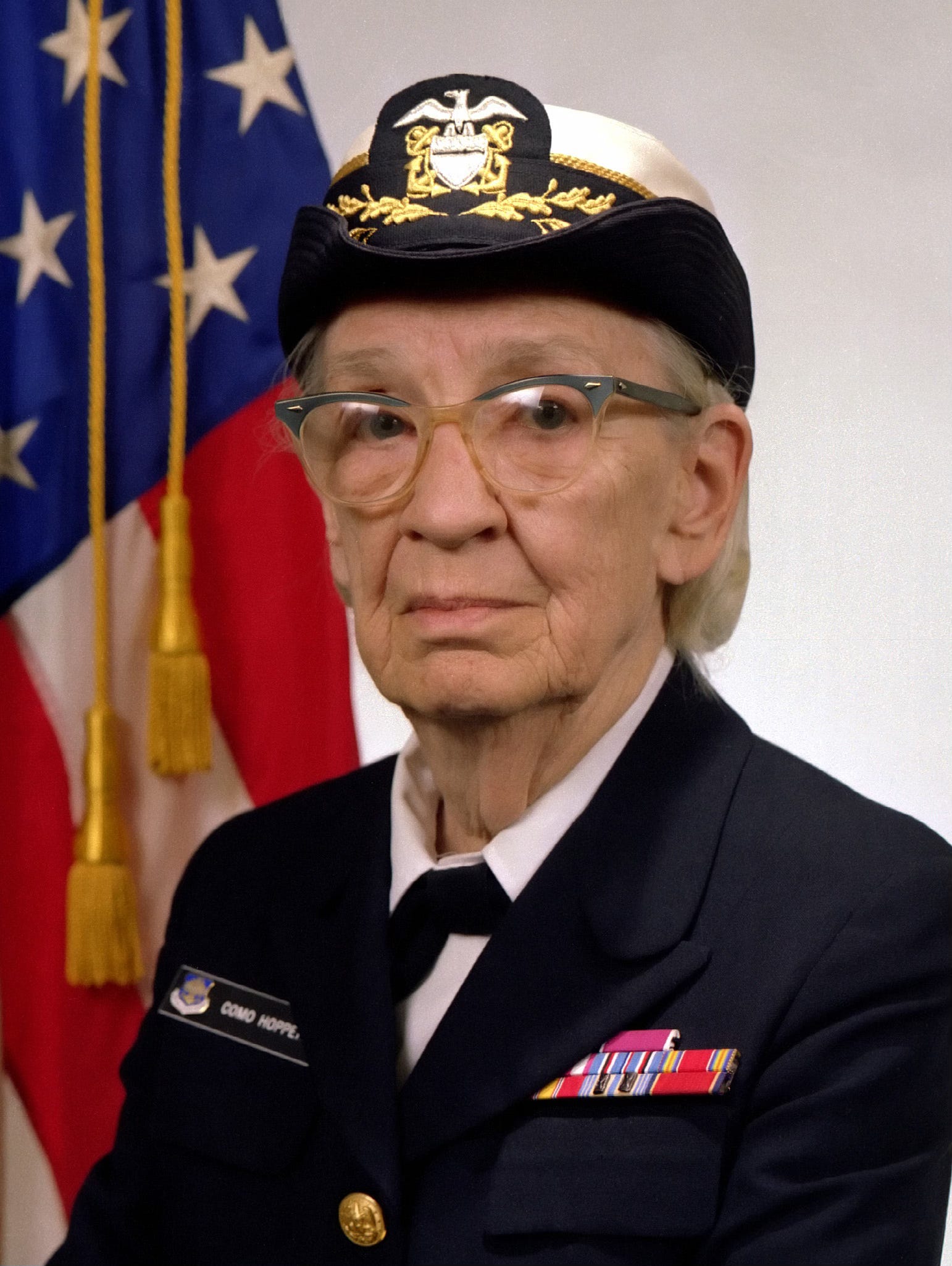
Hopper remained in the Navy Reserve for decades, eventually achieving the rank of rear admiral. She was one of the first women to reach that rank. Even in her eighties she continued to lecture and advocate for computer science education. When she died in 1992, the world she had helped create was only beginning to unfold. Personal computers were spreading into homes and offices, and the internet age lay just over the horizon.

Grace Hopper believed computers should be tools accessible to ordinary people rather than mysterious machines understood only by specialists like herself. By making programming languages more human, she helped open the door to the digital world that now shapes modern life.
with gratitude, and love—