

Conscience and Prudence
57. William H. Seward

57. William H. Seward (1801-1872)
It is no great insight to observe that the tensions and contradictions of the American Republic that the Founding could not resolve culminated in the catastrophe of the Civil War. But the fighting itself was only the climax, and the generation that led the Republic through the conflict inherited a nation already under strain. Expansion, commerce, and democratic energy pushed the nation forward, but slavery cast a long and damning shadow across every advance. In that unsettled landscape, the country required not only conviction, but also the judgment of men who possessed both moral conviction and political skill. Among those who rose to meet that burden was William H. Seward, a statesman whose career stretched from the age of Jackson to the aftermath of the Civil War, and whose steady hand helped guide the Union through its gravest trial.
William Henry Seward was born in 1801 in Florida, New York, a small village in Orange County. His father was a physician and farmer, a man of substance in the community, and Seward grew up in relative prosperity. He proved a capable and serious student from an early age. He attended Union College in Schenectady, where he distinguished himself academically and graduated early. After a brief and somewhat restless youth that included a short period teaching in Georgia, Seward returned to New York, read law, and was admitted to the bar. His time in Georgia proved deeply influential. His first close exposure to chattel slavery seared his conscience, and he determined thereafter to oppose its expansion and influence. Returning north, he established his law practice in Auburn, a town that would remain his home for the rest of his life.
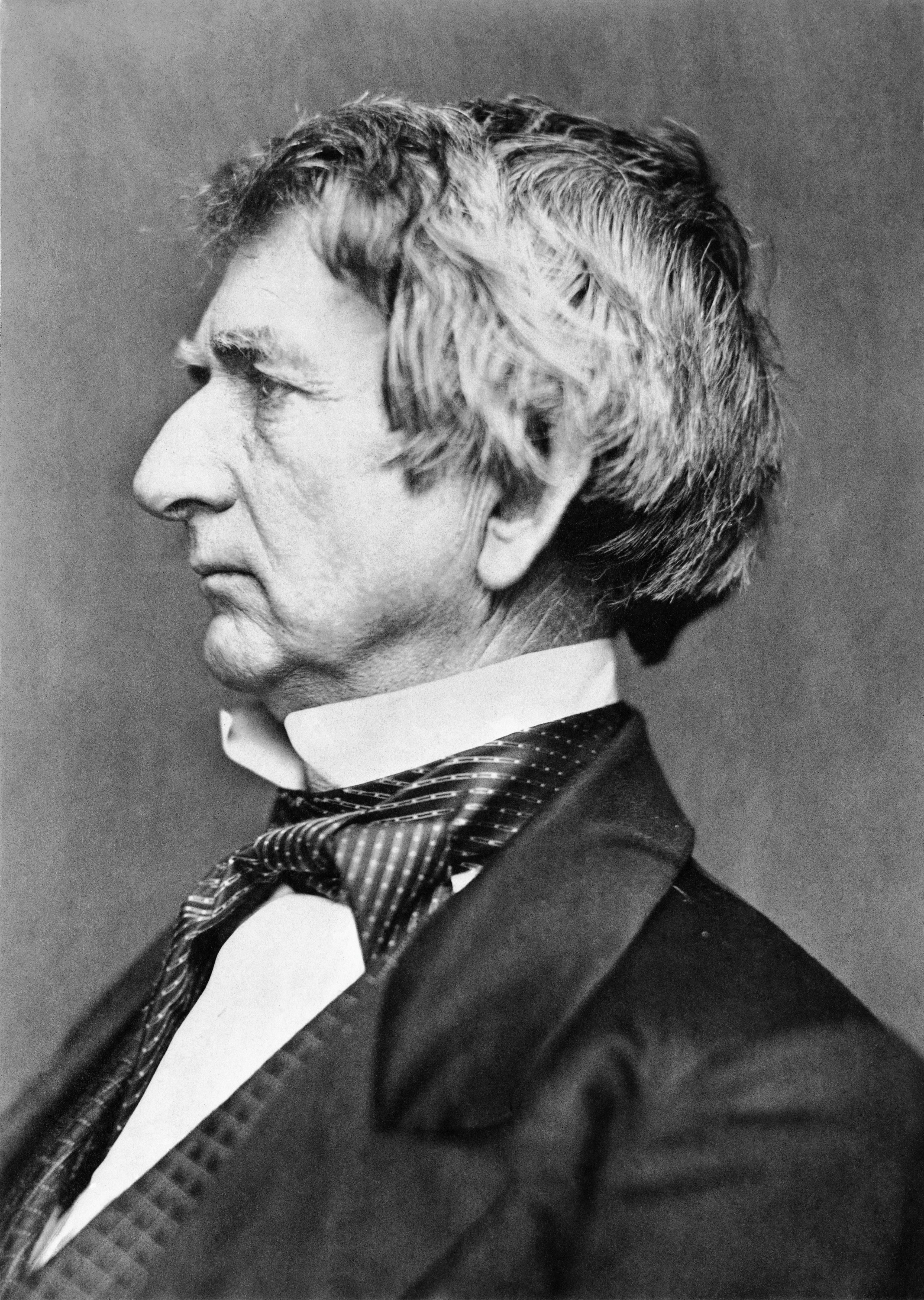
Seward entered politics as the American party system was developing. He first aligned with the Anti-Masonic movement, one of the earliest third parties in American politics, before joining the emerging Whig Party. In 1830, he was elected to the New York State Senate, where he quickly established a reputation as a reform-minded legislator. He supported public education, internal improvements, and a more humane approach to criminal justice. Even early in his career, Seward displayed the qualities that would define him throughout public life, ambition tempered by discipline and strong convictions moderated by political realism.
His rise continued with his election as Governor of New York in 1838 at only thirty-seven years old. As governor, Seward largely governed in the spirit of the Whig program. He supported infrastructure projects, particularly canals and railroads, and championed public education as essential to republican citizenship. But it was on the question of slavery that he distinguished himself. Seward opposed the expansion of slavery and defended the rights of free Black citizens. He intervened in cases involving the return of fugitive slaves and resisted efforts to enforce the harshest aspects of the federal fugitive slave laws within New York. These positions earned him both admiration and criticism. They also marked him as a politician willing to risk controversy in pursuit of principle.
In 1849, Seward was elected to the United States Senate, where he would spend the next twelve years. There, he solidified his reputation as one of the leading antislavery voices in American politics. He became associated with the idea that there existed a “higher law” than the Constitution, a phrase he used in a famous speech opposing the Compromise of 1850. The phrase proved controversial, and opponents portrayed him as a dangerous radical. Yet Seward himself remained a cautious politician. He opposed the expansion of slavery into the territories, but he did not call for immediate abolition . Instead, he sought to place slavery on a course toward eventual extinction without provoking immediate disunion.


The collapse of the Whig Party in the 1850s and the rise of the Republican Party provided Seward with a new political home. By the end of the decade, he was widely regarded as the leading Republican in the country and the presumptive nominee for president in 1860. He possessed experience, national recognition, and a well-developed network. But when the Republican convention met in Chicago, Seward’s prominence worked against him. Many delegates feared that his reputation for radicalism would alienate moderate voters. Instead, they turned to a less well-known figure from Illinois, Abraham Lincoln, whose views appeared more measured and whose humble background offered broader electoral appeal.
Seward accepted the outcome with disappointment, but also with characteristic pragmatism. When Lincoln won the presidency, he invited Seward to serve as Secretary of State. Seward accepted, and in doing so entered the most consequential phase of his career. At the outset, Seward appears to have believed that he might exercise a guiding influence over the new administration. But Lincoln quickly demonstrated uncommon judgment and independence. Over time, Seward came to respect Lincoln deeply, and the relationship between the two men evolved into one of genuine confidence and mutual trust.
As Secretary of State, Seward faced challenges that would have tested any diplomat. The outbreak of the Civil War created immediate dangers on the international stage. European powers, particularly Great Britain and France, possessed economic and strategic interests that might have led them to recognize the Confederacy or intervene in the conflict. Seward’s task was to prevent European meddling, to keep the war an internal American matter, and to deny the Confederacy foreign legitimacy.
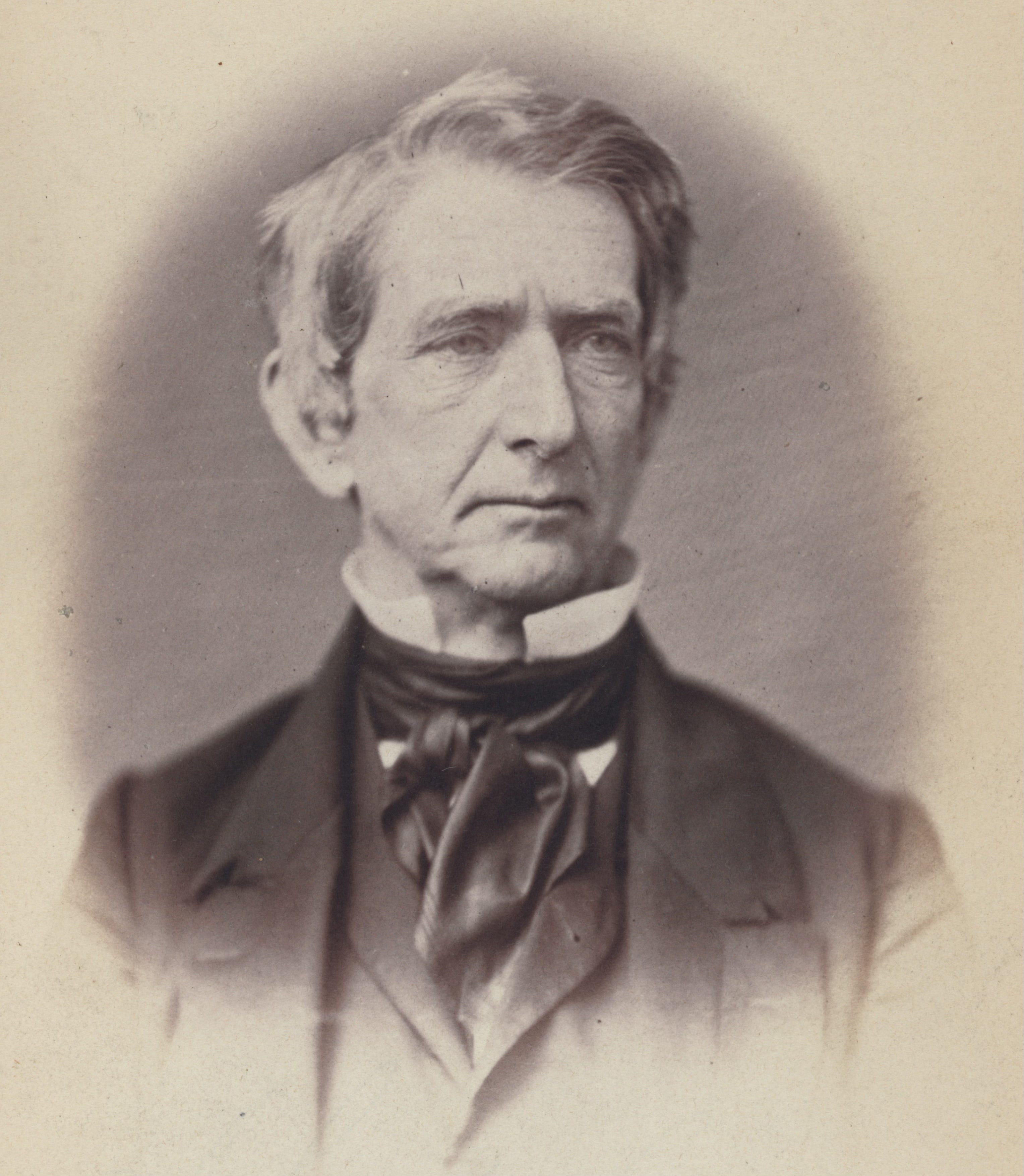
He approached these problems with a combination of firmness and restraint. In the Trent Affair of 1861, a Union naval officer seized two Confederate envoys from a British ship, provoking outrage in Britain and raising the prospect of war. Seward played the central role in defusing the crisis. While maintaining the legal position of the United States, he advised the release of the envoys, allowing Britain to step back without humiliation. The decision avoided a second war at precisely the moment the Union could least afford one. Throughout the conflict, Seward skillfully managed relations with European governments, countered Confederate diplomacy, and helped ensure that the Union retained the advantage of moral and political legitimacy abroad.
But Seward also suffered personally during the war. On the night of April 14, 1865, as the Assassination of Abraham Lincoln unfolded at Ford’s Theatre, a coordinated attack targeted other members of the administration. Seward, who was recovering from a carriage accident, was brutally assaulted in his home by an assailant armed with a knife. He survived, though he was severely injured. The attack underscored the peril and instability of the moment, even as the war itself was drawing to a close.
After Lincoln’s death, Seward continued as Secretary of State under Andrew Johnson. In that role, he oversaw one of the most controversial but ultimately farsighted decisions of his career, the purchase of Alaska from Russia in 1867. At the time, the acquisition was widely mocked as “Seward’s Folly,” a remote and frozen expanse that appeared to offer little immediate value. Yet Seward saw in Alaska both strategic and economic potential. He believed that American expansion into the northern Pacific would strengthen the nation’s geopolitical position and open new avenues of trade and commerce. In time, the wisdom of the purchase became clear, as Alaska proved rich in natural resources and enduring strategic value.


Seward retired from public life in 1869 after nearly four decades in politics. He died in 1872, leaving behind a long and substantial record of public service. Over the course of his career, he had been at various times a reformer, partisan, moral critic of slavery, diplomat, and cautious statesman. He had aspired to the presidency and fallen short, yet he persisted in service and ultimately found his greatest influence not in elected office, but in administration and diplomacy.
His legacy is best understood not through a single dramatic moment, but through a pattern of conduct sustained over time. Seward believed that the United States was moving toward a broader foundation of freedom, even if unevenly and at terrible cost. He spoke in terms that sometimes outran the comfort of his contemporaries, yet he governed pragmatically. The balance he attempted was not always perfect, but it was deliberate and prudent.
In the end, Seward’s career demonstrated that preserving a republic requires more than passion or moral certainty alone. It also requires patience, discipline, and the judgment to recognize which battles must be fought immediately and which must be prepared gradually over time. During the greatest crisis in American history, William H. Seward helped provide precisely that kind of leadership.
with gratitude, and love—