

Building New Cities

Daniel Burnham (1846-1912)
Daniel Burnham was born in New York, but his family quickly moved to Chicago. Although in time he would become the preeminent architect of the early twentieth century, he showed no promising signs as a youth. He was a poor student, though a passable artist. He failed the entrance examinations to Harvard and Yale—much to his father’s consternation. Restless, he drifted west to try his hand at mining in Nevada. He had no intention of joining his father’s successful drugstore business. Mining failed. So he returned to bustling, post–Civil War Chicago.
Chicago in the 1870s was an American proving ground and a gold mine for a would-be architect. The Great Fire of 1871 had leveled much of the city, but destruction created opportunity. Commerce demanded rebuilding. Railroads converged there and did a hefty freight trade. Grain and meat flowed outward. Capital arrived and piled up. Burnham entered architectural practice at precisely the moment when American cities were inventing themselves at a tall, brash, steel-frame scale, and when industrial steel could build high, straight, and strong.
He formed a partnership with John Wellborn Root in 1873. Root was the technical genius, and Burnham found an unexpected role as organizer and diplomat. Together they helped shape what became known as the Chicago School. Their buildings, including the Rookery and the Monadnock, pressed upward in exciting ways. Steel skeleton construction allowed height without suffocating weight. Windows widened, allowing light to enter. Heavy, expensive masonry retreated as the primary structural medium. The commercial skyscraper emerged in Chicago. It enabled density and connection in a way never imagined before. In spaces where only dozens could previously work, thousands could now labor and produce together.
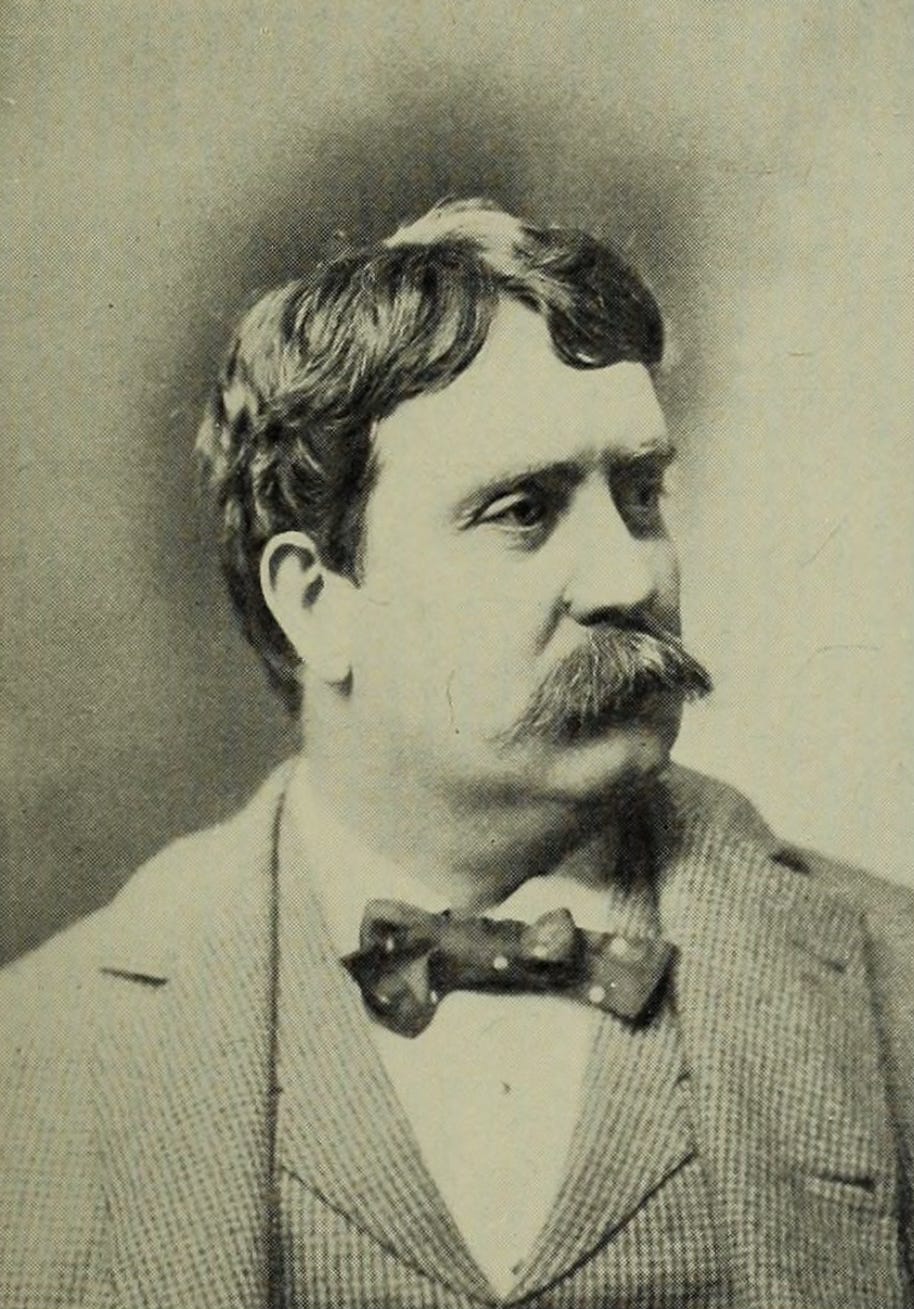
Burnham’s gifts were not primarily aesthetic. They were managerial and civic. He understood men, money, and artistic momentum. When Root died suddenly in 1891, Burnham lost his closest collaborator. Yet history was already placing in his hands a task that would define him.
The United States won the right to host the 400th anniversary celebration of Columbus’s voyage. Chicago would stage the great fair of 1893. Burnham was appointed Director of Works for the World’s Columbian Exposition. It was an immense undertaking: artificial lagoons were built, palaces and pavilions erected, landscapes carved from scratch, and an entirely new infrastructure improvised to service the grounds. The fairgrounds in Jackson Park became known as the White City.
Burnham’s architecture, largely Beaux-Arts and neoclassical, was not revolutionary in form. It looked backward to Rome and Paris. But context matters. The American republic in 1893 was industrial, restless, and often coarse. The White City offered order, symmetry, and grandeur. Electric lights illuminated colonnades. Millions walked its courts. For a moment, America saw itself as heir to civilization rather than merely its disruptor. It was elegant, orderly, clean, optimistic, and dignified.


Critics would later argue that the fair stalled modernist architecture by exalting classicism. That judgment misses the psychological need of the hour. Burnham supplied coherence to a nation intoxicated by growth. He demonstrated that large-scale coordination was possible in a democracy.
After the fair, Burnham turned increasingly toward city planning. American cities had grown haphazardly in their frenzied expansion. Streets were narrow, and waterfronts privatized. Parks were scarce. The Progressive Era believed expertise could improve civic life. Burnham became one of its chief spatial apostles.
His 1901 plan for Washington, D.C., known as the McMillan Plan, sought to restore and extend Pierre L’Enfant’s original vision. The National Mall was cleared and reconceptualized within a formal plan. Monuments were aligned. Public space was reclaimed from railroad clutter. Burnham coordinated among architects, legislators, and civic leaders. The capital would reflect republican dignity.


His most enduring statement came in 1909 with the Plan of Chicago. It was comprehensive and included lakefront preservation, a regional road system, new parks, forest preserves, civic centers, and boulevards. It did not content itself with zoning adjustments. It imagined at a metropolitan scale and sought to reconceive the idea of the city itself.
“Make no little plans,” Burnham declared, because small plans lacked the magic to stir men’s blood. The phrase has survived because it captures the American temperament at its best: ambitious, forward-looking, unapologetic in scope.
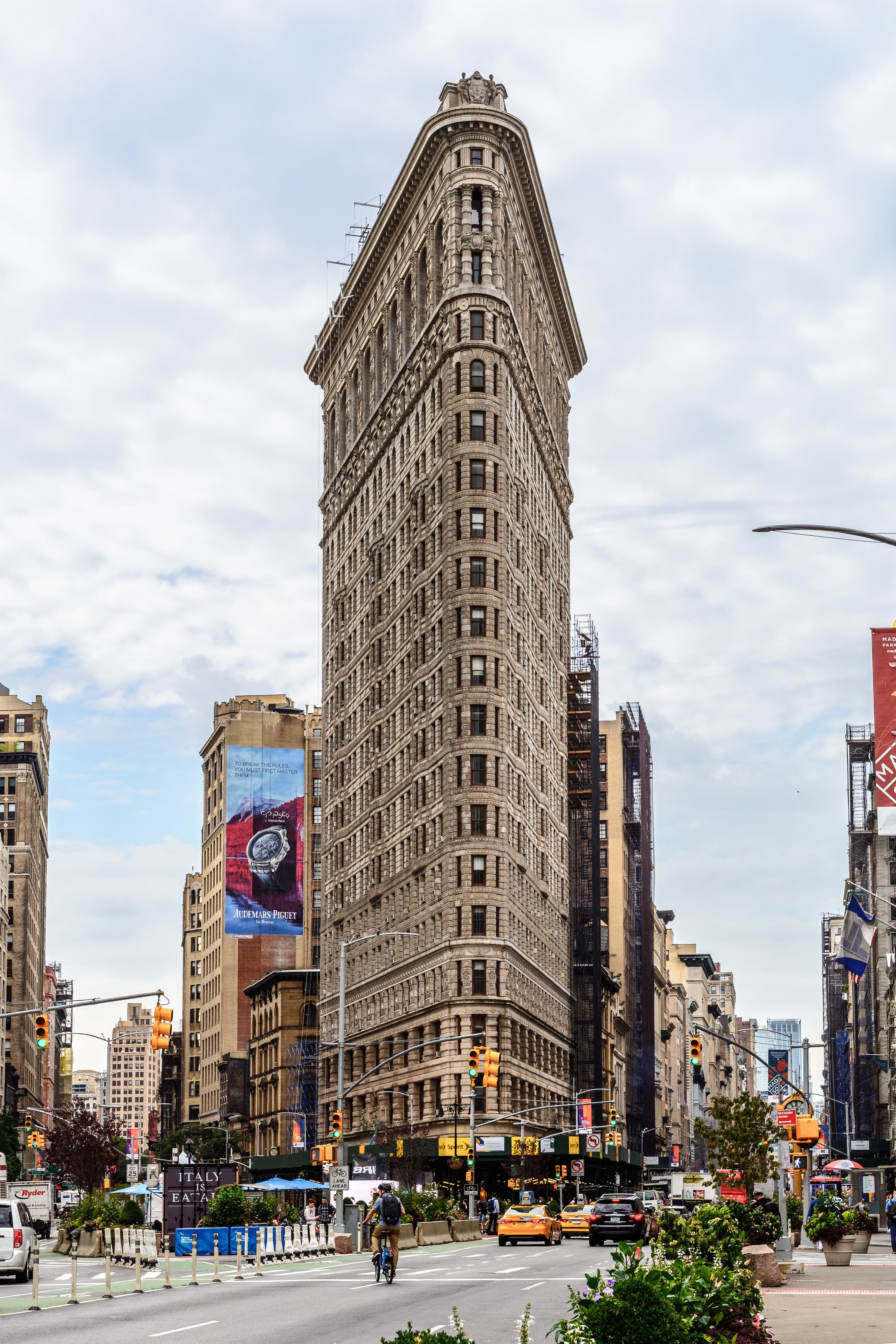
Burnham’s architectural practice continued alongside his planning work. His firm designed Union Station in Washington, D.C., an imperial gateway of stone and vaulting space. In New York, the Fuller Building—better known as the Flatiron—rose in 1902 as a slender wedge at the intersection of Broadway and Fifth Avenue. It was at once practical and iconic, proof that commercial necessity could produce civic symbol.


Burnham operated in the age of steel, rail, and immigration. Cities were swelling with newcomers. In his time, political machines traded favors and industry belched smoke. Against this background, he advanced the City Beautiful movement. It was built on the conviction that aesthetic order could cultivate moral order. Beauty, in this theory, was not the adornment of commercial space. It was the belief that careful planning could remake the city as a shared space for hopeful living.
There were limits. The City Beautiful sometimes neglected the realities of poverty and segregation. Grand boulevards did not automatically produce social justice. Later planners would critique its formality. Yet it is too easy to dismiss aspiration because it did not solve every problem. Burnham’s plans often integrated parks and public access in ways that benefited ordinary citizens. His insistence that the Chicago lakefront remain “forever open, clear, and free” has shaped generations of urban life.
He died in 1912 while traveling in Germany. By then, he had altered the physical and psychological horizon of American cities. He had shown that planning could be comprehensive without being authoritarian, ambitious without being reckless.
Burnham belongs to that generation that believed the American republic was still under construction—not merely in law and theory, but in brick, marble, and shoreline. He did not seek to retreat from modernity. He sought to give it proportion.
His legacy still lives. One need only walk along the lakeshore of Chicago or down Fifth Avenue in New York. The skylines and waterfronts that remain are not accidents of commerce. They are arguments in stone.
Robert Moses (1888-1981)
Robert Moses was born in 1888 in New Haven, Connecticut, into a prosperous German-Jewish family that believed in education, reform, and ambition. He was raised largely in New York City, educated at Yale, Oxford, and Columbia. He was a striver, and his early intellectual formation was Progressive. He admired efficiency. He believed government, properly structured, could be made rational and strong. He did not begin as a builder of highways. He began as a reformer of bureaucracy.
In the 1910s and early 1920s, Moses attached himself to reform governors in New York, especially Al Smith. He drafted civil service reforms and reorganizations meant to strip power from the clutches of the old political machines. Ironically, in mastering the mechanics of reform, he discovered the deeper architecture of power. He learned that appointed commissions, public authorities, and overlapping jurisdictions could accomplish what elected office often could not. He never won a major elective post. He did not need to. He built an empire through appointments and commissions.
His first great domain was parks. As head of the Long Island State Park Commission, he developed Jones Beach in the 1920s and 1930s. He made it into a vast public shoreline with bathhouses, boardwalks, and carefully orchestrated access roads. It was democratic recreation at monumental scale. Thousands who had never seen the ocean could now reach it by car. Moses believed the modern citizen required space, sun, and motion.
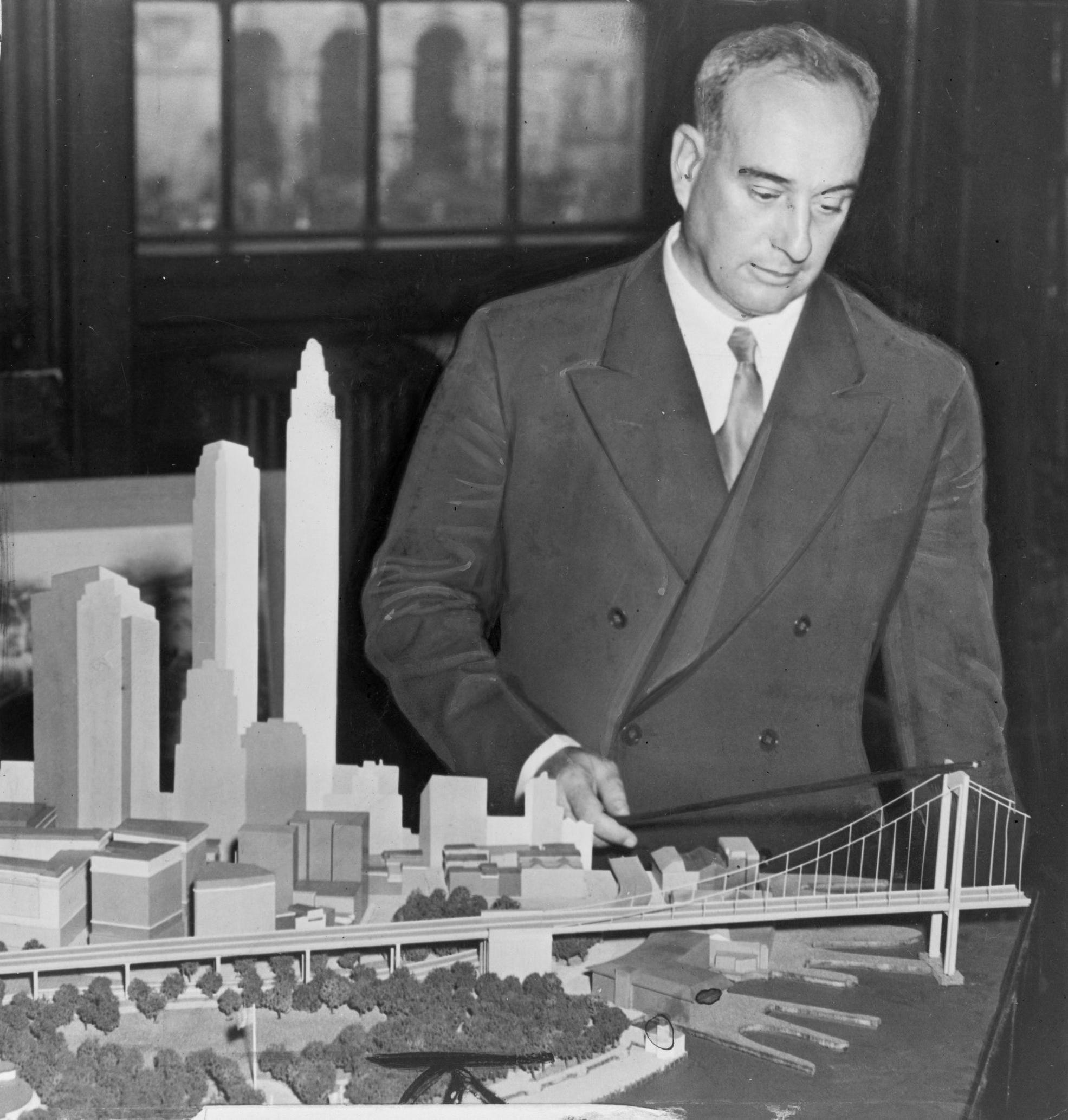
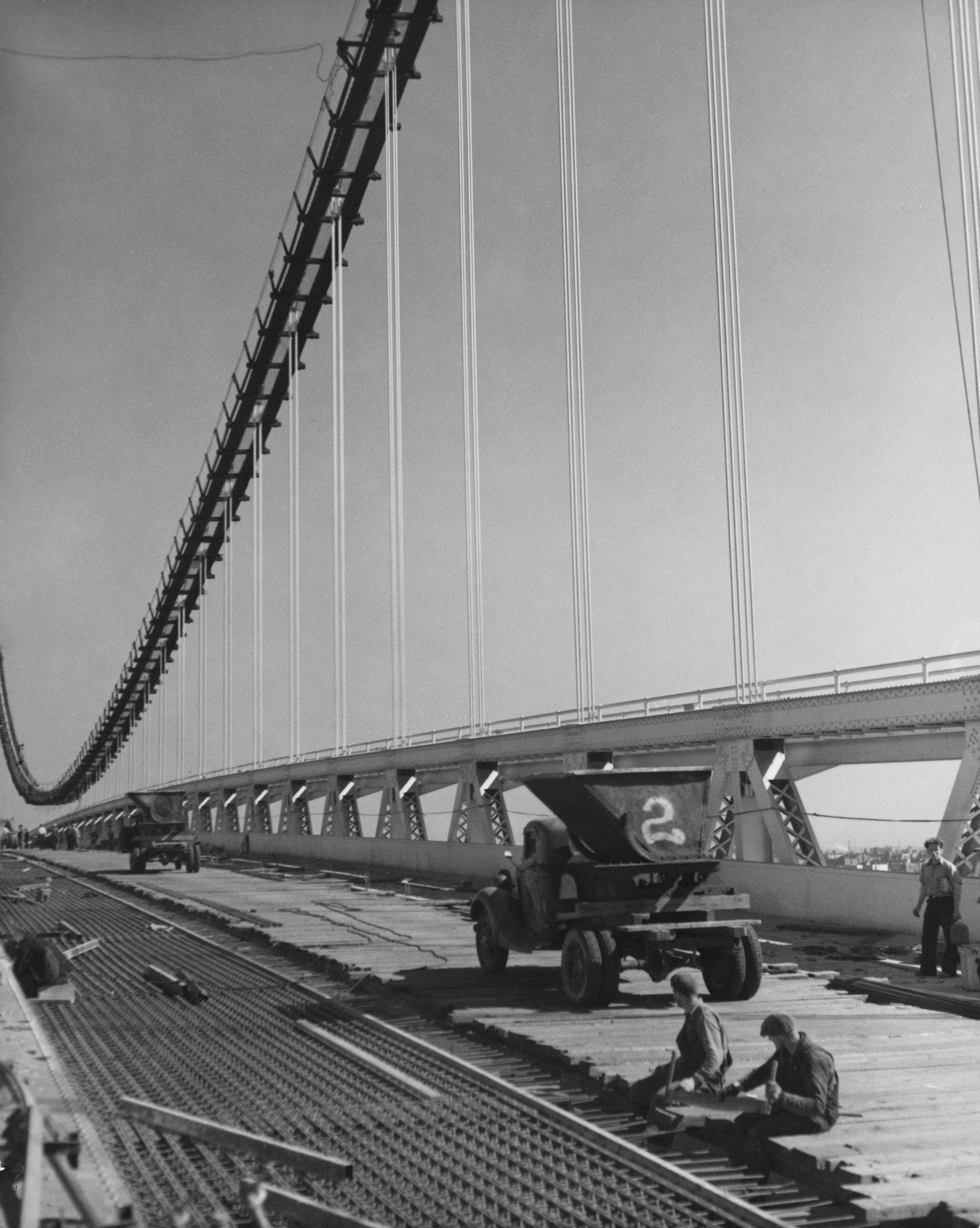
The Great Depression enlarged his opportunity. Federal New Deal money flowed to infrastructure. Moses proved uniquely capable of absorbing it. He oversaw the construction of bridges, tunnels, swimming pools, playgrounds, and parkways at astonishing speed. The Triborough Bridge, opened in 1936, became both literal crossing and financial engine. Tolls fed the Triborough Bridge Authority, and that authority, structured with unusual autonomy, gave Moses revenue independent of annual legislative appropriations. And revenue was power.
He had discovered the secret of durability: control the authority that controls the revenue.
From the 1930s through the 1960s, Moses shaped New York more than any mayor. He built the Henry Hudson Parkway, the Cross Bronx Expressway, the Brooklyn-Queens Expressway. He cleared neighborhoods for public housing. He expanded Lincoln Center. He drove highways through the urban fabric in the conviction that the automobile was the future and that cities must adapt or decay.
Context here is essential. Mid-twentieth-century America was intoxicated with mobility. The American landscape was scrambling and reshaping. Suburbs expanded. Industry dispersed. The car promised freedom. Urban “blight” was a word used easily and often, perhaps too often. Moses acted within a broad national consensus that clearance and construction signaled progress. He was not an alien force imposed upon a reluctant culture. He was, in many respects, its purest instrument. There was a demand for his methods, and he supplied.
Yet his methods distinguished him.
Moses centralized decision-making. He was impatient with consultation. Community objections were obstacles, not data. Entire neighborhoods in the Bronx were sliced apart to accommodate expressways. Tens of thousands were displaced in slum clearance projects that replaced dense ethnic communities with towers set in windswept superblocks. The human scale shrank as the infrastructural scale expanded.
He believed that traffic congestion was solved by more roads. When critics warned that new highways would generate new traffic, he dismissed them. To him, delay was decay. The city must move.
But it would be simplistic to cast him only as villain. He built beaches, parks, playgrounds, and pools that served millions. He professionalized public works. He demonstrated that government could execute large projects on time and at scale. His imprint remains visible in the bridges arching over the East River and in the parkways threading Long Island.
But scale without humility accumulates consequences.
By the 1950s and 1960s, a countercurrent emerged. Urbanists such as Jane Jacobs argued that vibrant cities depend upon mixed uses, dense neighborhoods, and pedestrian life. They resisted Moses’s proposed Lower Manhattan Expressway, which would have carved through SoHo and Little Italy. In that contest, for one of the first times, he lost. The age was turning. The automobile would not be unquestioned sovereign forever.
Moses’s decline was gradual but decisive. Political alliances shifted against him. Eventually governors withdrew support and authorities were consolidated against. By the late 1960s, the edifice of overlapping commissions that had sustained him began to crack. He lived until 1981, long enough to see many of his assumptions contested and some reversed.
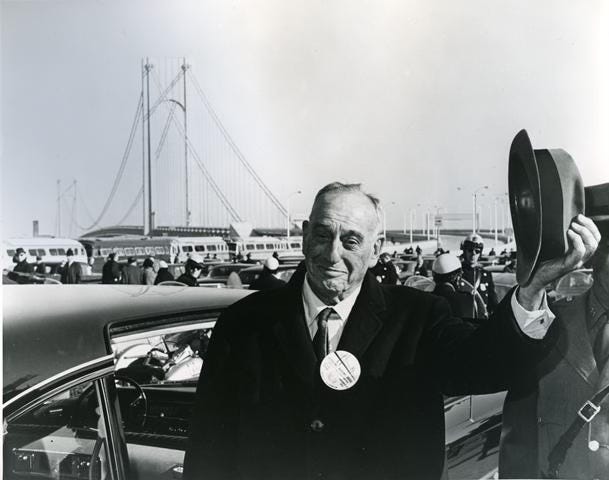
Moses operated in the century of the car, the bridge, the tunnel, the poured slab of concrete. He saw congestion as failure and motion as health. He believed that decisive administration was superior to paralyzing debate. In an era of swelling populations and economic transformation, that conviction produced tangible results.
Moses belongs to the American story of power in the administrative state. He demonstrated how unelected authority, properly structured, can shape millions of lives. He also demonstrated how such power, insufficiently checked, can harden into indifference.
He built for movement. He built at speed. He built with relentless will.
with gratitude, and love