Broken Windows, Broken Trust
Maintaining and Rebuilding a Republic

James Q. Wilson and Harold Ickes
Throughout our history, our relatively young republic has seen both cycles of decay and repair. Some failures have been local and intimate; others have risen to national scale. After the Second World War, American cities experienced a long, grinding escalation of crime that peaked in the late 1980s, hollowing out neighborhoods and confidence alike. Earlier still, before the Great Depression, many cities staggered beneath the weight of machine politics, where reform flickered briefly before being smothered by patronage and corruption. In both eras, the injury ran deeper than statistics. Citizens lost faith in the institutions closest to them, city halls, police departments, public works. Once that trust frayed, civic life itself began to thin.
James Q. Wilson and Harold Ickes worked at opposite ends of the twentieth century, but they confronted the same elemental problem: how a free society preserves trust once neglect sets in. Wilson observed that broken windows acted as small, visible signs of disorder that teach citizens that no one is watching and no one will intervene. These invite further decay. Ickes faced the larger, slower rot of corruption and incompetence, the broken windows of the state itself, which quietly erode confidence in democratic power. Both understood that public order is not automatic and legitimacy is not self-renewing. It must be maintained through care, fairness, and visible effort. Their work lacked spectacle and applause. Yet it endured, proof that the republic is repaired not by grand gestures, but by steady hands willing to tend what others overlook.
James Q. Wilson (1931-2012)
Most everything about James Q. Wilson’s life was ordinary for his time and place. He was born in Denver but raised in Long Beach, California. His father was a salesman; his mother a stay-at-home parent. As a child and adolescent, he knew the deprivation of the Great Depression and the war years. As a young adult, he came of age amid the abundance and confidence of the 1950s and early 1960s. He served in the Navy during the Korean War but saw no combat. His battles would be intellectual, and for them he was unusually well prepared.
In 1952, Wilson graduated from the University of Redlands. For two of those years he was a national collegiate debate champion, which was fitting preparation for a man who would spend much of his career dissenting from prevailing orthodoxies. He then spent seven formative years at the University of Chicago, earning both a master’s degree and a doctorate in political science. There, amid one of the most fertile intellectual environments in the country, Wilson refined a habit that would define his work: engaging in careful observation before asserting a confident theory.
Wilson entered political science at a moment when the social sciences were eager to imitate their siblings in the physical sciences. Comprehensive models, formal equations, statistical abstractions, and regression analyses promised predictive certainty. Wilson chose a different path. He embraced qualitative analysis, which is rigorous description grounded in verified experience and human behavior rather than bloodless abstraction. He distrusted any explanation that relied on a single cause, and he was especially skeptical of accounts that reduced human conduct to economic forces alone. People, he believed, were moral creatures who responded to signals far richer than incentives and prices.
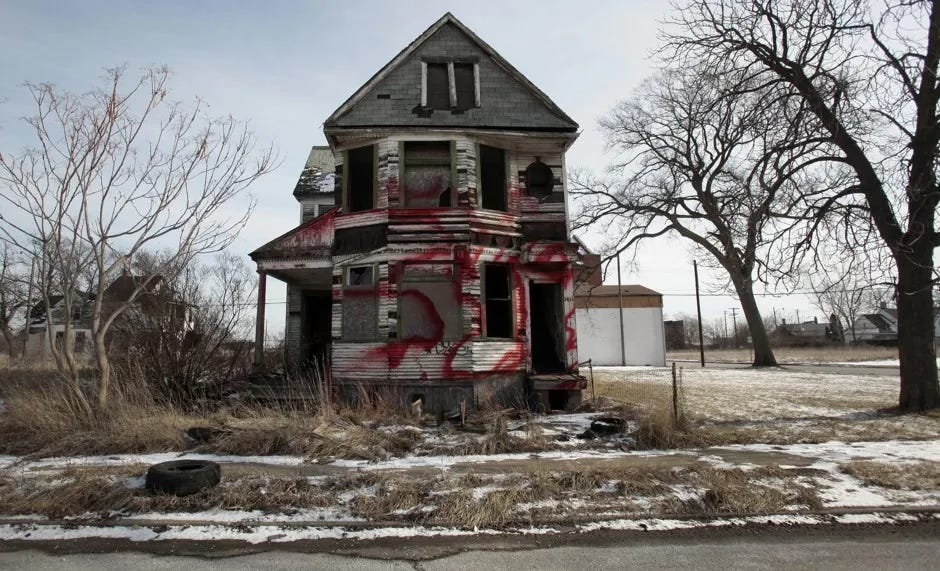
Crime, in particular, captured his attention. Wilson understood crime not as an isolated pathology, but as a social phenomenon shaped by multiple interacting forces: individual character, institutional design, cultural norms, neighborhood expectations, and the likelihood and legitimacy of punishment. This intuition found its most famous expression in 1982, when Wilson, together with George L. Kelling, articulated what became known as the Broken Windows theory of crime. The metaphor was so simple it invited misunderstanding.
It went like this: if a building has a broken window and it remains unrepaired, it sends a message. No one is watching. No one cares. Soon, more windows break. The damage accelerates not because the people nearby are wicked, but because the cues that sustain civil order have vanished. Wilson applied this insight to streets and communities. Graffiti, vandalism, predatory panhandling, and public disorder are not harmless inconveniences inherent to urban life. They are signals that informal social controls had eroded. Serious crime might not inevitably follow, but it became far more likely, because the environment had taught that neglect was tolerated.
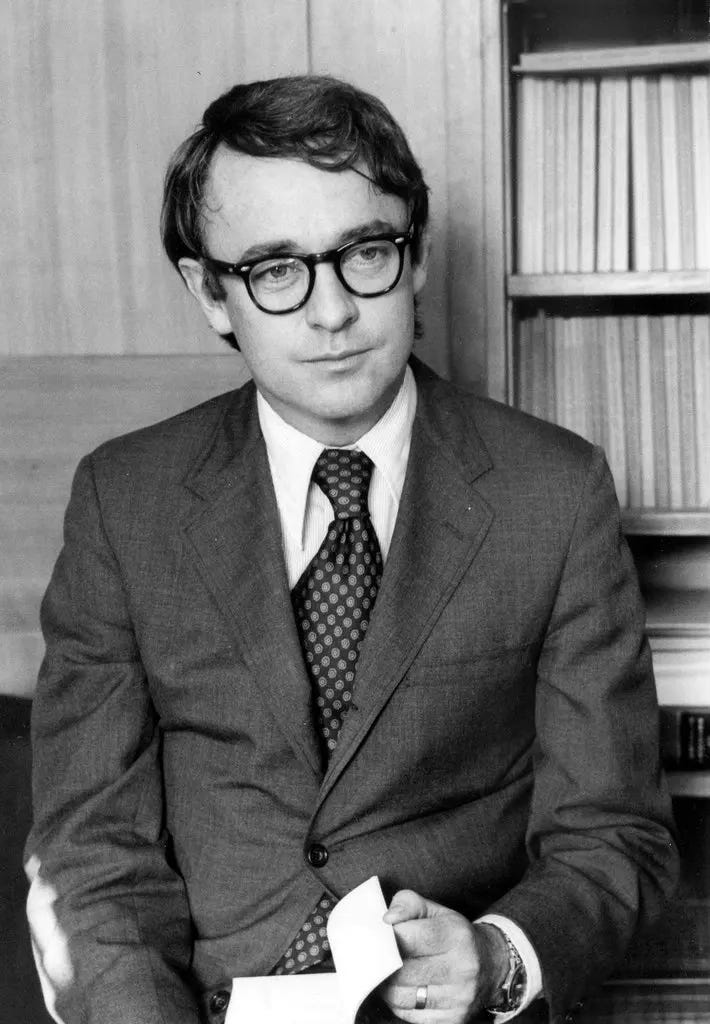
The power of the Broken Windows theory lay not in severity, but in perception. Critics often caricatured Wilson as advocating a surveillance state, a kind of authoritarian homeowners’ association writ large. He did nothing of the sort. Nor did he argue that poverty alone caused crime, or that overwhelming force could solve it. His claim was subtler, namely that order is communicative. People adjust their behavior in response to what they see around them. When small disorders go unaddressed, citizens withdraw. They stop intervening. They stop caring for shared spaces. They retreat indoors and surrender public life to those most willing to exploit it. Disorder compounds not through malice, but through abdication.
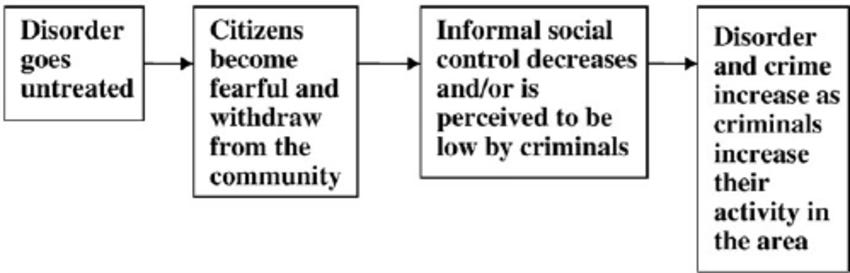
Wilson emphasized that Broken Windows policing was not primarily about arrests. It was about presence. Officers walking beats, knowing residents, reinforcing norms, restoring confidence that authority existed to protect. The aim was reassurance, not fear. In later years, the theory was flattened into slogans like “zero tolerance” or misused to justify indiscriminate enforcement. The tragedy of Broken Windows is that its simplicity made it vulnerable to distortion. Yet where it was applied correctly, the results were undeniable. Dramatic reductions in crime across American cities can be attributed, at least in part, to Wilson’s insights.
Wilson’s broader contribution was to reframe the relationship between freedom and order. He rejected the notion that order was inherently authoritarian. Rights, he argued, flourish only where pro-social norms are sustained. Communities unravel not only under injustice, but under neglect.
Wilson died in 2012 without leaving behind a movement or a set of slogans. What he left instead was a more durable insight. Civilizations do not collapse all at once. They fray, often one broken window at a time. But they can also be repaired the same way, patiently, attentively, one window at a time.
Harold Ickes (1874-1952)
Harold’s origins were suitably obscure for a man largely passed over in historical memory. He was born in Hollidaysburg, Pennsylvania, to a predominantly Scottish mother and a predominantly German father. He grew up in Altoona, but when his mother died unexpectedly while he was still a teenager, his father moved the family west to live with an aunt in Chicago. It was there that Harold Ickes made his name and began the long work of his public life.
He graduated from the University of Chicago in 1897 and worked briefly as a newspaper reporter for The Chicago Recordand later the Chicago Tribune. He earned a law degree from the University of Chicago Law School some years later but never took deeply to legal practice. Law sharpened his mind, but politics claimed his conscience. He turned his energies fully toward public life, entering local Republican politics at a time when party machines dominated and reformers were tolerated as irritants.
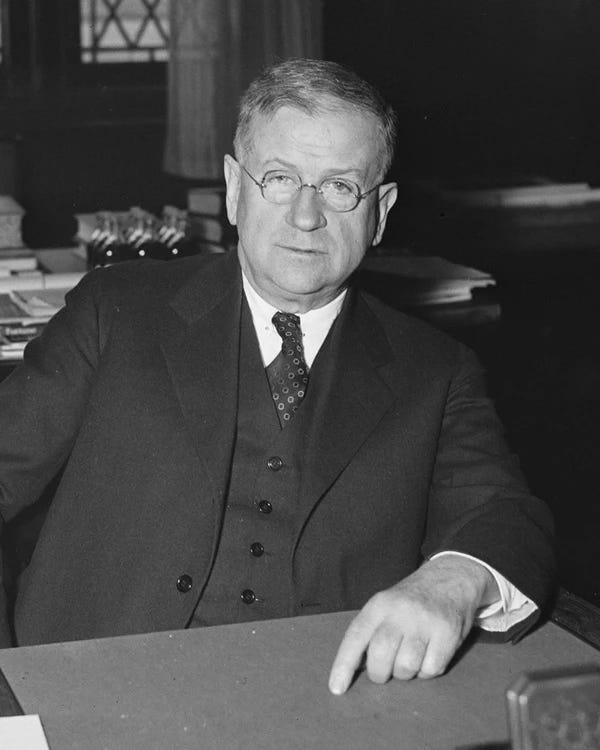
Beginning in 1912, Ickes became a fixture in progressive Republican circles. He campaigned vigorously for Theodore Roosevelt’s Bull Moose insurgency, then stumped for Charles Evans Hughes in 1916, and later for Hiram Johnson in 1920 and 1924. Johnson, Governor of California and later U.S. Senator, was a formidable reformer and a perennial presidential aspirant, forever frustrated in his pursuit of the White House. Ickes, too, grew accustomed to disappointment. He always aligned himself with the progressive wing of the party, and always found himself on the losing side.
In 1926, Ickes managed the senatorial campaign of Hugh S. Magill, an independent running against entrenched Republican Frank L. Smith. The contest was explicitly understood as a protest against the political influence of Samuel Insull, the powerful utility magnate who bankrolled Smith’s campaign and whose empire spanned electricity, railroads, and banking. Insull would later be prosecuted—though narrowly acquitted—for fraud. Magill lost decisively, but Ickes’ role in the campaign marked him as more than a gadfly. He had drawn blood.
By the late 1920s, Ickes had established himself as a counter-establishment figure: a tireless reform advocate, a relentless critic, and a man willing to make enemies. He served as president of the People’s Protective League of Illinois and sat on a thicket of party councils and reform committees. He was not beloved, but he was noticed.
By 1932, that distinction mattered. The country was exhausted by collapse and scandal. When Franklin Roosevelt prepared his cabinet, he sought balance, ideological, regional, and temperamental. He believed a progressive Republican would give credibility to the New Deal’s reach. His first choice was Hiram Johnson. Johnson declined but recommended Ickes instead.
Roosevelt had never heard of Harold Ickes. He trusted Johnson’s judgment and offered Ickes the post of Secretary of the Interior. Ickes accepted and served for thirteen years, one of only two cabinet members to remain through the entirety of Roosevelt’s presidency.


His first and most consequential assignment was directing the Public Works Administration. Created in 1933 and endowed with billions, the PWA was designed to restore confidence through construction on a national scale. It was the New Deal’s showpiece. Ickes moved deliberately, often frustrating allies, but insisted on clean contracts and public accountability. Under his stewardship rose dams, bridges, tunnels, and power systems, most famously the Hoover Dam. There was remarkably little scandal for such massive public projects, especially overseen by a Chicago politician!
As Secretary of the Interior, Ickes also oversaw the National Park Service. He expanded Yosemite National Park by acquiring land from commercial logging interests and ended logging within its boundaries. He commissioned Ansel Adams to document the parks’ grandeur, helping to catalyze public support for preservation and ultimately the creation of Kings Canyon National Park.
Ickes was also an early and imperfect champion of civil rights. He desegregated his own department at the outset of his tenure, encouraged PWA contractors to hire African Americans, and ordered the desegregation of National Park Service facilities in Washington, D.C. His most visible stand came in 1939, when Marian Anderson was barred from performing at Constitution Hall by the Daughters of the American Revolution because she was Black. Ickes arranged instead for her to sing at the Lincoln Memorial and served as master of ceremonies before a crowd of 75,000—integrated, reverent, and indelible. President and Mrs. Roosevelt attended. So too, did America.
Yet Ickes was not heroic in every hour. He opposed the internment of Japanese Americans only in private, recording his objections in his diary rather than wielding his authority publicly. It remains a moral failure, and one he never fully confronted. Still, measured against his era, he pressed further and harder than many who spoke more gently.
After Roosevelt’s death, Ickes retired to his farm in Olney, Maryland. He continued to write, continued to argue, continued to distrust easy answers. He died in 1952, leaving behind no cult, no movement bearing his name, only structures, policies, and precedents that held.
Harold Ickes shows that republics are not preserved by charisma. They are preserved by men willing to be difficult, to work hard, and to work for good ideas. He was not the voice of the New Deal. He was its spine.
With gratitude, and love—