

Before Law, Before Borders
The Lands Beyond the Republic

Daniel Boone (1734-1820)
His family were Quakers settled in the backwoods of Pennsylvania, but they were unorthodox by Quaker standards. When Boone’s sister and brother married “worldlings,” non-Quakers, the family stood by them rather than enforcing communal discipline. That quiet dissent mattered. Boone himself seemed to place little stock in organized religion. He rarely attended services, though throughout his life he traveled with two books: a Bible and Gulliver’s Travels. If faith shaped him, it did so privately. What truly held his attention were the woods.
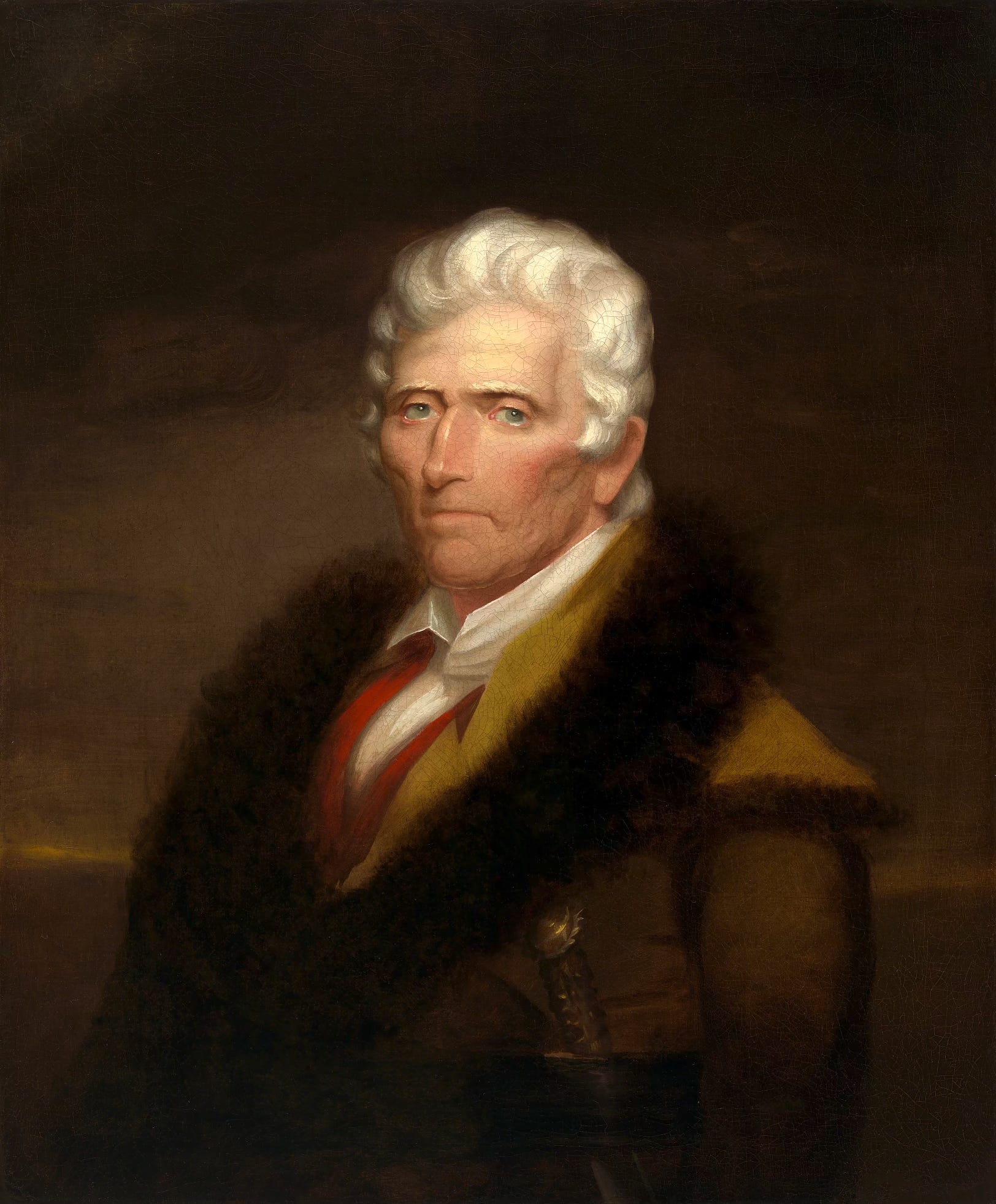
He received no formal schooling. His education came outdoors: hunting, fishing, tracking, scouting, and learning to speak with local Native peoples. By his mid-teens he was already known as a crack shot, an able overland navigator, and a skilled woodsman. He picked up several Native languages along the way. Stories followed him early. One legend tells of Boone calmly loading and firing his rifle while a panther charged, dispatching the animal as companions fled. Whether true or embroidered, the story captured something real: Boone’s reputation for composure under pressure.
During the French and Indian War, Boone briefly served with the colonial militia, marching with General Braddock’s ill-fated expedition into the Ohio Country. He was present at the disastrous Battle of the Monongahela in 1755, though positioned near the rear and seeing little direct combat. What he took from the war was not glory, but an appetite. He developed a lasting love for long-distance travel into the interior, beyond the Alleghenies and Appalachians, where the land widened and authority thinned.
He returned home, married, and tried briefly to settle. It did not last. Boone instead took up the life of a “long hunter”, heading west for months at a time. He hunted, trapped, traded, and explored, supporting his growing family through work that required endurance and shrewdness rather than settlement. He learned the rivers, ridgelines, and game trails of colonial America’s western reaches. He was not escaping society so much as living just ahead of it.
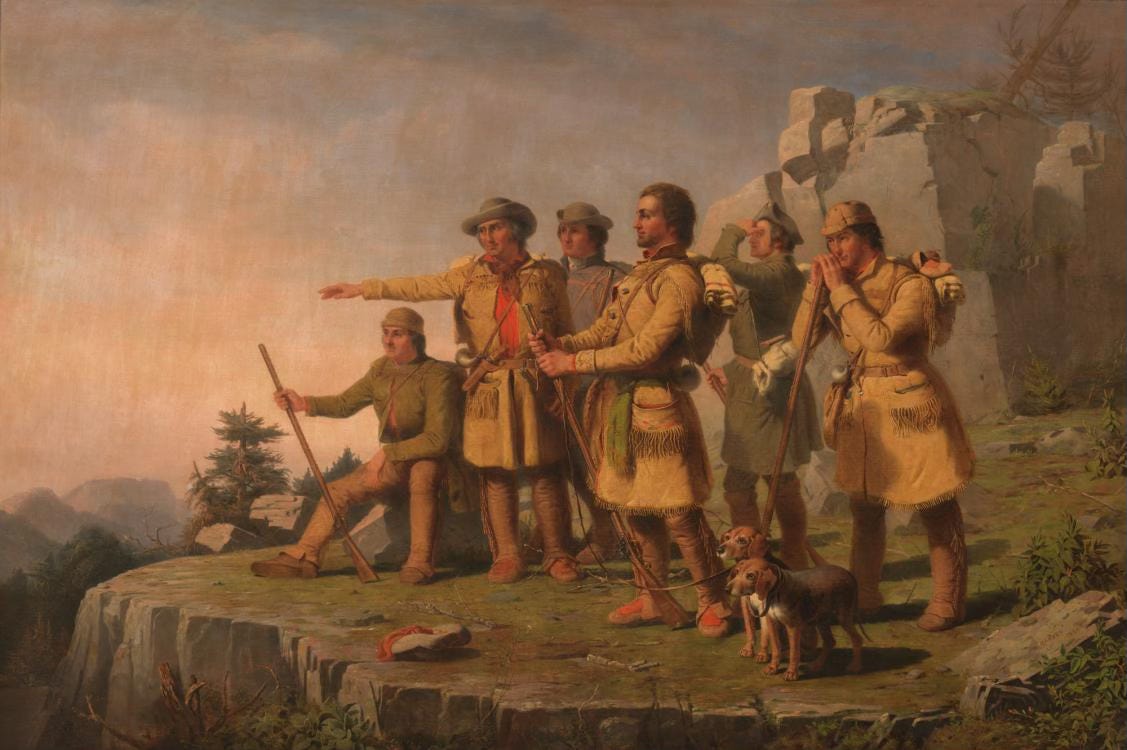
In the late 1760s Boone began pushing into Kentucky. At the time, Kentucky was more rumor than reality, a vast interior hunting ground contested by Native nations and claimed abstractly by distant colonial charters. Reaching it from the east was difficult. Mountains blocked passage. Rivers misled. Boone did not “open” Kentucky in the heroic sense later generations imagined. What he did was more consequential. Through repeated journeys via the Cumberland Gap, returning with hides and pelts, he demonstrated that a route existed that was sustainable and reliable. The Boone Trace worked. It could be used again and again.
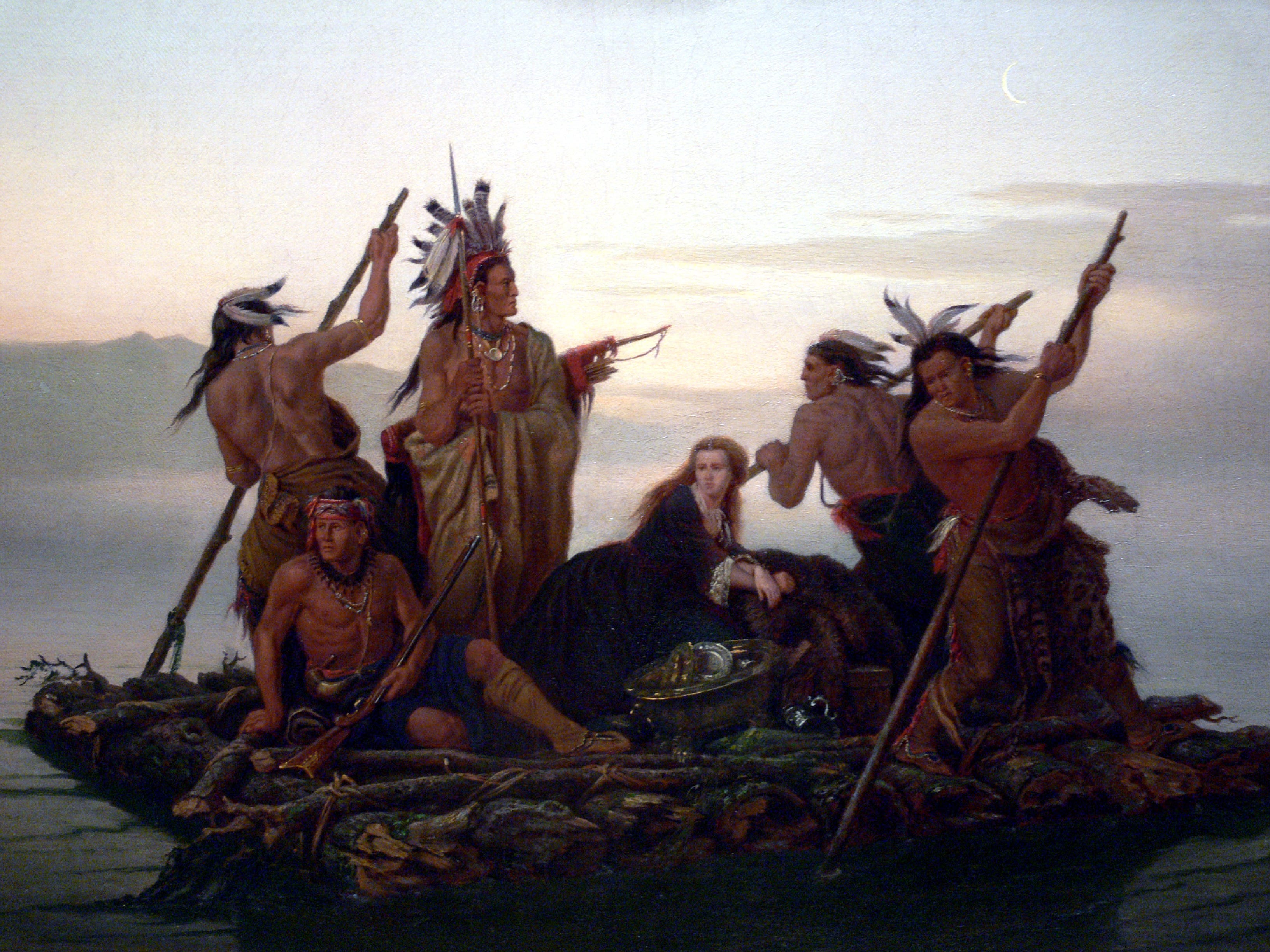
In the early 1770s Boone began guiding others west and giving form to the idea of permanent settlement. He founded Boonesborough, among the first durable American communities west of the Appalachians. The frontier, however, remained violent and uncertain. In July 1776, Shawnee raiders captured Boone’s daughter Jemima and two companions, taking them north along the Ohio River. Boone pursued them relentlessly, overtook the party after several days, and rescued the girls in a daring raid. The story raced through the colonies and later inspired frontier fiction, including scenes echoed in Cooper’s The Last of the Mohicans.
During the Revolutionary War, Boone served with the Virginia militia in frontier defense, fighting primarily against Native nations allied with the British. After a series of skirmishes, the Shawnee laid siege to Boonesborough. Boone helped repel the attack, but weeks later he was captured while out hunting. Following Shawnee custom, he was adopted into the tribe and lived among them for months. He later escaped, returning to warn Boonesborough of an impending attack. Instead of praise, he faced a court-martial on suspicion of disloyalty. Though acquitted, the episode revealed something essential. Boone’s loyalty was not to ideology. It was to place, to people, and to survival on the frontier.
Boone served the American cause, but he was never animated by republican theory. Independence meant freedom of movement more than flags or constitutions. In this sense, Boone lived beyond the Republic, both before it existed and after it took shape.
As America pushed westward, Boone was overtaken. Kentucky filled up. Courts arrived, along with lawyers, sheriffs, and land titles. Boone speculated in land and trade, but fared poorly. Debt mounted. Rules multiplied. He served briefly in the Virginia legislature, finding politics confining and unrewarding. Disillusioned, and in his sixties, Boone moved yet again, this time to Spanish Missouri, still a place of open country and thin authority.
He did not try to monetize his fame or transform himself into a frontier patriarch. He wanted wilderness, not recognition. In old age he became a living relic, watching paths turn into roads and territories into states. He died in 1820, as the Republic accelerated into a form that no longer resembled him.
Before ballots and legislatures, before courts and statutes, there were men like Boone, learning how to move through land that tested resilience, courage, and judgment. The Republic followed. Boone did not belong to it, even though he made it possible.
Jedediah Smith (1799-1831)
Jedediah Smith was a child of the young Republic, while it was still unsettled and unsure of itself. So too was his life. He was raised in upstate New York in modest, sometimes strained circumstances, in a household where self-reliance was learned early and security was never assumed. His formal education was basic. He learned to read, and not much more. But his mind was careful and methodical, drawn to structure and order. What captured his imagination was geography and distant places. While still young, he found copies of the journals of Lewis and Clark. They entranced him not merely for their adventure, though there was certainly that, but for their discipline. He admired the records they kept, their cataloging of plants, rivers, and distances, their insistence on measurement and method. To Jed, they were proof that endurance guided by knowledge could make the unknown legible.
Smith moved west in his late teens, determined to enter the fur trade. It was lucrative and brutally competitive, but it was also miserable work. Mountain men labored, lived, and died in extreme cold, violence, and isolation. Trappers existed on the edge of starvation, dependent on their own skill and the occasional, fragile cooperation of others. Smith made a name for himself not through bravado, but through reliability. He was methodical, calm, sober, and disciplined. He did not boast or exaggerate. He delivered what he promised, and he returned when others did not.
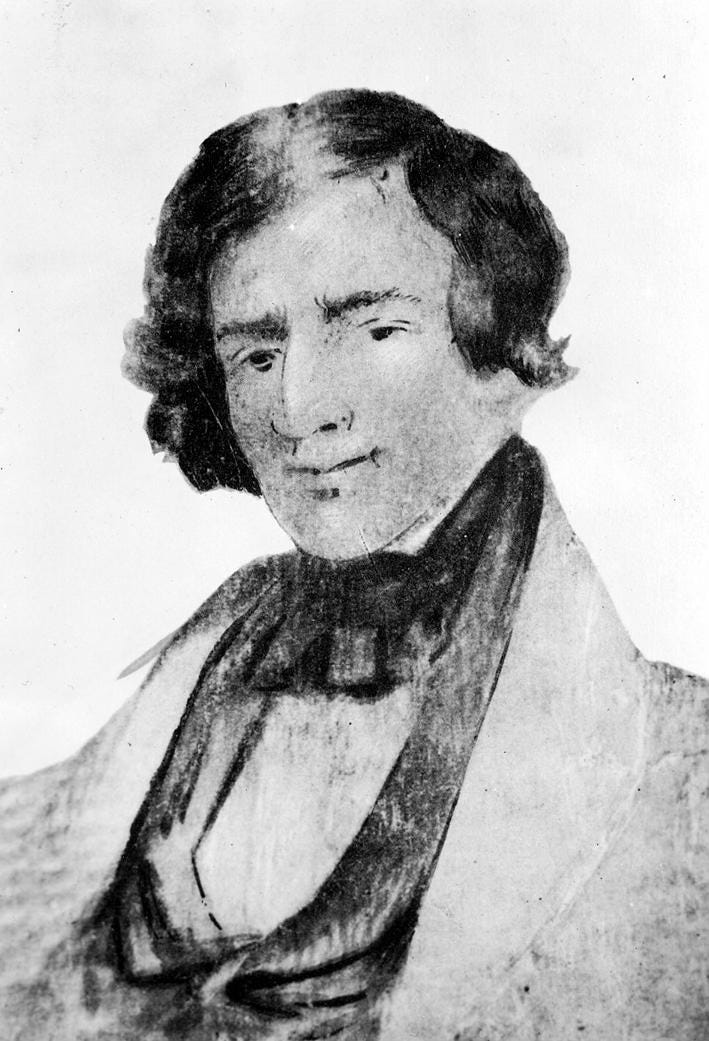
But trapping was never his true calling. What Smith loved was exploration and documentation. He took careful notes, mapped routes, traced the courses of rivers, charted mountain passes, and sketched the contours of basins. He rejected rumor and speculation. He made maps, and he made good ones. His work corrected years of geographic misunderstanding about the interior West. Later explorers and surveyors relied on his routes. Wagon trains followed paths he had first measured. He did not conquer space, but he clarified it.
Jed’s journeys carried him beyond the Mississippi and the Great Plains into the Great Basin and the Southwest. He became the first American citizen to cross the Great Basin, long imagined as a fertile inland paradise. It was nothing of the sort. Jed revealed it as a vast, arid interior of closed drainages, salt flats, and immense distances that punished error. He was also the first American to reach California overland from the east, then the first to travel north through Oregon country and find a workable route back across the Rockies. These were not triumphal marches. They were ordeals. Jed survived ambushes, starvation, desert crossings, and a succession of near-deaths. Most famously, a grizzly bear mauled him, tearing open his scalp, breaking ribs, and permanently scarring his face. He recovered and returned to the field.
The Republic was largely indifferent to Jed’s travels and offered him little protection. He repeatedly sought government sponsorship and was refused. He moved through Mexican territory, disputed tribal lands, and vast stretches where no sovereign authority prevailed. Survival depended on judgment, skill, and negotiation. Smith respected Native customs and relied on Native guidance, even as he sometimes faced violence and betrayal. He recorded these encounters honestly, without sentimentality or romance.
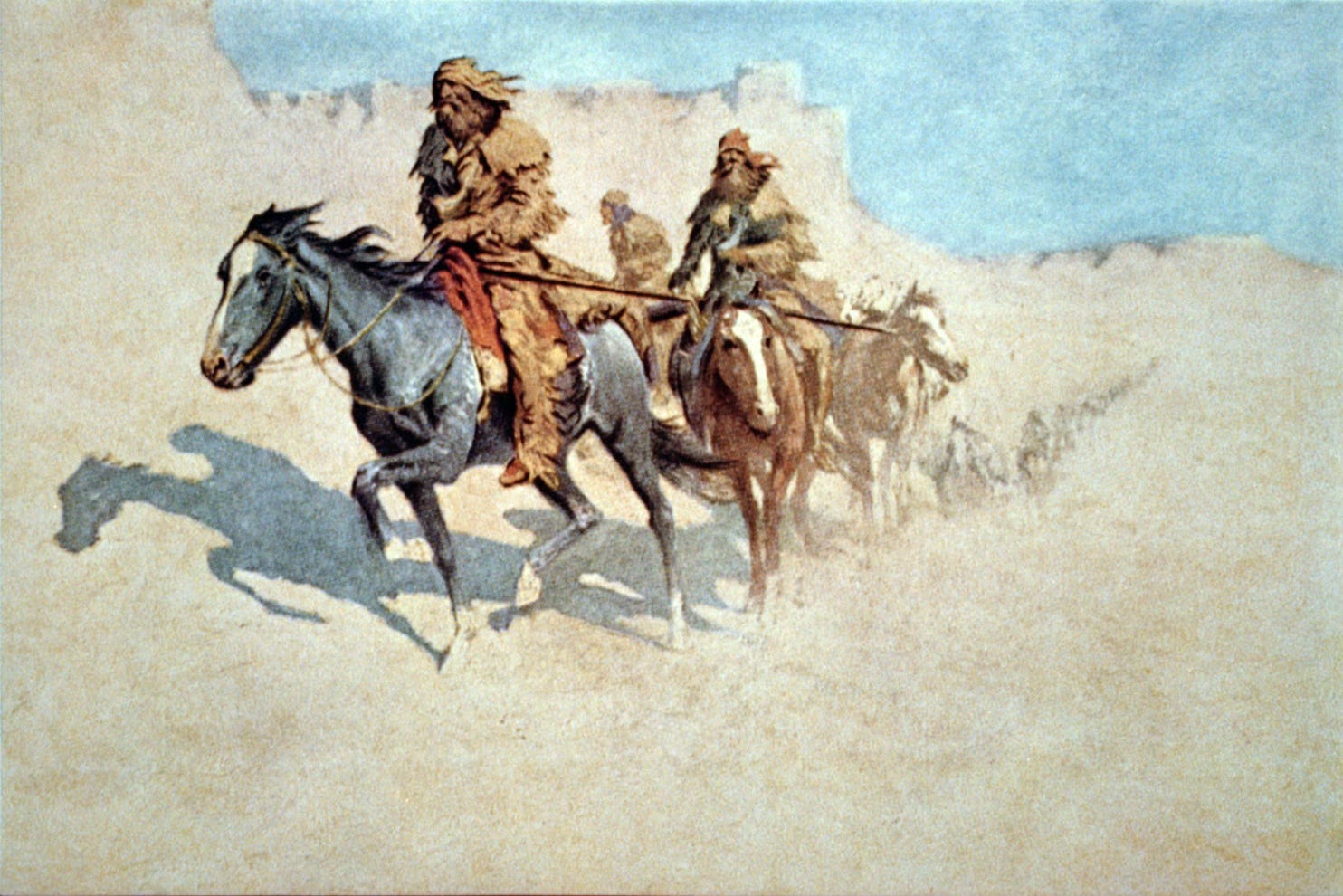
In 1831, at only thirty-two, Jed was killed in what is now southwestern Kansas. Accounts vary, but the best evidence suggests he was ambushed while attempting to negotiate safe passage through Comanche territory. It was an abrupt and anticlimactic end after years of surviving dangers far greater. His body was never recovered. He left no family and no estate. What he left instead was knowledge. Through his journals and maps, he measured the American continent, documented its peoples and landscapes, and replaced myth with fact. He never sought the Republic’s applause. He served it by making the land knowable, at a cost he alone paid.