Accuracy and Honesty
Personal virtue and civil obligation

Katherine Johnson and Elie Wiesel
There is courage and boldness in honesty and accuracy, even if spoken without bravado. These virtues can prevent both technical and moral catastrophe. When reality is miscalculated, it risks lives. When morality is distorted, it risks truth. Societies will not fall all at once, but they will drift; first in error, then in evasion, and finally in forgetting. With machines and totalitarian ideologies, the modern world has raised the stakes in the cost of error.
Katherine Johnson and Elie Wiesel lived on opposite ends of this risk, but exemplified the virtues of accuracy and honesty. Johnson ensured that the numbers guiding humans into space were exact. Approximations would mean death. Wiesel protected the memory of humanity’s darkest failure, and ensured that it remained truthful. Forgetting would invite its return. Together, they reveal that accuracy and honesty are not merely personal virtues, but civic obligations.
Katherine Johnson (1918-2020)
Katherine grew up in segregated West Virginia, at a time when Greenbrier County did not offer education to Black children beyond the eighth grade. Her budding mathematical talent might easily have gone to waste, but her parents refused to let geography or prejudice dictate her future. They sacrificed to place her in courses at West Virginia State College, a historically Black institution with a strong mathematics faculty. Katherine thrived. She graduated summa cum laude in 1937 with degrees in mathematics and French. She was only eighteen.
She entered teaching and soon married. For a time, she intended to pursue a graduate degree in mathematics and became the first Black woman admitted to graduate study at West Virginia University. But family intervened. She withdrew from the program to raise her children. She never withdrew from mathematics itself. Numbers remained her native language.
In 1952, when her youngest daughter was old enough to look after herself, Katherine returned to work. At first, she assumed she would resume teaching. Then she heard from a relative about an obscure federal agency called the National Advisory Committee for Aeronautics (NACA) the forerunner of NASA. NACA was hiring mathematicians to work as “computers” in its guidance and navigation divisions. At the time, the word computer did not refer to a machine, but to a person capable of performing complicated calculations accurately and consistently.
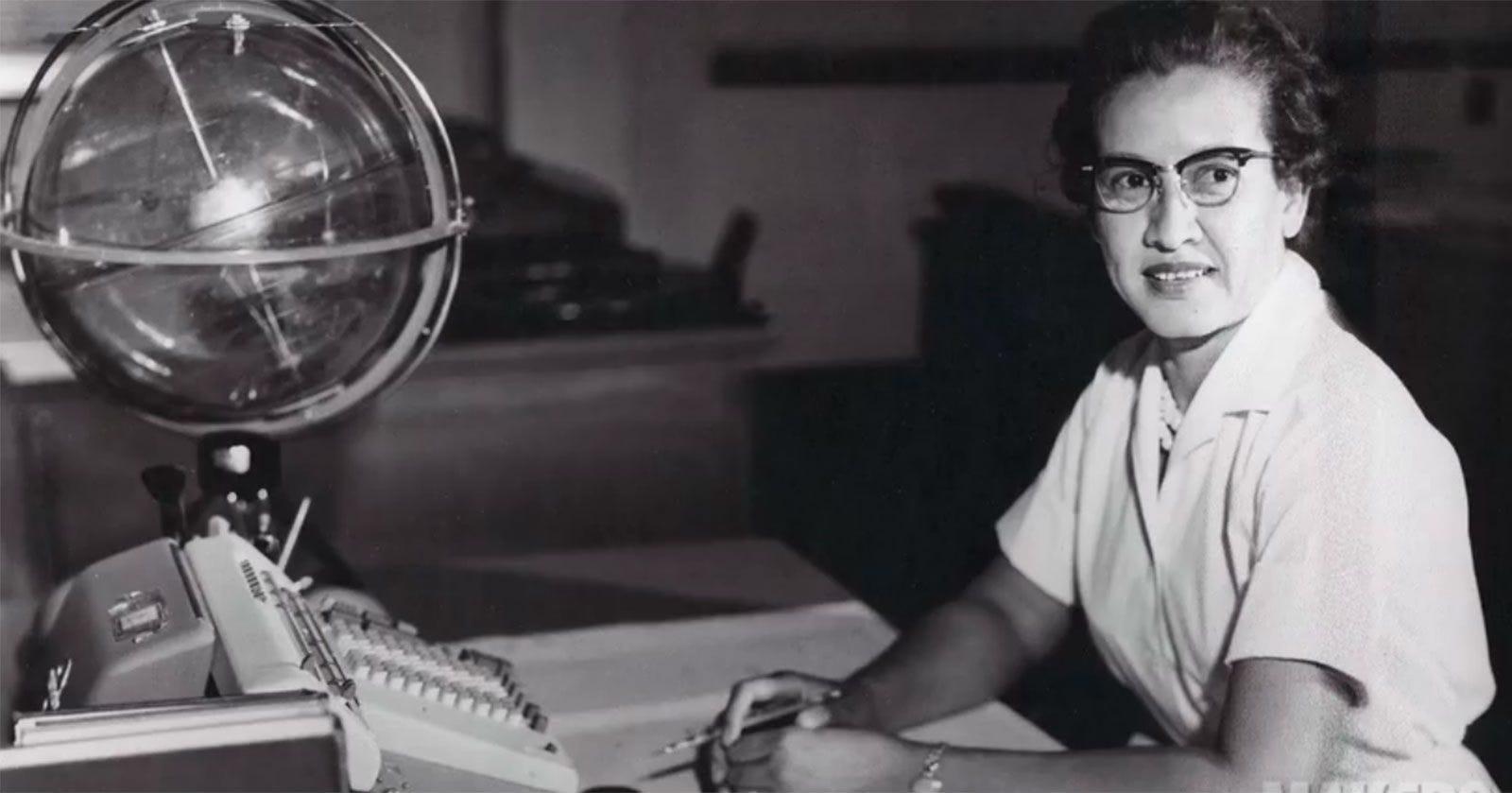
More surprising still, NACA, unlike many federal agencies and certainly unlike many employers in the Jim Crow South, was willing to hire an integrated workforce. Katherine applied, was hired, and moved her family to Newport News, Virginia.
Initially, she was assigned to a pool of all-female computers, performing routine calculations derived from reams of flight data recorded during experimental test flights. Katherine later joked that she and her colleagues were “computers who wore skirts.” Others at NACA were not joking at all. Sexism and casual racism were deeply ingrained. Virginia and much of the federal workforce remained segregated, and many engineers doubted whether women possessed the mathematical skill required for advanced aeronautics.
Katherine answered doubt with results. She was assertive, curious, and exceptionally gifted in analytic geometry. That specialty made her especially valuable to the Guidance and Control Division of NACA’s Flight Research Department, an elite unit essential to the emerging Mercury program. Despite formal and informal barriers of race and gender, her work was too accurate, too useful, and too reliable to ignore.
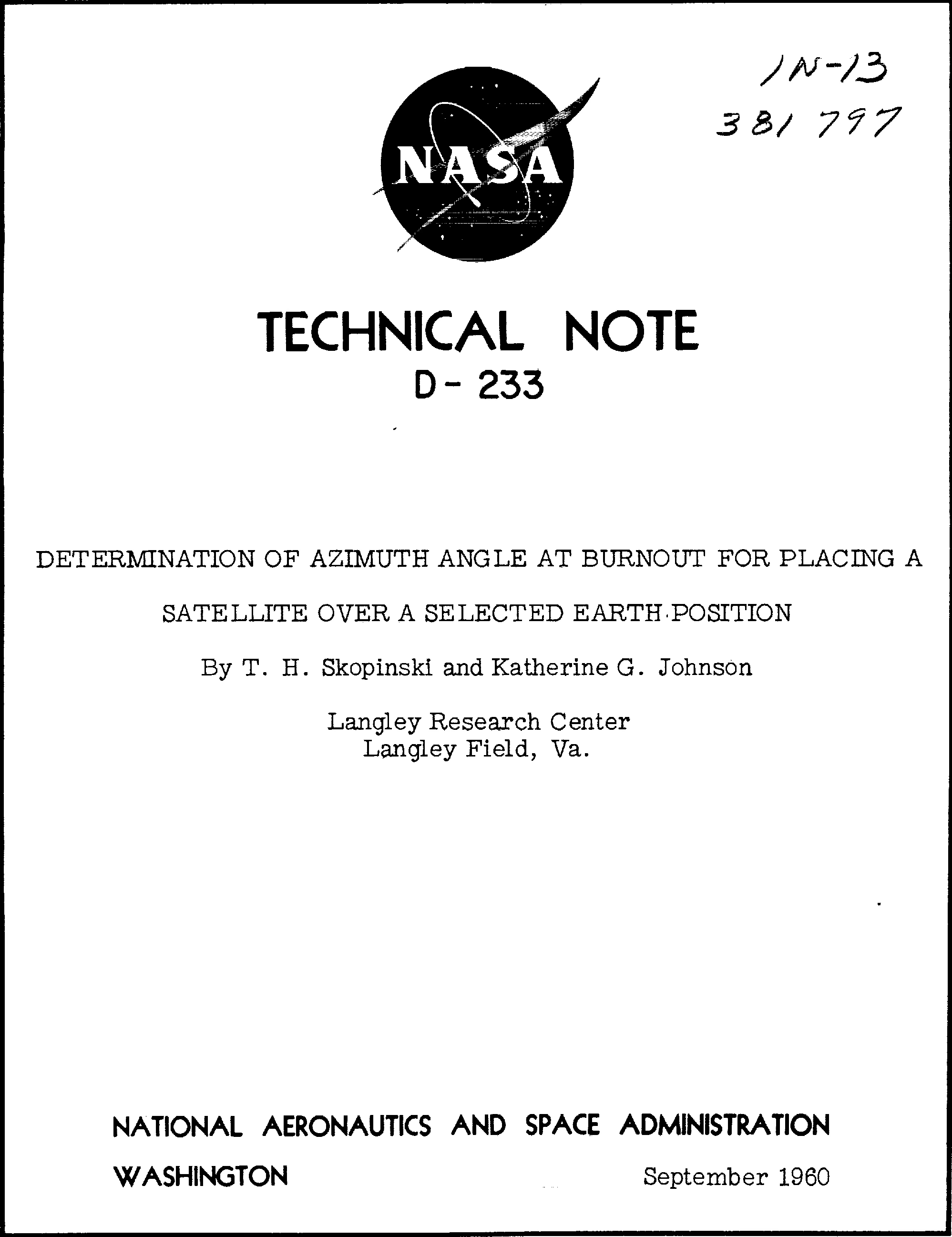
In 1958, NACA was formally subsumed into the newly created National Aeronautics and Space Administration. Racial segregation within the agency was abandoned, though gender barriers remained. Women were still prohibited from authoring research or technical papers, regardless of their intellectual contribution. That changed in 1960, when Katherine Johnson became the first woman at NASA to publish a technical paper. Her name appeared as co-author on Technical Note D-233: Determination of Azimuth Angle at Burnout for Placing a Satellite over a Selected Earth Position.
The dense mathematics mattered less than the meaning. It was a quiet revolution. Women were now producing, and receiving credit for, science of the highest order.
Katherine was only beginning. In 1961, she calculated the trajectory for Alan Shepard’s suborbital flight, the first time an American ventured into space. She was the mind behind the mathematics that enabled both the historic ascent and the safe return. Later that year, she calculated optimal launch windows for subsequent Mercury missions. She also prepared backup navigation charts for astronauts to use in the event of onboard computer failure, should they need to navigate the old-fashioned way. The symmetry was fitting: Katherine herself still calculated the old-fashioned way, by hand.
Her indispensability became unmistakable during John Glenn’s orbital mission. Glenn, preparing to become the first American to orbit the Earth, was uneasy trusting his life entirely to newly installed machine computers. He refused to fly until Katherine verified the calculations personally. Her confirmation was the proven course of the infant space age.
Katherine Johnson worked at NASA until 1986. Over three decades, she contributed to nearly every major American space program. She calculated vectors and velocities for Apollo 11. She helped plot the emergency trajectories that brought the Apollo 13 astronauts safely home when failure threatened catastrophe. She worked on the Space Shuttle program, on satellite systems, and even on early planning models for a future crewed mission to Mars.
Katherine Johnson never left Earth, but her work traveled into the cosmos. More important, what she accomplished on Earth demonstrated how consistent, excellent work can bend history without ever raising its voice. She did not stand at the front of a movement or demand recognition in its moment. She simply made herself indispensable by being right. In an era when lives were entrusted to equations, accuracy became a moral virtue.
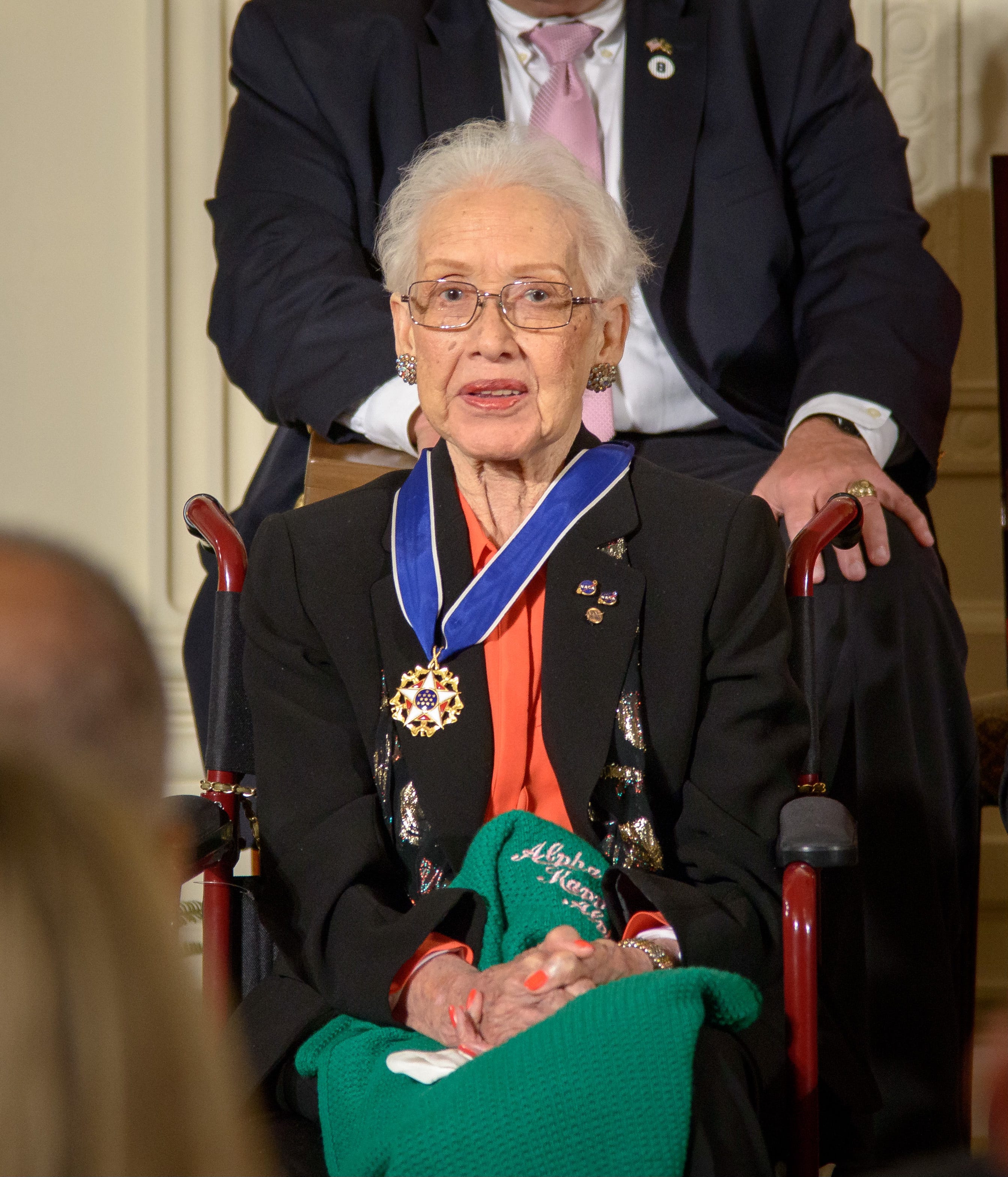
Recognition eventually followed. Medals were awarded. Presidents honored her. Schoolchildren learned her name. Yet her deepest legacy lies elsewhere. She quietly expanded who could be imagined as a scientist and who could help shape the future.
Katherine Johnson proved that accuracy can be revolutionary, that precision can be liberating, and that history is sometimes redirected not spectacle, but by a pencil, a sheet of paper, and a woman who knew that the numbers would hold.
Elie Wiesel (1928-2016)
Elie Wiesel was born in 1928 in Sighet, a small town nestled into the Carpathian Mountains of Transylvania, near what is now the Ukrainian border. It was a place shaped by faith and tradition. His family spoke Yiddish, German, Hungarian, and Romanian at home, and Elie absorbed them all. His mother, Sarah, was the daughter of a respected community leader, deeply rooted in synagogue life and religious devotion. His father, Shlomo, was different in temperament, less mystical, more humanistic, and encouraged Elie not only to study Torah but also to learn languages, to read widely, to remain open to the broader world.
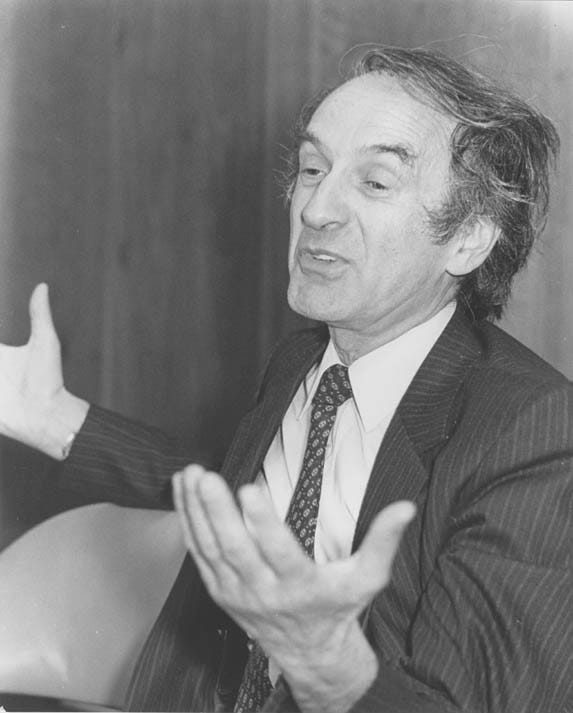
With his two older sisters, Beatrice and Hilda, and his younger sister, Tzipora, Elie grew up happy. The world felt stable, even permanent. When Adolf Hitler rose to power in Germany, Elie was five years old, and Germany was far away. When Hitler invaded Poland, Elie was eleven, and Poland felt closer, but still distant enough to seem unreal. Like many European Jews, the Wiesel family believed that whatever storms were gathering would pass them by.
They almost did. It was not until March 1944, late in the war, that Germany occupied Hungary, extending Nazi control into Elie’s corner of Transylvanian Romania. The collapse was swift. Jewish families were forced into ghettos, one of them in Sighet itself. For a brief, surreal moment, Elie and his family were prisoners in their own home. In May, deportations began. Hungarian Jews were loaded onto trains bound for Auschwitz.

Nearly ninety percent of those transported to Auschwitz were murdered immediately upon arrival. Sarah and Tzipora were sent directly to the gas chambers and killed within hours. Elie and his father were spared only because they were deemed fit for labor. At the entrance to the camp, they passed beneath the grim, mocking slogan Arbeit macht frei—“Labor will free you.” Elie was tattooed with the number A-7713 on his left arm and assigned to brutal, exhausting work. Hunger hollowed time itself. Meaning collapsed. He later reflected that the sole reason he endured was his father. “I knew that if I died,” he wrote, “he would die.”
Father and son were later transferred to Buchenwald, a camp designed entirely for forced labor. There, conditions worsened as the war drew toward its end. Shlomo grew weak, sick, and disoriented. Elie could hear guards beating his father in the final days, and he could do nothing to intervene. Shlomo died shortly before liberation. Elie survived, physically alive, morally stunned, emptied of certainty.
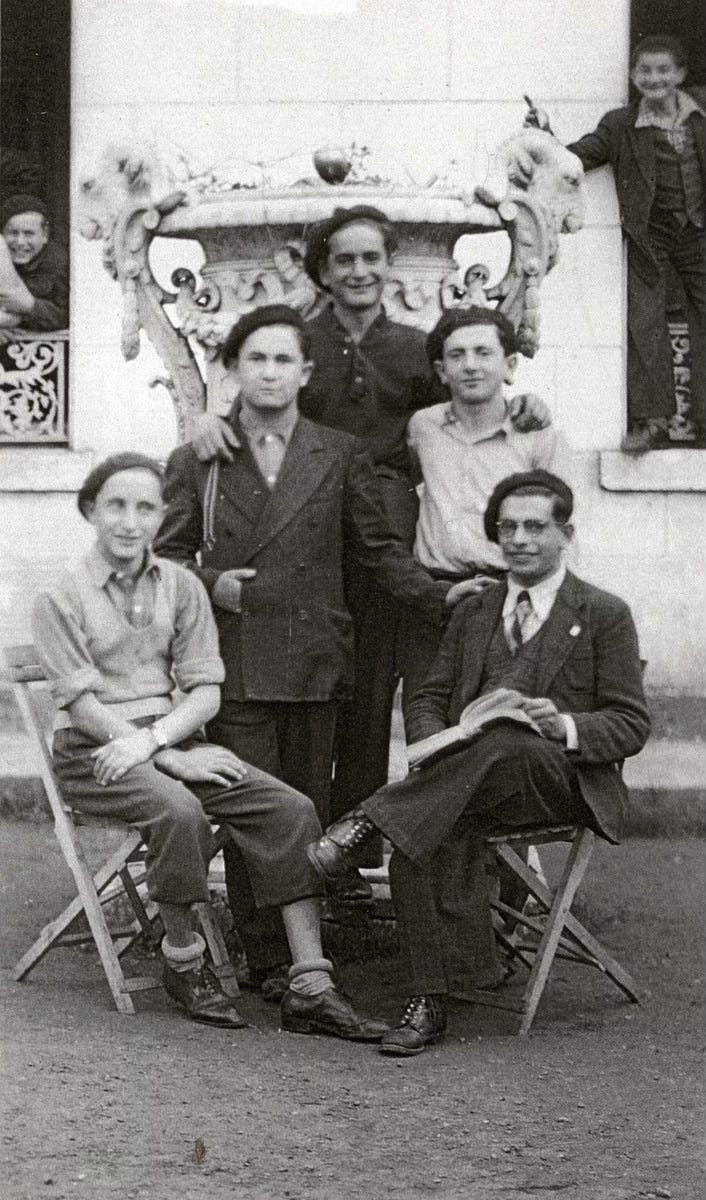
On April 11, 1945, the U.S. Third Army liberated Buchenwald. Elie was seventeen years old, alone, and nearly silent. He was evacuated to a French orphanage, where he learned that against all odds his sisters Beatrice and Hilda had survived. He remained in France and became a journalist, reporting on the rebuilding of Europe while carrying inside him a past that refused to be assimilated.
The opposite of love is not hate, it’s indifference. The opposite of art is not ugliness, it’s indifference. the opposite of faith is not heresy, it’s indifference. And the opposite of life is not death, it’s indifference.
For years, he did not speak of the camps. Silence felt both necessary and intolerable. When he finally broke it, he did so with aching humanity and accuracy. The result was Night, first published in Yiddish and later translated around the world. The book was spare, unsparing, and devastating. It was direct. It did not explain suffering away. It bore witness. In doing so, it altered the moral landscape of the twentieth century.
Never shall I forget that night, the first night in the camp, that turned my life into one long night seven times sealed.
Wiesel came to believe that memory itself was an ethical act. Forgetting, minimizing, or rationalizing the Holocaust was not merely an intellectual error, it was a moral failure. Silence, he warned, was never neutral. The opposite of love was not hate, but indifference. Indifference allowed trains to run on time. Indifference allowed neighbors to look away. He powerfully warned that “to forget the dead would be akin to killing them a second time.”
In 1955 Elie moved to New York and continued working as a journalist and author. Over the decades that followed, Wiesel became a global moral voice. He wrote novels, essays, and theological reflections that wrestled openly with God, doubt, and suffering. His faith never returned to innocence, but became one of open inquiry and protest, a faith thatargued rather than abandoned, questioned rather than denied. He spoke not only for Jews, but for victims of injustice wherever they were found, insisting that history’s lessons were universal and fragile.
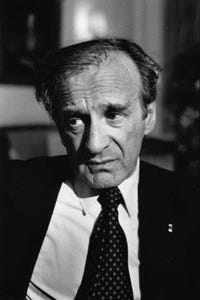
In 1986, he was awarded the Nobel Peace Prize. He accepted it not as a culmination, but as a responsibility. He distrusted grand theories and ideological certainty. He was, rather famously, a victim of a grand theory and ideological certainty. His authority rested instead on honesty, on refusing to say more than could be known, and refusing to say less than must be said.
Elie Wiesel transformed survival into service, and witness into duty. He carried memory even when memory was unbearable, and insisted that truth be faced without illusion. He taught that honesty is not merely a personal virtue, but a civic duty.
With gratitude, and love—